Starmer Resigns as UK Prime Minister Amid Mounting Pressure, Continuing a Decade of Political Instability
- TDS News
- Breaking News
- June 22, 2026
By: Donovan Martin Sr, Editor in Chief
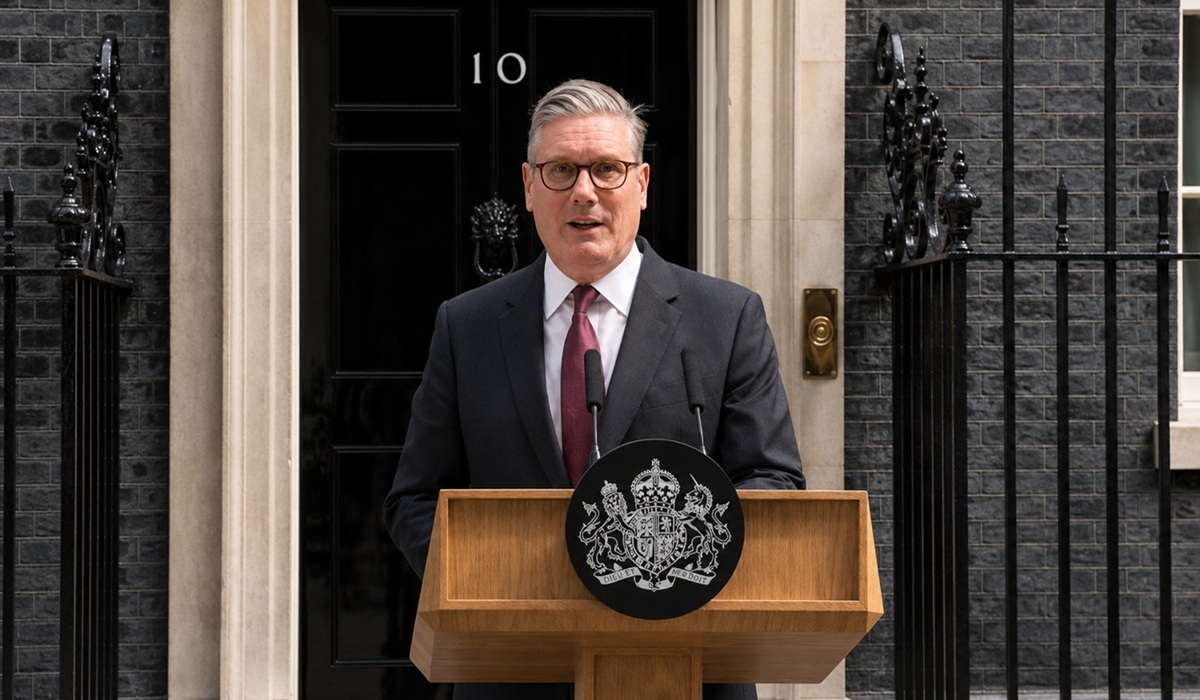
LONDON — British Prime Minister Keir Starmer has announced his resignation after less than two years in office, bringing an abrupt end to a premiership that was once expected to provide stability following years of political upheaval. The decision follows mounting pressure from within the governing Labour Party, declining public support, and growing concerns among lawmakers about the party’s electoral prospects.
Starmer said he had listened to colleagues and accepted that many within Labour no longer believed he was the right person to lead the party into the next general election. He will remain in office on a caretaker basis until a successor is selected. Labour is expected to begin its leadership process in the coming weeks, although no formal timetable has yet been established for when a new leader will officially take office.
The leading contender to replace him is widely believed to be Andy Burnham, the former Mayor of Greater Manchester, who has been signaling for some time that he would be interested in a larger national role. Several senior Labour figures have also been mentioned as possible candidates, but Burnham currently appears to have significant momentum among party members and MPs.
Starmer’s departure continues a remarkable period of instability in British politics. Since the Brexit referendum in 2016, the United Kingdom has cycled through a succession of prime ministers with unprecedented speed. David Cameron, Theresa May, Boris Johnson, Liz Truss, Rishi Sunak, and Keir Starmer have all occupied 10 Downing Street during the past decade. The constant turnover has made long-term planning difficult and has contributed to growing voter frustration with the political establishment.
When Labour won the 2024 general election, many voters hoped Starmer would provide a period of stability after years of Conservative turmoil. Instead, critics argue that his government struggled to distinguish itself from many of the political habits and approaches that voters had already grown tired of. Approval ratings steadily declined as concerns mounted over the economy, immigration, public services, housing, and the overall direction of the country.
Starmer also faced criticism over foreign policy. Opponents accused him of lacking decisive leadership and argued that Britain often appeared to be following rather than shaping international events. His handling of issues related to the Middle East generated criticism from multiple sides, while others argued that his government frequently appeared reluctant to take firm positions on some of the most contentious global challenges facing Western democracies.
For many observers, Starmer’s resignation is less about one individual and more about a broader pattern that has come to define British politics over the past decade. Regardless of which party has been in power, prime ministers have struggled to maintain public confidence for extended periods. Leadership contests, cabinet reshuffles, internal party disputes, and political scandals have become recurring features of Westminster politics.
King Charles III has accepted Starmer’s resignation, although the transition process will continue until Labour selects a new leader. Under the British parliamentary system, a general election is not automatically triggered when a prime minister resigns. Instead, the governing party chooses a replacement, who is then invited by the King to form a government if they can command the confidence of the House of Commons.
Whoever succeeds Starmer will inherit a country facing significant challenges. Economic pressures remain a concern for many households, public services continue to face demands that often exceed available resources, and voter trust in political institutions has been weakened after years of upheaval. The next prime minister will face immediate pressure to demonstrate not only competence, but also a sense of direction that many critics argue has been missing from British politics for years.
For supporters of change, Starmer’s departure represents an opportunity for Labour to reset and reconnect with voters. For critics, it is further evidence that Britain has yet to find a leader capable of restoring stability after a decade marked by political turbulence. Either way, another chapter has closed at Downing Street, and the search for Britain’s next prime minister is now underway.
About The Author