By: Donovan Maritn Sr, Editor in Chief
Few words in the English language carry the same weight as cancer. The diagnosis changes everything. Families begin researching treatment options, seeking second opinions, and searching for any sign of hope. In many cases, that journey eventually leads to an oncologist’s office and a discussion about chemotherapy, one of the most widely recognized yet least understood medical treatments in modern healthcare.
Many people mistakenly believe chemotherapy and radiation therapy are the same thing. They are not. Radiation is targeted. Physicians focus high-energy beams on a specific tumour or area of the body in an attempt to destroy diseased tissue while limiting damage to surrounding cells. Chemotherapy operates very differently. It is a systemic treatment that enters the bloodstream and travels throughout the body, attacking rapidly dividing cells wherever they may exist.
That distinction is important because the treatment’s greatest strength is also one of its greatest weaknesses. Cancer cells divide rapidly, which is why these drugs can be effective. Unfortunately, healthy cells in hair follicles, bone marrow, the digestive system, and other parts of the body also divide rapidly. As a result, healthy tissue is often caught in the crossfire. Hair loss, fatigue, nausea, weakness, immune suppression, weight loss, and a host of other side effects become part of the experience for many patients.
Ask almost anyone who has undergone multiple rounds of treatment and the descriptions are often remarkably similar. Many describe it as one of the most physically demanding experiences of their lives. Oncology nurses witness those struggles every day. They see patients arrive hopeful and determined, only to watch many battle exhaustion, sickness, uncertainty, and fear as the weeks progress. While some individuals respond exceptionally well, others find themselves facing difficult decisions about whether the benefits continue to outweigh the burdens.
The public conversation surrounding cancer care often focuses on survival rates, research breakthroughs, and inspiring stories of perseverance. Far less attention is paid to the emotional, financial, and ethical questions that accompany treatment. Those questions become particularly complicated when patients are diagnosed with advanced disease where the goal may not necessarily be a cure but rather slowing progression, managing symptoms, or extending life.
For many people facing that reality, the decision is not simple. Additional therapy may provide more time. It may mean another holiday with family, another birthday, another anniversary, or another opportunity to see children and grandchildren reach important milestones. Hope is a powerful force, and it is often hope that drives patients to pursue every available option despite the physical challenges involved.
What receives far less attention is the enormous amount of money flowing through the cancer treatment system. Depending on the medication, dosage, facility, and insurance arrangement, a single infusion can cost thousands of dollars. Some therapies cost tens of thousands of dollars per session. Patients may receive repeated rounds over weeks, months, and sometimes years. By the time physician services, infusion fees, specialty pharmacies, laboratory testing, imaging, hospital charges, and drug costs are combined, the total cost of care can easily reach hundreds of thousands of dollars.
Cancer treatment has become one of the largest and most expensive sectors of American healthcare. Pharmaceutical companies generate billions of dollars developing and selling cancer drugs. Hospitals invest heavily in oncology departments. Specialty clinics are built around treating cancer patients. Insurance companies process billions of dollars in claims. Every year, hundreds of billions of dollars move through the broader cancer-care economy. Cancer is a disease, but treating it has also become a massive industry.
This reality creates questions many people are uncomfortable discussing. The concern is not necessarily that physicians are acting improperly or that patients are receiving therapies they do not need. The concern is whether any system generating this much revenue can ever be completely separated from the financial incentives attached to that revenue. History has repeatedly shown that healthcare systems are not immune from economic pressures. From unnecessary testing scandals to fraudulent billing schemes and the prescribing practices that helped fuel the opioid crisis, there have been numerous examples where financial incentives influenced medical decision-making.
Cancer care occupies a unique position within that debate because patients are rarely making decisions from a position of strength. They are often frightened, vulnerable, and desperately searching for more time. When an oncologist recommends another round of treatment, most patients are not thinking about reimbursement structures or healthcare economics. They are thinking about seeing another Christmas, another anniversary, another birthday, or simply another ordinary day with the people they love.
Lost in many discussions about healthcare economics are the nurses who stand beside patients throughout the process. While physicians often become the public face of treatment, nurses are frequently the people spending the most time with patients and families. They answer questions that arise at two o’clock in the morning. They explain procedures. They provide reassurance when fear begins to overwhelm hope. They witness the victories, the setbacks, and everything in between. For many patients, it is the nurse rather than the physician whose face they remember most clearly after their journey is over.
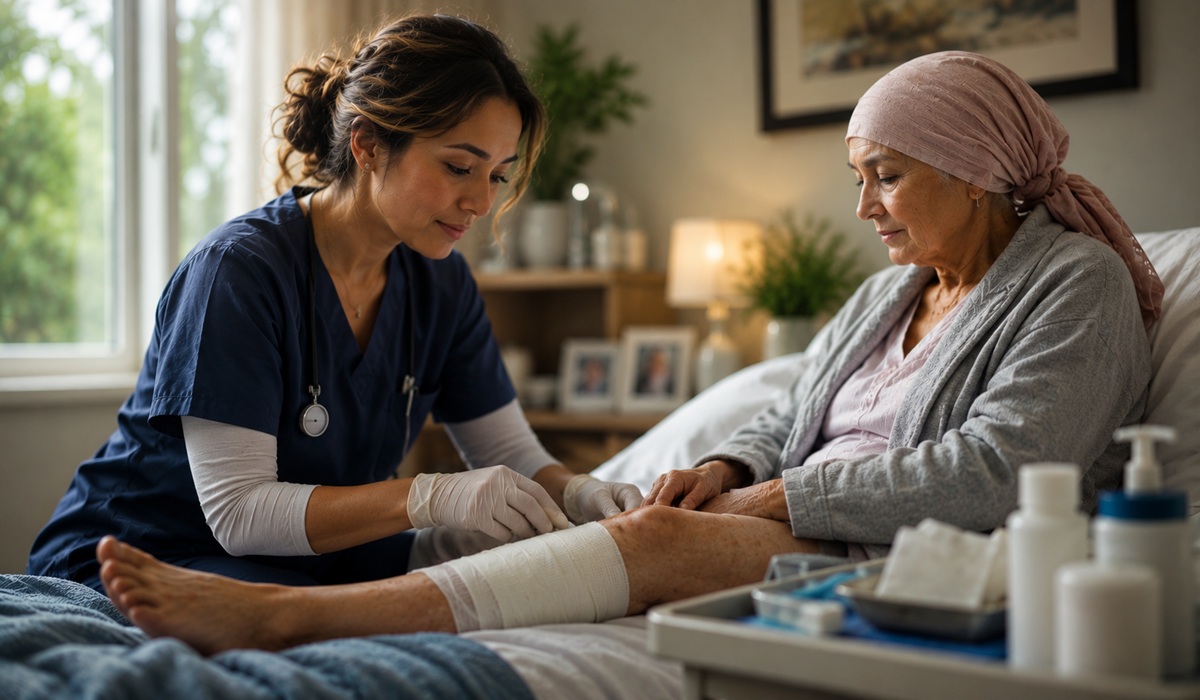
An even greater spotlight should be placed on wound-care and home-care nurses, professionals who rarely receive the public recognition they deserve. These individuals travel into patients’ homes and often see the realities that much of the healthcare system never witnesses firsthand. They care for radiation-related skin injuries, surgical wounds, treatment complications, mobility challenges, and the physical consequences of serious illness. They help patients maintain comfort, dignity, and independence during some of the most difficult chapters of their lives. Their work is rarely glamorous, often emotionally exhausting, and absolutely essential.
There are no major fundraising galas celebrating nurses. There are no billion-dollar awareness campaigns focused on home visits. Yet these professionals quietly move from home to home every day, helping families navigate circumstances many people could scarcely imagine. In a healthcare system increasingly focused on technology, innovation, and costs, they serve as a reminder that medicine is ultimately about people caring for other people.
Beyond the economics lies another question that continues to frustrate many members of the public. If society spends hundreds of billions of dollars every year on cancer research, treatment, fundraising campaigns, drug development, and healthcare infrastructure, why does the process still often feel so primitive? Why are patients still enduring severe side effects from treatments that affect healthy cells as well as diseased ones? Why are we not hearing more about technologies capable of identifying and destroying only cancer cells while leaving the rest of the body untouched?
For many people, the answer seems obvious. They imagine microscopic machines travelling through the bloodstream, locating malignant cells and eliminating them with precision. The concept of nanotechnology has captured public imagination for decades. To many outside the scientific community, it seems like exactly the kind of breakthrough that should already exist given the amount of money devoted to fighting cancer.
The reality is considerably more complicated. Cancer is not a single disease. It is hundreds of diseases with different genetic mutations, behaviours, and responses to treatment. A technology capable of identifying one type of cancer cell may be ineffective against another. Scientists must also solve challenges involving targeting accuracy, immune-system reactions, toxicity, manufacturing, regulation, scalability, and long-term safety. Laboratory successes do not automatically translate into treatments that can be safely administered to millions of patients.
That explanation, however, does not completely satisfy skeptics. Many point to decades of fundraising campaigns, billions of dollars in grants, and countless public appeals for donations. They wonder why the public conversation still seems dominated by surgery, radiation, and drug-based therapies. They ask why major breakthroughs often appear buried in scientific journals while public awareness remains focused on treatments that have existed for generations. Fairly or unfairly, those questions continue to fuel skepticism about the pace of progress.
Part of that skepticism may stem from declining trust in institutions generally. Pharmaceutical companies, healthcare providers, governments, and regulators have all faced scandals at various points in history. When people hear that enormous sums of money are being spent while watching loved ones endure difficult treatments, they naturally begin asking questions. Are breakthroughs happening but being poorly communicated? Are researchers doing a poor job explaining progress to the public? Or are expectations simply moving faster than science itself?
The answer may be a combination of all three. Significant advances are taking place. Immunotherapy has transformed outcomes for some patients. Precision medicine is allowing treatments to be tailored to specific genetic profiles. Researchers continue exploring nanotechnology, targeted drug delivery systems, gene editing, and other approaches that would have seemed like science fiction only a generation ago. Yet many of these developments remain expensive, highly specialized, and not universally effective. Scientific progress is real, but it often moves slower than public expectations.
Perhaps the most uncomfortable truth is that nobody wants to die. Faced with a life-threatening diagnosis, most people will pursue every available option if there is even a small possibility of gaining more time. Hope is one of the most powerful forces in medicine. It motivates patients, inspires families, drives researchers, guides physicians, fuels fundraising campaigns, and sustains entire industries. In oncology, hope may be the most valuable commodity of all.
One of the least discussed aspects of cancer care is palliative medicine. Contrary to popular belief, palliative care is not about surrendering. It focuses on symptom management, comfort, dignity, emotional support, and helping patients make informed decisions about how they want to spend the time they have remaining. Many experts believe these conversations should become a larger part of the overall treatment process, not because treatment should stop, but because patients deserve a complete understanding of every available option.
At the heart of the debate lies a difficult question with no easy answer. If a treatment costs hundreds of thousands of dollars, causes significant physical side effects, and extends life by only a matter of months, how should society measure its value? More importantly, who gets to decide? The patient? The family? The physician? The insurance company? Government healthcare programs? Every answer carries ethical, emotional, and financial consequences.
The future may eventually make many of these questions less relevant. Researchers continue developing targeted therapies, immunotherapies, genetic medicine, nanotechnology-based delivery systems, and next-generation approaches designed to attack disease with greater precision. The ultimate goal is simple: destroy the cancer without destroying the patient in the process. Medicine has made remarkable progress, but many experts believe today’s treatments may eventually be viewed as stepping stones toward therapies that are far more precise, effective, and humane.
Until that day arrives, cancer treatment will remain one of medicine’s most powerful and controversial tools. It has saved lives, extended lives, and given hope to countless families facing devastating diagnoses. At the same time, it exists within a healthcare system where enormous amounts of money change hands and where some of life’s most difficult decisions are made. The challenge for society is not deciding whether treatment should continue. The challenge is ensuring that hope, compassion, transparency, scientific innovation, quality of life, and medical ethics remain just as important as the therapies themselves. And when that conversation takes place, the contributions of nurses, particularly those working in wound care and home care, should never be overlooked. Long after the debates about costs, research funding, and emerging technologies have ended, they remain among the people doing the difficult work of helping patients face illness with dignity, comfort, and humanity.
About The Author