Prime Minister Shehbaz Sharif’s scheduled visit to China in May 2026 comes at a moment of profound regional flux and domestic economic urgency. Far from a routine diplomatic engagement, this visit reflects Pakistan’s attempt to recalibrate its strategic, economic, and geopolitical trajectory through its most reliable partner. In an era marked by shifting alliances, economic vulnerabilities, and intensifying global rivalries, the visit carries layered implications that extend well beyond bilateral symbolism.
At its core, the visit is anchored in three principal objectives: revitalizing economic cooperation, accelerating the second phase of the China-Pakistan Economic Corridor, and aligning positions on regional and global crises. Discussions will revolve around trade expansion, investment flows, industrial collaboration, and the establishment of Special Economic Zones. These goals are not merely economic—they are existential for Pakistan, which continues to grapple with fiscal instability, inflation, and a chronic balance-of-payments crisis.
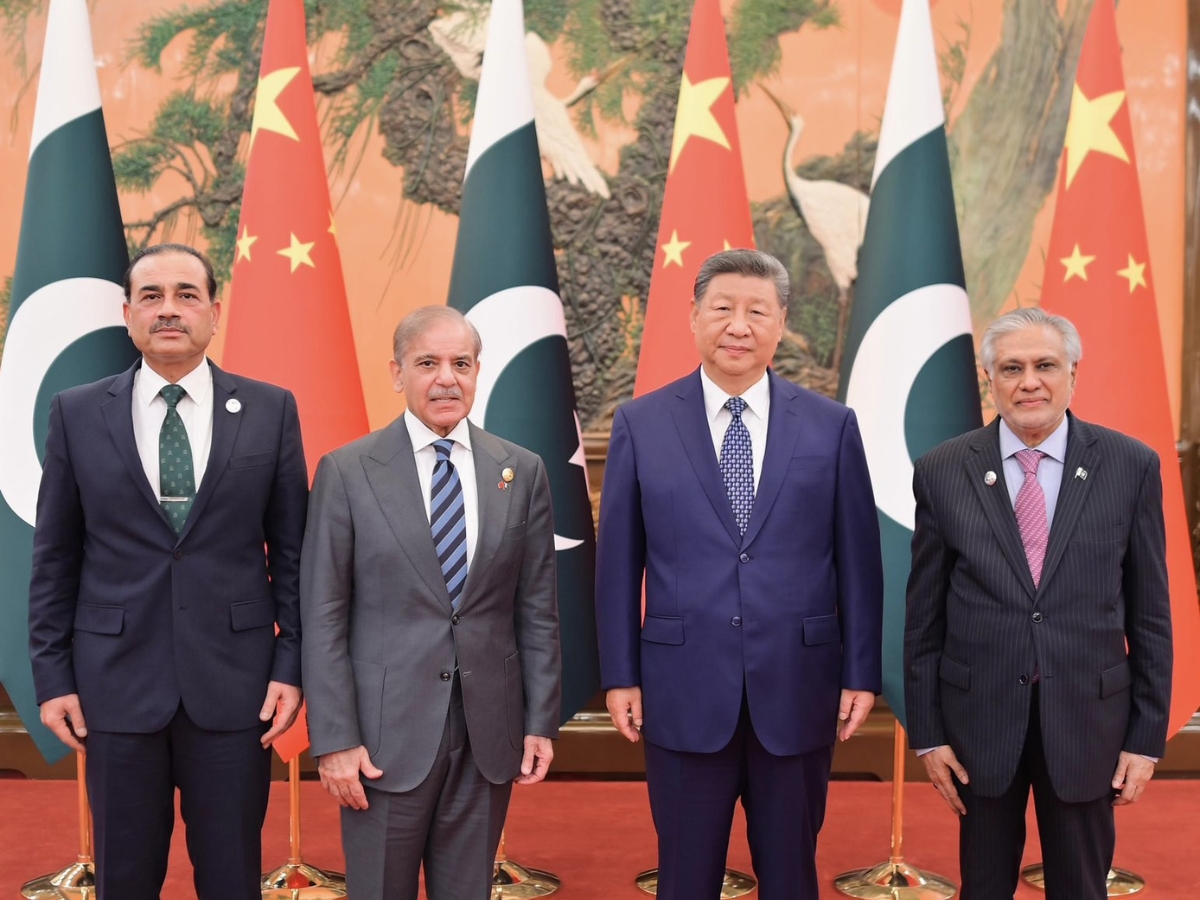
A key component of the agenda will be high-level meetings with China’s top leadership, most notably President Xi Jinping and Premier Li Qiang. Such engagements are expected to reaffirm the “All-Weather Strategic Cooperative Partnership” that has long defined Pakistan-China relations. These interactions are also likely to include institutional dialogues with Chinese economic planners, investors, and state-owned enterprises, reflecting a shift from political rhetoric to project-level execution.
The significance of this visit must be understood through a geo-economic lens. Pakistan seeks to reposition itself as a regional connectivity hub linking South Asia, Central Asia, and the Middle East. CPEC, once hailed as a “game changer,” has entered a critical phase where industrialization, agriculture modernization, and technology transfer are prioritized. The second phase of CPEC emphasizes value-added exports, agro-industrial cooperation, and digital infrastructure—areas where China’s expertise can help Pakistan transition from a consumption-driven to a production-oriented economy.
From a geostrategic perspective, the visit underscores Pakistan’s continued reliance on China amid strained relations with Western powers and a volatile neighborhood. The evolving US-Iran tensions, instability in Afghanistan, and India’s growing strategic alignment with the United States have collectively heightened Pakistan’s security concerns. During the visit, Islamabad is expected to brief Beijing on Middle Eastern developments and broader regional dynamics. This reflects Pakistan’s aspiration to act as a diplomatic bridge while consolidating its own strategic depth through Chinese support.
Defense cooperation, though not always publicly highlighted, remains a critical pillar of bilateral ties. While no formal announcements have yet been confirmed, it is highly plausible that discussions will include defense technology collaboration, joint production, and maritime security—especially in the context of Gwadar Port and the Arabian Sea. Given recent precedents of military cooperation and joint ventures, any new agreements—formal or informal—would further solidify Pakistan’s defense posture in a rapidly militarizing region.
Equally important is the geo-political signaling embedded in this visit. At a time when global power structures are transitioning toward multipolarity, Pakistan’s deepening engagement with China sends a clear message about its strategic orientation. For Beijing, Pakistan remains a crucial partner in its Belt and Road Initiative (BRI), providing access to the Arabian Sea and serving as a counterbalance to Indian influence in South Asia. For Islamabad, China offers not only economic lifelines but also diplomatic backing on key international issues.
The regional implications of the visit are equally profound. Enhanced Pakistan-China cooperation could reshape economic corridors extending into Afghanistan and Central Asia, potentially fostering regional integration. Moreover, if CPEC expansion into neighboring regions materializes, it could transform Pakistan into a transit economy, generating revenue, employment, and strategic leverage. However, such ambitions are contingent upon internal stability, governance reforms, and improved security conditions—areas where Pakistan still faces significant challenges.
Globally, the visit reflects the deepening of South-South cooperation in an increasingly polarized world. As Western economies grapple with internal challenges and shifting priorities, China’s outward economic engagement—particularly in developing countries—continues to expand. Pakistan’s alignment with this model highlights a broader trend where emerging economies seek alternatives to traditional Western-led financial systems.
Yet, the visit is not without risks or limitations. Pakistan must navigate concerns related to debt sustainability, transparency in agreements, and equitable distribution of CPEC benefits. Critics argue that without structural reforms and institutional capacity-building, even the most ambitious projects may fail to deliver long-term dividends. Additionally, security concerns surrounding Chinese personnel in Pakistan remain a sensitive issue that could influence the pace and scale of future cooperation.
Prime Minister Shehbaz Sharif’s visit to China is a strategically timed effort to revitalize a critical bilateral partnership and reposition Pakistan within an evolving global order. It carries the promise of economic revival, strategic reinforcement, and regional connectivity, but its success will depend on Pakistan’s ability to translate diplomatic goodwill into tangible outcomes. If managed effectively, this visit could mark a turning point—transforming Pakistan’s economic landscape and reinforcing its role as a pivotal player in regional geopolitics. If not, it risks becoming yet another high-profile engagement with limited long-term impact.
About The Author