Markets, Power, and Profit: How Trump Signals Are Moving Billions Behind the Scenes
- Naomi Dela Cruz
- Tiger's Eye Advisory Group - Trending News
- March 27, 2026
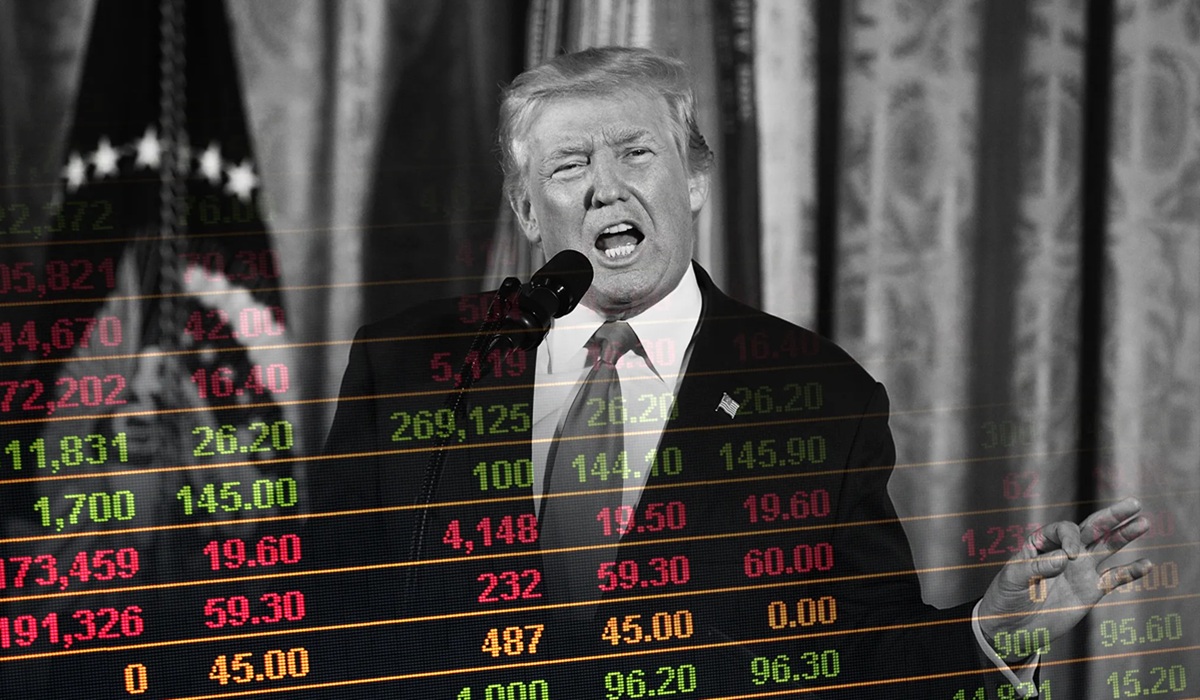
Markets thrive on confidence, but they can just as easily be moved by perception, timing, and carefully placed signals. There is a growing number of analysts, traders, and political observers have begun raising serious questions about whether the line between political messaging and market influence is being blurred in ways that benefit a select few with proximity to power.
At the center of that conversation is Donald Trump, whose public statements—particularly around geopolitical tensions—have repeatedly coincided with sharp market movements. Traders have pointed to instances where claims of imminent ceasefires, de-escalations, or backchannel negotiations were floated publicly, only for those narratives to shift or quietly disappear days later. Each time, markets reacted in predictable ways: equities surged, oil pulled back, defense stocks dipped, and volatility cooled—at least temporarily.
The concern is not simply that political leaders comment on global events. That has always been part of the equation. The deeper issue being raised is whether some of these statements are being deployed strategically, with full awareness of how markets will respond in the short term, and whether individuals within those inner circles are positioned to capitalize on that movement before the broader public has time to react.
Financial markets operate at a speed where minutes matter, and information asymmetry can translate into enormous profit. If a statement suggesting a ceasefire leads to a rapid rally across major indices, those who entered positions moments before the announcement stand to gain significantly. If that same narrative later unravels, the reversal can be just as profitable for those positioned on the other side. In that environment, even a single well-timed claim—accurate or not—can trigger a cascade of buying and selling worth billions.
What has unsettled some observers is the pattern. These are not isolated moments. There have been repeated cycles where geopolitical optimism is injected into the market, followed by either silence or contradiction. Each cycle creates volatility, and volatility, for those who understand it and are positioned correctly, is opportunity.
Market watchdogs and institutional investors have quietly questioned whether regulatory frameworks are equipped to handle a scenario where political messaging itself becomes a market-moving instrument. Traditional insider trading laws are built around corporate disclosures and non-public financial information. They are far less clear when it comes to political narratives that may or may not reflect reality.
The scale of potential gains adds another layer of concern. In high-volume markets, even a modest percentage swing can translate into tens of millions of dollars for well-positioned trades. In more aggressive scenarios, particularly with leverage or derivatives, those gains can climb into the hundreds of millions in a matter of hours. That kind of money does not move quietly, and it does not go unnoticed by those watching the flow of capital.
What makes this moment particularly sensitive is the broader geopolitical backdrop. Conflicts in the Middle East, shifting alliances, and ongoing economic uncertainty have created a market environment that is already fragile. In such conditions, statements about ceasefires or escalations carry enormous weight. Investors are not just reacting to headlines; they are reacting to the perceived direction of global stability.
There is also a psychological dimension at play. Markets are driven not only by fundamentals but by sentiment. A suggestion that peace is on the horizon can trigger relief buying, even if the underlying conditions have not materially changed. When that optimism is later questioned, the correction can be swift and unforgiving. For everyday investors, that translates into losses, often without a clear understanding of what changed. For those operating closer to the source of the information, it can look very different.
The broader question now being asked is whether the market is being subtly gamed through narrative rather than data. If political statements are being used as tools to influence short-term market direction, intentionally or otherwise, it raises serious concerns about fairness and transparency. Markets are supposed to reflect information that is equally accessible, not selectively advantageous.
Regulators have historically been slow to adapt to new forms of influence, particularly when they intersect with politics. Investigations, if they come, tend to follow patterns that are already well established. This situation, however, sits in a gray area. It is not a leaked earnings report or a corporate tip-off. It is something far more difficult to define: the power of a statement, delivered at the right moment, with the right implications.
For now, the markets continue to move, often sharply, in response to headlines that may or may not hold up over time. Traders will keep trading, institutions will keep hedging, and those with access—real or perceived—will continue to operate in that space between information and interpretation.
What is becoming harder to ignore is the growing sense that the playing field may not be as level as it appears, and that in a market driven by confidence, even the suggestion of manipulation can be enough to shake it.
About The Author