Beyond the Buzzwords: What EDI Really Means Inside Workplaces, Schools and Governments
- TDS News
- Tiger's Eye Advisory Group - Trending News
- May 27, 2026
By: Donovan Martin Sr, Editor in Chief
Somewhere along the way, conversations around equity, diversity and inclusion became trapped inside acronyms, political arguments and corporate slogans. EDI, and DEI as it is more commonly referred to in the United States, slowly began losing its human face. For some people, the term now immediately triggers frustration or skepticism. For others, it represents progress, opportunity and the belief that institutions should reflect the diversity of the people they serve. Yet behind the endless commentary and headlines, there remains a much simpler question that often gets overlooked: what does EDI actually look like in real life?
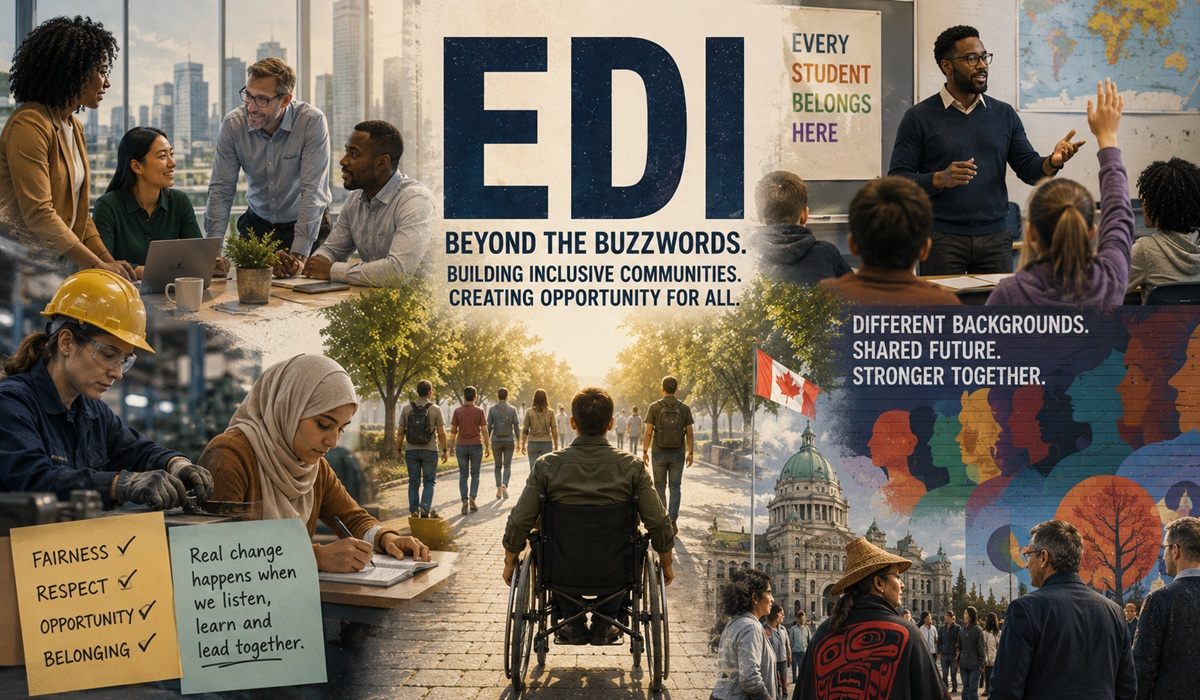
For most Canadians and Americans, these conversations are not experienced through university lectures or social media debates. They are experienced quietly, through everyday moments that shape whether somebody feels included, respected or capable of succeeding. It can be the wheelchair ramp that allows someone to enter a building independently for the first time. It can be a young Black student seeing a teacher who looks like them standing at the front of the classroom. It can be a workplace finally recognizing religious holidays outside the traditional Western calendar. These moments may seem small individually, but collectively they influence how people move through society and whether they believe there is truly room for them inside it.
At its best, EDI is not about lowering standards or forcing artificial outcomes. It is about identifying barriers that may prevent qualified people from accessing opportunities in the first place. That distinction matters because much of the public debate surrounding inclusion has become distorted by extremes. Critics often portray it as a system focused entirely on identity politics, while supporters sometimes struggle to explain it in practical terms beyond broad language about fairness and representation. The reality usually exists somewhere far more grounded and human than either side of the debate admits.
Inside workplaces, inclusion efforts can take many forms. Some companies focus on recruitment practices designed to reach a wider pool of candidates. Others examine promotion trends to determine whether certain groups are consistently overlooked despite qualifications and performance. Accessibility measures, mentorship programs and flexible workplace policies also fall under the broader umbrella of inclusion. In many cases, these efforts are not controversial internally because employees simply want environments where talent and contribution are recognized fairly.
“Some of the most meaningful conversations I have had in workplaces happened when people stopped trying to sound perfect and simply started listening to each other as human beings. I think we underestimate how powerful it is when someone feels genuinely seen instead of tolerated. That kind of environment does not weaken organizations, it changes people, teams, and communities for the better.” Denise Young, Tiger’s Eye Advisory Group
The conversation becomes more complicated when corporations treat inclusion as branding rather than culture. Over the past decade, many companies publicly embraced the language of diversity while privately failing to address issues affecting workers day to day. Employees noticed the contradiction. A corporation could release polished advertisements celebrating representation while staff members still experienced toxic workplace culture, wage disparities or limited advancement opportunities behind the scenes. That disconnect damaged public trust and allowed critics to argue that the movement had become more performative than meaningful.
Education has also become one of the most emotionally charged battlegrounds surrounding these conversations. Schools and universities increasingly face pressure to create environments where students from different cultural, racial and economic backgrounds feel represented and supported. In practice, that can mean revisiting curriculums, addressing bullying, improving accessibility services or expanding scholarship opportunities. For many students, especially those from historically marginalized communities, those efforts can have a profound impact on confidence and belonging.
At the same time, schools have become a focal point for broader cultural anxieties about identity, history and social change. Parents worry about political agendas entering classrooms. Teachers feel pressure from all directions. Social media amplifies isolated incidents until they appear representative of entire educational systems. Lost in the noise is the reality that most educators are not trying to divide students. Most are simply trying to prepare young people to function in increasingly diverse societies and workplaces.
In Canada, these conversations carry additional historical weight. Discussions surrounding reconciliation with Indigenous communities, immigration, multiculturalism and accessibility are deeply tied to the country’s evolving identity. Canada has long promoted itself as a multicultural society, but living up to that ideal requires more than slogans or symbolic gestures. It requires institutions willing to examine whether people from different backgrounds genuinely feel represented, respected and able to participate fully in public life.
These discussions are also not limited to major urban centres or corporate towers. Smaller communities, healthcare systems, trades industries and local organizations are all navigating changing demographics and expectations as well. Rural communities across North America are becoming more diverse, workplaces are adapting to younger generations with different perspectives, and employers increasingly recognize that inclusion is connected to long-term growth and stability. The conversation may sound different depending on geography, but the underlying questions remain remarkably similar.
One of the biggest misconceptions surrounding inclusion efforts is that they only benefit minorities. In reality, many policies designed around accessibility and fairness improve environments for everyone. Flexible work arrangements originally introduced to support caregivers can benefit employees across the board. Accessibility improvements help seniors, injured workers and parents with strollers alongside people living with disabilities. Mental health awareness initiatives create healthier workplaces regardless of race, religion or background. Inclusive systems tend to function better because they account for a broader range of human experiences.
“I know what it feels like to walk into rooms where you are trying to read whether you truly belong there. For me, inclusion has never been about slogans, optics, or checking a box, it has always been about the moment someone feels safe enough to stop second-guessing themselves and finally use their voice. I have seen how powerful that shift can be when a person feels heard, respected, and trusted for who they are and what they bring to the table. From an organizational perspective, that matters because people do their best work when they are not spending energy trying to fit into an environment that was not designed with them in mind.” Denise Young, Tiger’s Eye Advisory Group
At the same time, economic anxiety cannot be ignored. Many families across North America are struggling with rising housing costs, inflation and uncertainty about the future. In moments of instability, people often become more fearful about opportunity and fairness. Most people do not wake up in the morning wanting special treatment. They simply want to know they will be judged fairly, treated respectfully and given a genuine chance to succeed. That reality is important because inclusion cannot become a conversation where one group feels acknowledged while another feels invisible.
The future of these efforts will likely depend on whether institutions can move beyond symbolism and focus more deeply on authenticity. People respond to sincerity far more than corporate slogans or political messaging. They want to know inclusion efforts are grounded in fairness, competence and meaningful opportunity rather than public relations campaigns designed to generate headlines. The organizations that succeed moving forward will probably be the ones that treat inclusion not as a trend, but as part of building healthier communities and stronger institutions.
There is also a generational reality shaping this conversation. Younger generations are entering adulthood in societies that are more multicultural, interconnected and socially aware than at any point in modern history. They are more likely to work alongside people from different backgrounds, cultures and identities throughout their lives. For many of them, diversity itself is not controversial because it reflects the world they already know. What they increasingly demand, however, is honesty and accountability from institutions claiming to champion fairness.
Perhaps that is where the future conversation ultimately needs to go. Away from outrage. Away from political theatre. Away from reducing people into categories and slogans. At its core, EDI was always supposed to be about recognizing human potential more broadly and building systems where more people feel capable of participating fully in society.
North America is changing whether institutions are prepared for it or not. Communities are becoming more diverse. Workforces are evolving. Expectations around accessibility, fairness and representation are shifting with every generation. The challenge ahead is not whether society can stop those changes, but whether it can navigate them thoughtfully, honestly and with enough empathy to ensure inclusion remains something people genuinely experience in their daily lives.
EDI should not be remembered as a culture war slogan, but as an evolving attempt to make institutions more reflective of the people they serve. The next chapter of this conversation will likely focus not only on inclusion itself, but on how the public narrative surrounding it changed so dramatically in such a short period of time.
About The Author