The Political Tsunami: How a Coastal and Heartland Blue Wave Shattered the MAGA Movement
- Ingrid Jones
- Trending News
- November 4, 2026
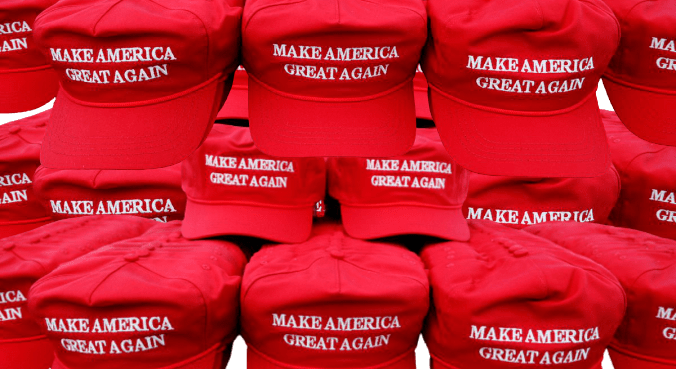
The political landscape of the United States experienced a seismic shift of historical proportions as election returns finalized across the country. What analysts initially forecast as a tightly contested midterm election transformed rapidly into an overwhelming blue wave that dismantled long-standing Republican strongholds from suburban districts to deep rural heartlands. Across state houses, gubernatorial mansions, and both chambers of the United States Congress, voters delivered a clear, decisive, and uncompromising repudiation of Donald Trump, his brand of populist politics, and the broader Make America Great Again movement. The sheer magnitude of the Democratic victories surpassed even the most optimistic partisan projections, signaling a profound recalibration of the nation’s political trajectory and exposing the structural vulnerabilities of a movement that had dominated conservative discourse for over a decade.
For years, conventional political wisdom dictated that rural America served as an impenetrable fortress for the MAGA ideology. Small towns, agrarian communities, and exurban counties consistently yielded staggering margins for Trump-aligned candidates, offsetting Democratic gains in major metropolitan centers and affluent inner suburbs. However, this election completely upended that electoral calculus. Rural voters turned out in record numbers, but not to reaffirm their allegiance to the MAGA doctrine. Instead, a striking shift occurred in non-metropolitan counties where economic frustration, deteriorating public infrastructure, and exhaustion with chaotic rhetoric culminated in a decisive pivot toward Democratic contenders. By reducing Republican margins in deep-red rural zones and outright winning agricultural counties that had not voted Democratic in decades, the blue wave swept away the geographical insulation that previously protected conservative majorities.
The implications for the Trump brand and the future of the MAGA movement are profound and immediate. For nearly ten years, Donald Trump maintained an ironclad grip on the Republican Party, enforcing ideological compliance and punishing dissenters through primary challenges. His personal endorsement was treated as an absolute requirement for political survival within the party. This election, however, rendered a damning verdict on that strategy. Candidates who ran primarily on loyalty to Trump, cultural warfare, and election denialism suffered crushing defeats across competitive districts and deep-red terrain alike. The failure of MAGA-aligned candidates to win over moderate, independent, and even traditional conservative voters suggests that the personal brand of Trumpism has transitioned from a potent electoral asset into a significant political liability.
Beyond individual candidacies, the broader ideological foundation of MAGA faces existential scrutiny. The electorate’s broad-based rejection highlights a growing discontent with policy platforms centered on institutional disruption, international isolationism, and aggressive partisan conflict. Voters prioritized material concerns such as economic stability, healthcare access, reproductive freedom, and institutional predictability. As the Democratic coalition expanded to include suburban parents, young voters, working-class communities, and rural defectors, the core tenets of the MAGA philosophy proved incapable of building a winning national consensus. The election results demonstrate that voters across diverse demographics sought a return to governance focused on tangible outcomes rather than perpetual grievances.
In the aftermath of this electoral annihilation, the Republican Party finds itself at a critical crossroads. The collapse of the MAGA consensus leaves a power vacuum within conservative politics, forcing party leaders to reckon with years of total alignment under a single individual’s vision. The loss of key legislative seats and executive offices deprives the party of its structural dominance and signals that reliance on a base-only mobilization strategy is no longer viable in modern American elections. For Democrats, the blue wave represents both a historic mandate and an immense responsibility to address the structural issues that drove voters away from the opposition, marking the beginning of a transformative era in American governance.
About The Author