Where will the US-Israel war against Iran end
- Naveed Aman Khan
- Tiger's Eye Advisory Group - Trending News
- Middle East
- March 3, 2026
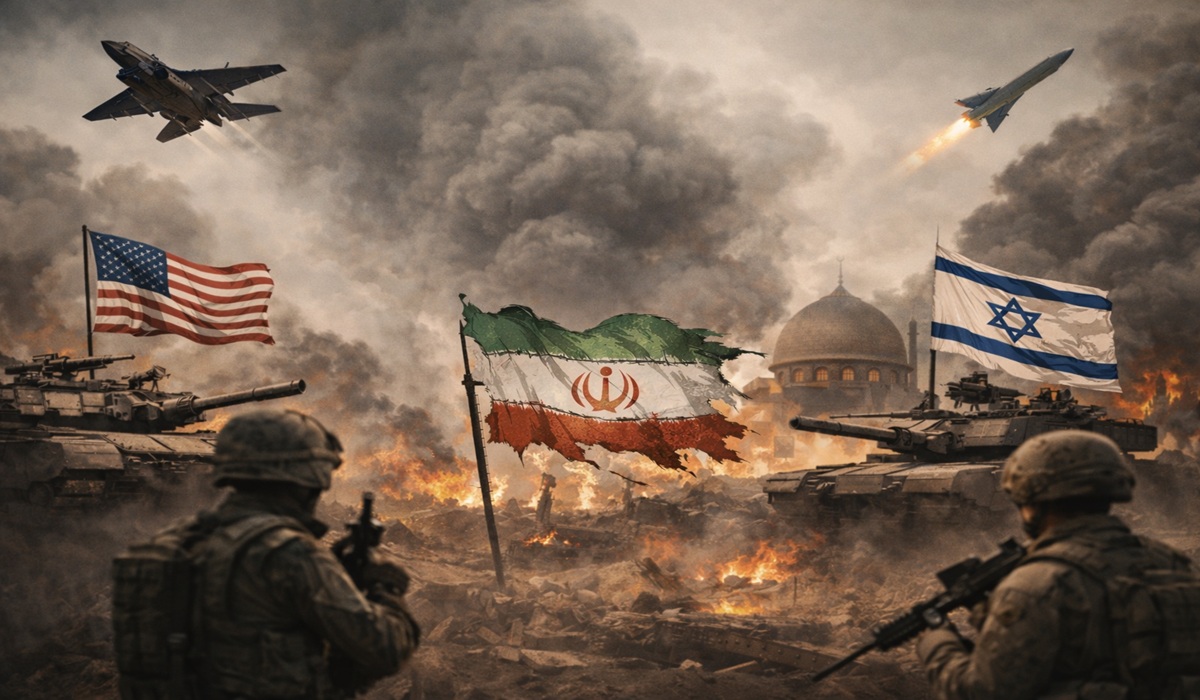
The Martyrdom of Iranian Supreme leader Ayatollah Sayyed Ali Khamenei is not simply be a military strike; it represents an historic rupture in the political architecture of the Middle East. The killing of a sitting Supreme Leader of Iran during a period as symbolically charged as Ramadan would reverberate far beyond Tehran. Yet history cautions against simplistic conclusions. Political assassinations, particularly of ideological or religious figures, rarely deliver the strategic collapse their planners anticipate. More often, they ignite forces far more difficult to control. Iran is not structured as a fragile personality cult.
While Ali Khamenei has been the central authority for decades, the Islamic Republic rests on layered institutions: the Supreme Leader’s office, the Assembly of Experts, the Guardian Council, and most critically the Islamic Revolutionary Guard Corps (IRGC). Succession mechanisms exist. Power would not dissolve; it would reorganize. In fact, external attack has historically strengthened hardline cohesion inside Iran. The eight-year Iran-Iraq War forged a political culture that equates endurance with legitimacy. A foreign strike on the highest authority would likely consolidate that mindset rather than fracture it.
For leaders such as Donald Trump in Washington or Benjamin Netanyahu in Jerusalem, the strategic objective behind such escalation would presumably be deterrence—or, more ambitiously, regime change. Yet regime change in a nation of roughly 90 million people with deep nationalist consciousness is not achievable through airpower alone. Iraq and Afghanistan demonstrated the enormous cost of military occupation. Iran’s geography—mountainous, vast, and heavily militarized—renders invasion exponentially more difficult. Without boots on the ground, “decapitation” remains symbolic rather than transformative.
The question of restoring Reza Pahlavi, the son of the last Shah, resurfaces periodically in diaspora discourse. While monarchist sentiment exists among segments of the Iranian diaspora, internal Iranian politics are far more complex. Younger generations demand reform, economic opportunity, and civil freedoms—but that does not automatically translate into support for reinstating a monarchy, especially through foreign intervention. A ruler perceived as externally imposed would face immediate legitimacy challenges. Historical memory of the 1953 coup and Western involvement in Iranian politics remains deeply embedded in national consciousness.
Could Iran retaliate directly inside the United States, Europe, or Israel? Iran’s military doctrine emphasizes asymmetric warfare: regional proxies, missile deterrence, cyber operations, and maritime leverage. Direct large-scale attacks on Western soil would invite overwhelming retaliation and global isolation. Tehran has traditionally preferred calibrated escalation—actions designed to signal strength without triggering total war. The more probable theaters of confrontation would be Iraq, Syria, Lebanon, the Red Sea, and maritime corridors such as the Strait of Hormuz. Disruption there would send immediate shockwaves through global energy markets.
The duration of such a war is unlikely to be short. Full-scale conventional war between the United States plus Israel against Iran would be catastrophic and therefore strategically avoided by both sides. Instead, the conflict would likely evolve into a prolonged hybrid confrontation: missile exchanges, proxy skirmishes, cyberattacks, economic sanctions, and psychological warfare. These types of conflicts can stretch for years without formal declarations. The danger lies not in planned escalation but in miscalculation—an attack that crosses a red line and triggers a rapid spiral.
The role of global powers adds further complexity. Russia and China would almost certainly provide diplomatic backing to Iran in international forums. Moscow may expand military-technical cooperation; Beijing may deepen economic coordination. Yet neither power is likely to enter direct combat against the United States on Iran’s behalf. Both benefit strategically from American distraction but will avoid open superpower confrontation. North Korea might offer rhetorical support or limited technical collaboration, particularly in missile technologies, but full military engagement remains improbable.
Pakistan faces a uniquely delicate balancing act. It shares a border with Iran, maintains strategic ties with China, depends on relations with Gulf states, and retains a complex security relationship with Washington. Public opinion in Pakistan may sympathize with Iran in the face of external attack, but official policy would likely prioritize neutrality, border stability, and prevention of sectarian spillover. Pakistan can’t afford regional conflagration that destabilizes its own fragile economic and security environment.
Morale inside Iran is another critical variable. Contrary to assumptions of imminent collapse, foreign aggression often generates national solidarity. The narrative of martyrdom, during Ramadan, would carry immense emotional resonance. The IRGC and regular armed forces are structured for resilience under sanctions and isolation. Economic hardship may persist, but wartime psychology frequently suppresses internal dissent. Morale would likely rise under a banner of resistance. The longer the conflict endures, the more economic strain could test public endurance.
Who, then, would be defeated? Absolute victory for any party appears unlikely. The US risks deeper entanglement in another Middle Eastern confrontation at a time when strategic competition with China dominates long-term planning. Domestic political divisions could intensify if casualties mount or oil prices spike. Israel, though militarily formidable, would face sustained missile pressure from multiple fronts, including potential activation of allied groups in Lebanon and Gaza. Civil defense systems mitigate damage but can’t eliminate psychological and economic costs.
Iran would suffer infrastructure damage, intensified sanctions, and economic contraction. Yet survival—rather than triumph—may be its strategic objective. If the Islamic Republic endures despite leadership loss and sustained bombardment, it would frame survival itself as victory. In asymmetric conflicts, perception often outweighs territorial gain.
The broader Middle East would pay the highest price. Energy routes through the Gulf could be disrupted, sending global markets into volatility. Proxy arenas from Yemen to Lebanon could ignite simultaneously. Sectarian tensions might deepen across fragile states. European nations would confront refugee flows and security anxieties. The global economy, already strained by geopolitical fragmentation, would absorb another destabilizing shock. The belief that killing a leader ensures political transformation is rooted more in symbolism than strategy. Institutions adapt. Command structures reconstitute. Narratives of resistance intensify. A decapitation strike may remove a figurehead, but it can also create a martyr—one whose symbolic power exceeds his lifetime authority.
The fire unleashed by such escalation would not be easily contained. It would burn through alliances, markets, and societies, reshaping calculations in Washington, Jerusalem, Tehran, Moscow, and Beijing alike. In wars defined by ideology and identity, defeat is rarely absolute—but damage is always real.
No side can guarantee victory, but all sides can guarantee cost. The question is not who appears courageous in the opening chapter. The question is whether any actor involved truly controls the ending.
About The Author