The Weight of Alfred Nobel’s Legacy and the Reckoning of the Peace Prize
- TDS News
- Breaking News
- October 9, 2026
By: Donovan Martin, Sr. Editor-in-Chief
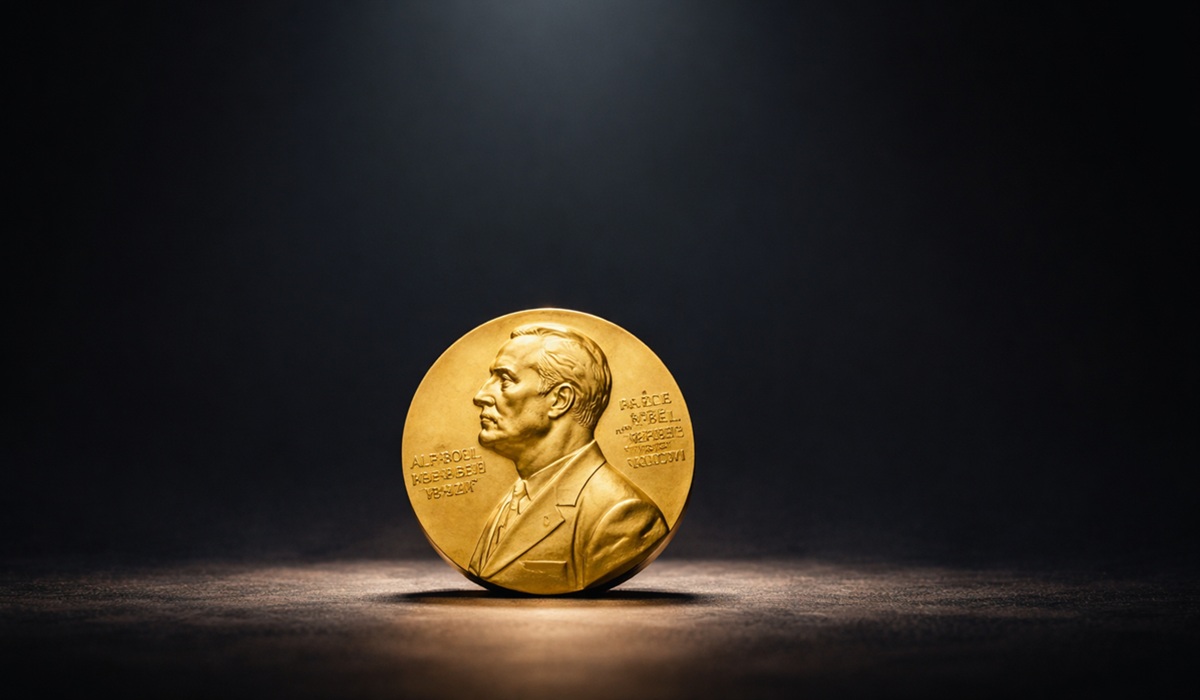
Every autumn, the eyes of the global community turn toward Oslo, Norway, waiting for the announcement of the world’s most prestigious political accolade. The Nobel Peace Prize was conceived at the turn of the twentieth century by Alfred Nobel, a Swedish industrialist and inventor who amassed an immense fortune through the invention of dynamite and other powerful explosives. Legend holds that Nobel was driven to establish the prize out of a profound sense of remorse after reading an prematurely published French obituary that branded him the merchant of death. Determined to leave behind a legacy that elevated humanity rather than destroying it, his last will and testament allocated the bulk of his vast estate to reward those who conferred the greatest benefit on mankind, specifically honoring those who worked tirelessly toward fraternity between nations, the abolition or reduction of standing armies, and the holding of peace congresses.
In the decades following its inception, the Norwegian Nobel Committee often fulfilled that lofty ideal, bestowing honor upon courageous activists, humanitarians, and diplomats who risked their lives to alleviate human suffering and build international consensus. Yet over time, critics and observers began to voice growing cynicism, arguing that the committee was losing its way and straying far from Nobel’s original vision. The award increasingly appeared to operate as a geopolitical instrument, prone to phantom awarding driven by diplomatic expediency, political wishful thinking, or the desire to curry favor with world superpowers. Rather than recognizing tangible, enduring peace work, the prize occasionally transformed into a weapon of international narrative management, casting a long shadow over its moral authority.
Few decisions illustrated this drift more starkly than the award bestowed upon Barack Obama in nine hundred and nine, less than a year after he assumed the United States presidency. The committee explicitly cited his extraordinary efforts to strengthen international diplomacy and his hopeful rhetoric for a world without nuclear weapons. To many observers, awarding the prize for mere potential rather than proven achievement felt like a premature political endorsement. History soon tested that decision, as the Obama administration oversaw an expansion of drone warfare, prolonged military engagements across the Middle East, and covert geopolitical interventions such as Operation Timber Sycamore, a massive clandestine program aimed at arming and training anti-government rebels in Syria. To many critics, the contrast between the ideal of a peace maker and the reality of an executive overseeing complex global warfare exposed a glaring disconnect in how the prize was allocated.
The politicization of the award reached another bizarre chapter through the relentless public campaign mounted by Donald Trump, who openly caved for the honor throughout his tenure and beyond. Trump insisted that his diplomatic overtures, particularly the Abraham Accords and his high-profile summits with North Korea, made him uniquely deserving of the golden medal. Had the committee succumbed to political pressure and granted him the official award, many scholars argued it would have permanently shattered the institution’s credibility. Yet, in a peculiar twist that troubled ethics observers, Trump eventually received a Nobel Peace Prize medal anyway, not from the official committee in Oslo, but as a gift passed to him by a past laureate. Maria Ressa, who co-won the prize in twenty twenty-one for her defense of free expression, handed over her physical medal in a gesture that critics labeled a disheartening moment of political groveling, designed to appease power rather than speak truth to it.
It is against this long backdrop of controversy, politicization, and skepticism that the latest announcement arrives as a profound and necessary course correction. The Nobel Committee awarded the prize to Navi Pillay, the celebrated South African jurist and former United Nations High Commissioner for Human Rights. Pillay’s lifelong commitment to international law, human rights defense, and accountability stands in stark opposition to the fleeting political rhetoric that so often dominates global headlines. Her selection signals a decisive shift away from charismatic political figures toward the steadfast institutional architecture that underpins global stability.
The Director of the Peace Research Institute Oslo, Haakon Gjerløw, captured the essence of this pivotal decision in a formal statement following the announcement. Today’s Nobel Peace Prize award to Navi Pillay is a solid and timely choice by the Nobel Committee, Gjerløw noted. It highlights how a stable and legal world order is necessary to promote peace, and puts accountability at the centre of peace processes. At a time when these legal frameworks are under increasing pressure, this prize sends a clear message that peace depends not only on political leadership, but on strong, credible international institutions and the courageous people who dedicate their lives to defending them.
Gjerløw’s reflection highlights why this particular award carries such immense weight at this moment in history. For years, the global community has witnessed a steady erosion of international norms, where powerful nation-states ignore treaties, bypass legal institutions, and substitute military force or economic coercion for rule-based diplomacy. By honoring a figure who has spent her career establishing international tribunals, investigating war crimes, and fighting for the rights of marginalized populations, the Nobel Committee has reclaimed its founding ethos. Peace is not merely the temporary absence of open conflict negotiated in backrooms by politicians seeking photo opportunities; true and lasting peace requires a structural foundation rooted in justice, legal accountability, and human dignity.
Reflecting on the evolution of Alfred Nobel’s legacy offers a sobering reminder of how fragile moral authority can be when exposed to global politics. The Nobel Peace Prize has survived eras of global conflict, ideological rivalries, and internal missteps, but its endurance relies entirely on its willingness to honor substance over spectacle. In recognizing Navi Pillay, the committee has taken a crucial step toward restoring faith in an institution that had dangerously strayed from its core mandate. By elevating the defenders of law and international accountability over the transient promises of political leaders, the prize reaffirms that true peace is built through the patient, courageous defense of justice.
About The Author