The Purity Trap: Substack’s War on AI-Assisted Content Is Performative Theatre
- Nick Kossovan
- Technology
- July 24, 2026
I didn’t have “Substack plays moral police over AI” on my bingo card. Yet here we are, with the self-proclaimed Internet’s sanitized literary playpen rolling out purity testing.
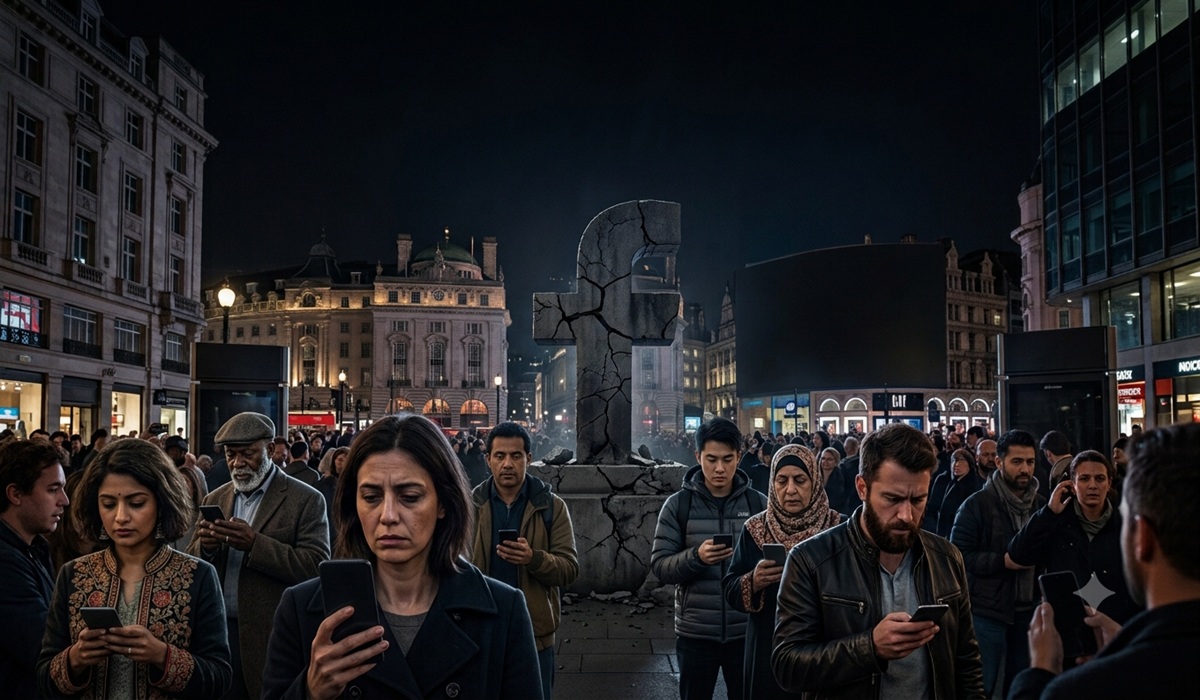
In his Substack post Against Claudefishing, Substack CEO Chris Best announced a partnership with the AI-detection tool Pangram, enabling Substack users to audit articles on the platform for AI-generated prose. Chris claims he’s safeguarding “writer authenticity” and keeping Substack “the most human place on the internet” (supposedly) by stopping “claudefishing,” a term he coined to describe passing off AI-generated text as human-written. However, strip away the corporate virtue-signalling, and Chris isn’t defending human integrity; he’s installing a surveillance system. Rather than fostering quality writing on Substack, Chris is handing users an embedded “gotcha!” mechanism. The Pangram feature caters directly to the human urge to display moral superiority, inevitably leading people to weaponize (read: conduct a witch-hunt) their one-click access for public shaming, while ignoring whether the writing offers any real value.
Chris surely knows we live in a world built on 21st-century manufacturing. Why should the written word, or any creative endeavour, be given a free pass from technological evolution? Almost every physical item we touch daily—along with most of the food we eat—was produced by a machine. The screen you’re staring at wasn’t hand-blown from river sand; the chair beneath you wasn’t painstakingly handcrafted from a fallen maple tree. Suddenly, self-appointed literary elites are outraged when they suspect a large language model helped organize an essay, clarify an idea, or fix a clunky paragraph. Judging content by its manufacturing process rather than the value it delivers is absurd. Are the people turning up their noses at AI-assisted writing applying the same standard to their non-hand-stitched wardrobes and non-hand-forged utensils? If not, their outrage over AI content is nothing short of hypocritical.
This obsession with origin over utility is barking up the wrong tree. It treats writing as a medieval guild’s secret ritual rather than a direct medium for cognitive exchange. If an essay illuminates a complex reality, sharpens a reader’s perspective, or solves a problem, its worth remains the same whether it was hammered out on a 1953 Smith-Corona typewriter or generated by a large language model. If not today, then soon, the ability to use AI as an intellectual partner to craft deep, original prose will be part of every writer’s skill set, expanding their capacity to deliver meaningful insight.
Insisting that artificial assistance inherently degrades written work fundamentally misunderstands where technology is headed. Algorithmic intelligence processes vast oceans of raw data, uncovers hidden structural correlations, and synthesizes intricate concepts at a scale no single human brain could match in a lifetime. If not today, then in the very near future, AI-driven writing will prove just as valuable, if not more so, than human-created content. When prompted by a writer with sharp critical thinking and a clear editorial vision, AI yields analysis that is far richer, more comprehensive, and vastly more precise than what the average writer can generate unaided. “Writing value” exists only in the finished text; the labour spent hammering on a keyboard is merely a performative ritual, romanticized to soothe our obsession with effort.
In a keynote at Valence’s 2026 AI & The Workforce Summit, Wharton Professor Ethan Mollick noted that in late 2024, when expert judges blindly evaluated AI versus human output on complex professional tasks, the top AI model won or tied 72% of the time. Given how rapidly AI has advanced since 2024, this two-year-old data is brutally conclusive: judged on objective merit, without fixating on “the process” or leaning on “romantic nostalgia,” algorithmic output consistently matches or surpasses unassisted human effort. Does Chris’s expect Substack users to judge a rambling, poorly formatted 2,000-word article as having superior spiritual value simply because a human spent four hours typing to produce it? Such thinking is a sentimental delusion.
By integrating Pangram into Substack, Chris is encouraging users to act as whistleblowers, which solves nothing and creates friction for honest creators. Instead of embedding AI-detection policing tools and demanding arbitrary disclosures, Substack should allow its users to cultivate their inner guidance. This is how real evolution happens: by building personal judgment, intellectual self-reliance, and critical evaluation, rather than relying on corporate algorithms to decide whether an article has any human sweat equity. By playing moral chaperone, Chris is treating Substack readers like gullible children who lack the basic intelligence to evaluate prose on its own merits.
Worse still, these automated detection tools are notoriously broken instruments that routinely produce false positives. AI detectors, such as Pangram, don’t read for meaning, nuance, tone, or emotional resonance; they measure statistical variance, vocabulary distribution, and structural predictability. Writers with crisp, analytical prose styles, or those who naturally favour complex sentence structures, formal phrasing, and frequent em dashes, repeatedly find their original essays flagged as having been AI-generated. Accusing genuine writers of deceit because their natural voice triggers a flawed, black-box probability calculation doesn’t protect authenticity; it creates an environment of paranoid self-censorship and grey conformity.
Strip away the moralizing posture and call it what it is: elite-status anxiety about the democratization of production. For generations, producing elegant, grammatically flawless, and well-structured commentary was a privilege reserved for those with elite educations and abundant leisure time. Generative tools have shattered that barrier, enabling anyone with a compelling concept to articulate it with maximum clarity and power. Attempting to slap a digital scarlet letter on machine-assisted writing is nothing more than a desperate effort to preserve traditional gatekeeping mechanisms that the market has already rendered obsolete.
The online creator economy doesn’t require corporate nannyism. Readers aren’t stupid, and they don’t read essays out of a moral duty to reward manual labour. They read a piece of writing because it offers value, whether through undeniable insight, a solution to a real-world dilemma, or compelling intellectual entertainment. If an article or essay is derivative, uninspired, or boring, readers bounce within three seconds, whether it was typed by hand or generated by Claude. Conversely, if a piece is brilliant, insightful, and sharply argued, no reader in their right mind cares what tools were on the writer’s desktop.
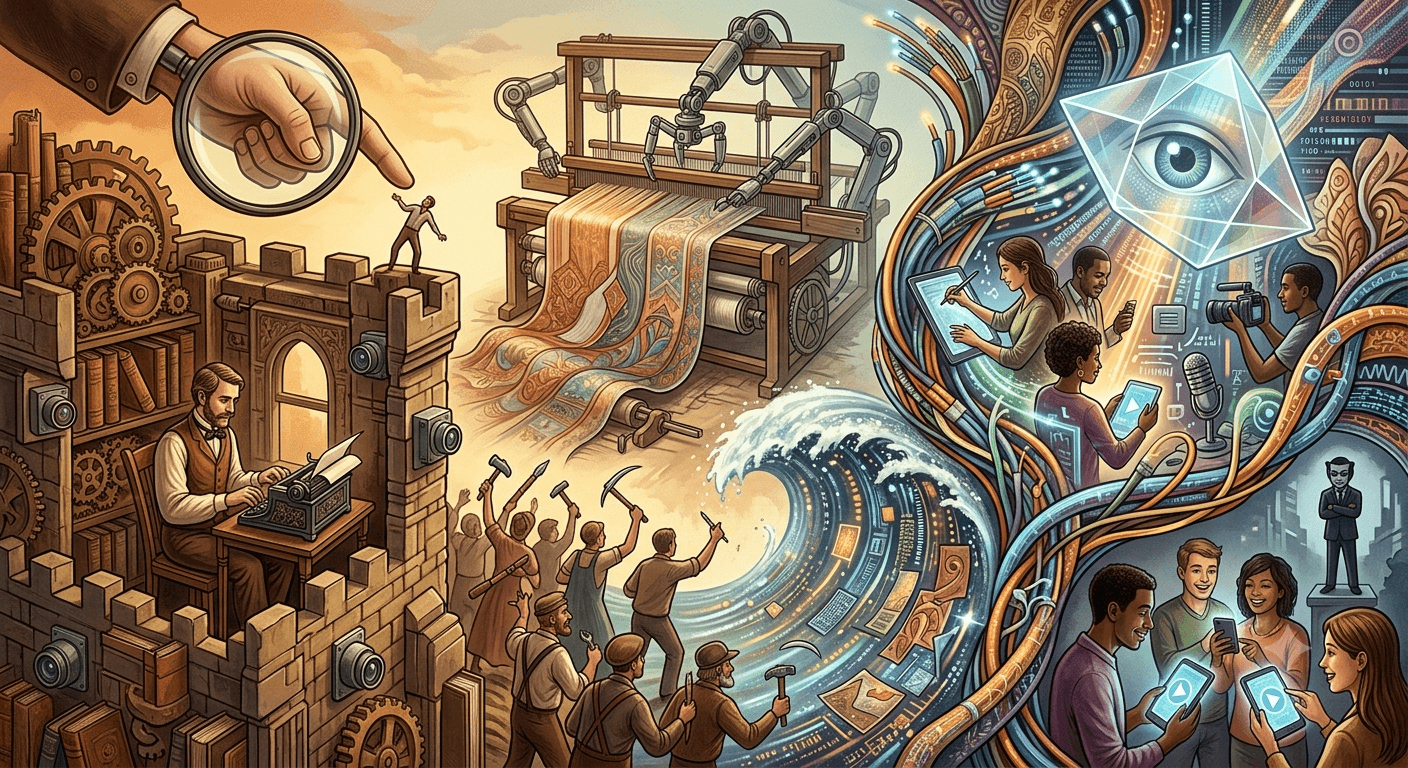
Chris Best’s moral crusade will age as gracefully as 19th-century trade unions protesting automated textile looms or music executives decrying electronic synthesizers and digital samplers. Technological progress does not pause for “how we wish things were” sentimentality. Tools evolve, creative workflows transform, and the definition of craftsmanship continually shifts. Creators who insist on judging work by its manufacturing method rather than by its delivered value are bound to be left behind, shouting in anger against an unstoppable tide of technological adoption.
As a society, we’ve reached a point of no return: artificial intelligence is woven into the fabric of modern creation, making complex information more accessible, better structured, and more valuable than ever. Content creators don’t need arbitrary purity tests, and readers don’t need algorithmic babysitters. If someone’s words, picture, video, or podcast give you sought-after clarity, shift your perspective, solve a problem, or simply reassure you that you aren’t the only one who feels this way, why judge how the content was created?
About The Author