The New Era of EV Engineering: Inside BYD’s Breakthrough Battery Technology
- TDS News
- Breaking News
- Technology
- September 4, 2026
By: Donovan Martin Sr, Editor in Chief
Visiting the corporate headquarters and sprawling advanced research facilities of BYD in Shenzhen delivers an immediate and staggering realization that the engineering standards governing modern electric vehicle manufacturing have entered an entirely new epoch. Standing inside these high-tech complexes and observing firsthand the intricate precision that goes into contemporary energy architecture demonstrates an industrial capability that is truly second to none.
For over a decade the global automotive market has grown accustomed to incremental software updates, minor cosmetic facelifts, and marginal efficiency gains that rarely altered the fundamental ownership experience. However, the foundational chemistry of mobility is shifting away from traditional high-nickel formulations toward advanced sodium-based and highly optimized structural configurations, fundamentally redefining how electrical energy is stored, managed, and deployed across diverse environments.
This structural transition directly addresses the core vulnerabilities that have historically plagued electrified transport, particularly in demanding geographical environments where extreme weather conditions ruthlessly expose the shortcomings of legacy engineering. In a cold climate like Canada, where a multitude of motorists have long harbored deep reservations about purchasing electric vehicles due to documented complaints of severe winter range depletion and catastrophic cold-weather starting failures, these engineering innovations represent a definitive turning point.
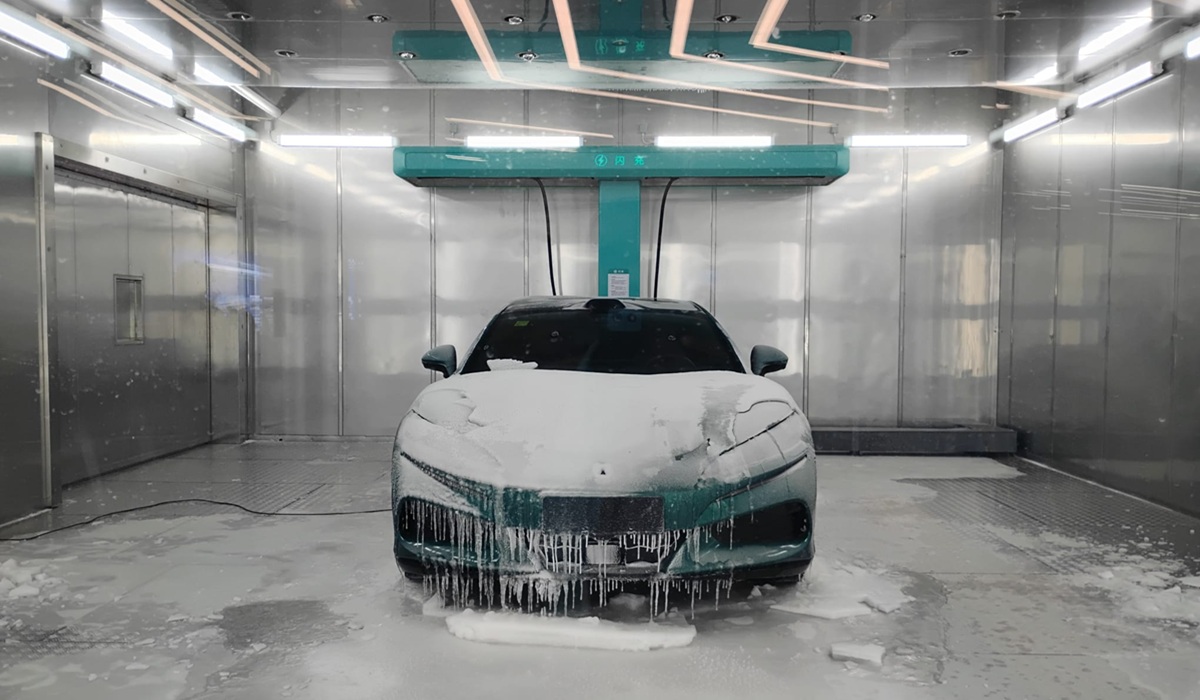
Witnessing the rigorous stress tests applied to these next-generation energy packs reveals an unprecedented level of thermal and operational resilience that completely obliterates past limitations. During a specialized live demonstration conducted within the corporate facility, an electric vehicle that had been entirely submerged within a solid block of ice for twenty-four hours with its internal energy reserve completely depleted was brought out for evaluation.
Connected to a remarkably lightweight charger capable of delivering massive high-voltage throughput, the vehicle defied conventional expectations by accepting a nearly full charge in a mere twelve minutes, a feat that remains entirely unheard of in the broader automotive landscape. Standard fast-charging infrastructure typically demands forty-five minutes to an hour to accomplish a partial replenishment under ideal room-temperature conditions, yet this severely chilled system absorbed power at a blistering velocity while encased in frozen moisture.
Contemplating how rapidly this architecture would replenish its capacity under normal ambient temperatures highlights an astonishing leap in electrical throughput and thermal management efficiency. The implications of this capability for cold-weather regions are profound, neutralizing the deep-seated anxiety that drivers experience when parking uncharged vehicles in sub-zero temperatures overnight or facing winter storms without reliable access to indoor garaging.
Beyond thermal resilience, the structural and safety evaluations conducted on the new manufacturing lines highlight a monumental leap in mechanical stability and occupant protection. Traditional battery packs utilizing conventional chemistries have always carried an inherent structural vulnerability where high-impact mechanical damage or direct perforation can trigger catastrophic internal short circuits, leading to violent thermal runaway and volatile explosions.

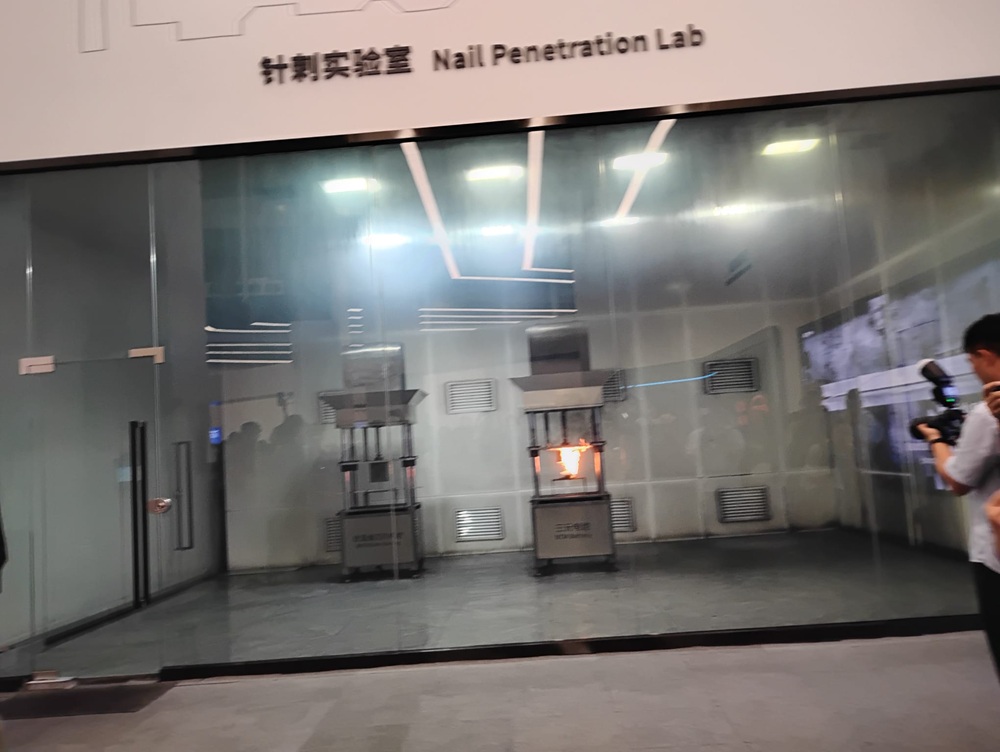
During the rigorous safety trials observed in Shenzhen, engineers subjected the ultra-thin architecture of the new cells to extreme nail penetration and physical impalement tests explicitly designed to simulate the absolute worst-case scenarios of a high-speed vehicular collision. Instead of the dangerous combustion or smoke traditionally associated with legacy energy storage systems, the impacted battery demonstrated absolute stability with zero explosion and zero thermal propagation.
This level of physical security transforms the energy storage pack from a potential hazard into a structurally integrated component that reinforces the overall safety cell of the automobile. Innovation of this caliber transcends ordinary engineering milestones and establishes an entirely new benchmark for the global manufacturing sector, shifting consumer expectations permanently.
Furthermore, the operational range achieved by these systems redefines long-distance capability, providing an astonishing one thousand kilometers of driving distance on a standard charge. Motorists no longer have to compromise between utility and sustainability, as the energy density achieved through these advanced manufacturing processes matches and exceeds the demanding requirements of transcontinental travel.
By solving the dual challenges of extreme winter degradation and sluggish charging speeds while achieving absolute structural immunity against mechanical trauma, this technology marks the definitive arrival of the modern electric vehicle era.
About The Author