For many businesses, the supply chain becomes visible only when something breaks, whether it’s a shipment arriving with damage, a pallet shifting during transit, or a worker losing time wrapping loads by hand. These moments may seem small next to the larger forces shaping commerce, yet they reveal how much the modern economy depends on ordinary equipment doing ordinary jobs with consistency.
That is why automatic and semi-automatic stretch wrappers deserve more attention than they usually receive. Manufacturers, distributors, food producers, retailers, and logistics companies all rely on stable pallet loads. When those loads fail, the costs can ripple through inventory, labor schedules, customer relationships, and insurance claims.
A stretch wrapper applies plastic film around a palletized load to hold products together during storage and transport. The idea sounds simple, but the decision to buy and manage the equipment, however, requires a clear understanding of workflow, safety, film use, maintenance, and labor. That’s why we’ve created a beginner’s guide to owning a stretch wrapper, so new owners can understand the type of wrapper that ideally suits their process, how to care for it, and more.
The first question is not which machine looks most advanced. The first question is what problem the business must solve. Some operations wrap only a limited number of pallets each day, while others move a steady stream of outbound freight. A facility that ships bottled beverages faces different conditions than one shipping furniture, paper goods, auto parts, or medical supplies.
Hand wrapping may appear inexpensive at first, especially for a small business, but it depends heavily on the strength, consistency, and judgment of individual workers. One employee may apply too much film, while another may apply too little. The result can waste material, create unstable loads, and cause physical strain. A stretch wrapper can standardize that process. It can reduce guesswork, improve load security, and help workers focus on tasks that require more judgment than walking around a pallet with a roll of film.
Ownership begins with choosing the right class of machine. A semi-automatic stretch wrapper still requires an operator to place the pallet, attach the film, start the cycle, cut the film, and remove the load. For many smaller or mid-sized facilities, that balance makes sense. It introduces consistency without requiring a fully automated line.
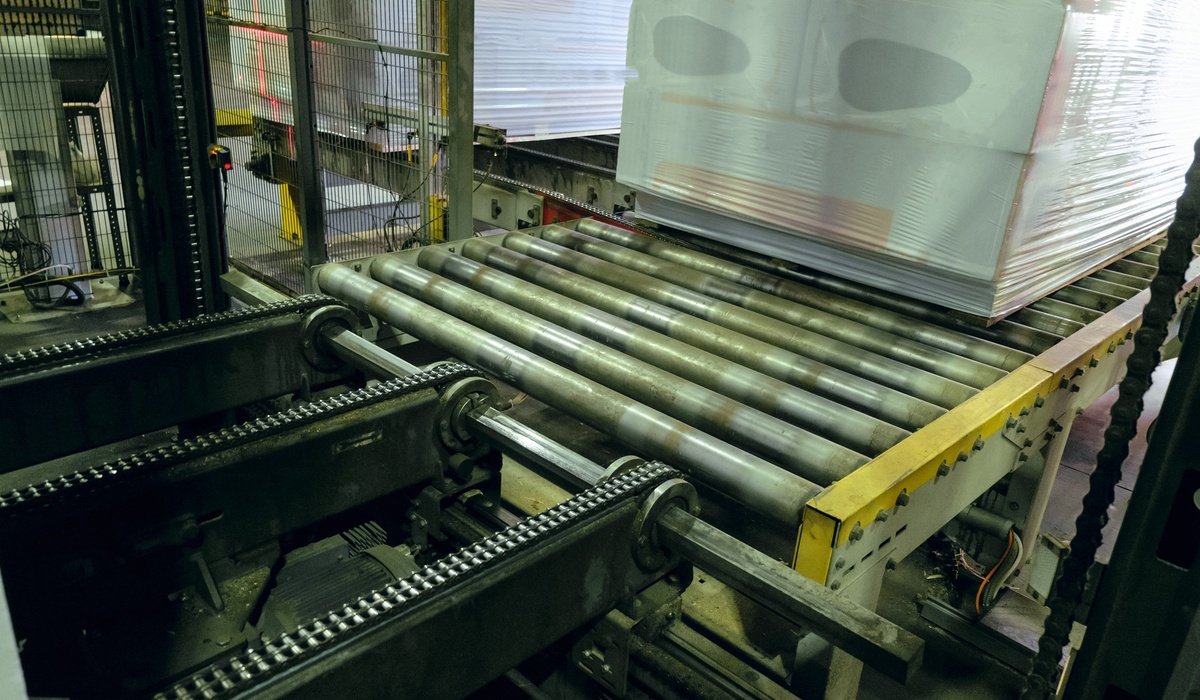
An automatic system moves further, using conveyors and machine controls to wrap pallets with less human involvement. That type of system may suit higher-volume operations that need speed, uniformity, and integration with other end-of-line equipment. The distinction matters because buying too much machine can waste capital, while buying too little can create new bottlenecks. A company should study its current pallet volume, expected growth, labor availability, loading dock layout, product mix, and peak-season pressure before making a purchase.
A machine that fits the operation today but cannot handle tomorrow’s volume may become a short-lived investment. A machine built for a much larger operation may sit underused and tie up money that the business needs elsewhere.
Beginners should first understand the essential stretch wrapping terms before they compare models. Terms such as film carriage, pre-stretch, containment force, turntable, rotary arm, and load profile describe real performance factors, not mere technical jargon.
Film use deserves the same attention as machine cost. Stretch film seems inexpensive by the roll, but it becomes a meaningful expense across thousands of pallets. A wrapper that uses film efficiently can reduce waste while still securing the load. Pre-stretch capability plays a central role because it allows the film to elongate before application. When managed correctly, this can improve coverage and reduce unnecessary material use.
Load containment is the heart of the process. The wrapped pallet must withstand forklift handling, warehouse movement, truck vibration, and changes in temperature or humidity. Too little containment risks collapse. Too much force may crush cartons, deform packaging, or make unloading more difficult. The right setting depends on product weight, stack pattern, pallet quality, film type, and transit conditions.
Safety also belongs at the center of the ownership decision. Hand wrapping can place strain on backs, shoulders, wrists, and knees. Workers may bend, twist, and walk backward around pallets in crowded areas. A stretch wrapper can reduce those hazards, but it introduces its own safety responsibilities.
Operators need training. Machines need guards, clear work zones, emergency stops, and written procedures. Forklift traffic must align with the wrapping area so workers do not operate in a congested path.
Maintenance may determine whether the machine becomes a dependable asset or a recurring frustration. Owners should plan for routine inspection, cleaning, film carriage checks, turntable or arm function, sensor alignment, and replacement parts. They should also know who can service the machine, how fast parts can arrive, and what training the vendor provides.
The physical layout of the facility can shape the decision as much as the machine itself. A turntable wrapper needs room for pallet placement, rotation, loading, and removal. A rotary arm wrapper may serve unstable or heavy loads because the pallet remains still while the arm moves around it. A portable wrapper can move to the load, which may help facilities with oversized products or limited dock space. Each configuration carries tradeoffs.
Ownership also changes how a company thinks about data. Even a simple wrapper can prompt better tracking of pallets per hour, film consumption, load failures, rewraps, and damage claims. These measures give managers a clearer view of the packaging process. Instead of treating damaged freight as an unavoidable cost of doing business, they can connect the problem to load pattern, film choice, operator training, equipment settings, or carrier handling.
For businesses serving national or global customers, this kind of discipline matters. A damaged pallet does not merely affect a warehouse ledger. It may delay a store restock, interrupt a production schedule, disappoint an online customer, or create waste in food and beverage distribution. Supply chains attract public attention during major disruptions, yet they also depend on countless small decisions made inside private facilities.
Financial planning should include more than the purchase price. A new owner should calculate installation, electrical requirements, training, film, preventive maintenance, repairs, downtime, and potential floor changes. The return may appear through reduced labor strain, lower damage rates, improved throughput, less film waste, and more predictable shipping.
Training should continue after installation. Operators must understand which buttons to press and why settings matter. Supervisors should know how to spot poor wrapping patterns, unstable loads, film breaks, and signs of mechanical wear. A company that treats the machine as a shared operational system will get more value than one that leaves the knowledge with a single employee.
For a beginner, the best guide to owning a stretch wrapper is patience and practicality. Watch the current process, count the pallets, talk to the workers who wrap them, review damage records, study the building layout, and learn the terminology. The right stretch wrapper should fit the work, not force the work to fit the machine.
In that sense, investing in a stretch wrapper is not just a packaging decision. It is a decision about how a business manages reliability. The value of a stretch wrapper lies not in the machinery alone, but in the steadier, safer, and more accountable shipping process it can support.
About The Author