Saudi Arabia’s Nuclear Ambition and the Iranian Shadow
- Naveed Aman Khan
- Pinpoint
- Trending News
- September 16, 2026
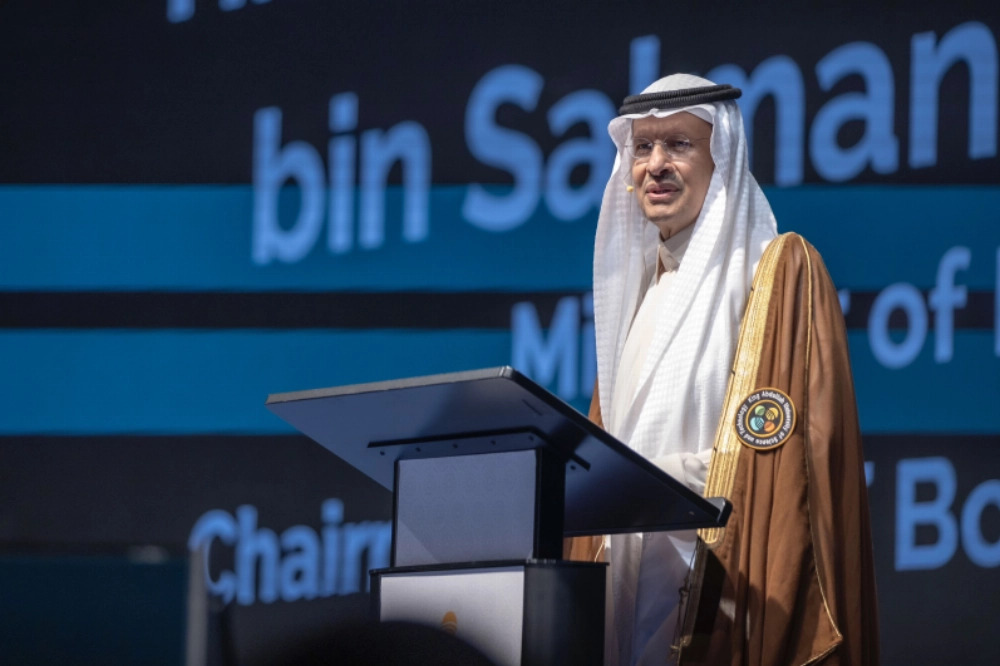
Saudi Arabia’s announcement of a major uranium-bearing ore discovery in the Medina region should not be viewed merely as another geological success. The declaration by Energy Minister Prince Abdulaziz bin Salman at the International Atomic Energy Agency’s General Conference in Vienna carries an unmistakable strategic dimension. Riyadh says that approximately 110 million tons of raw mineral material containing uranium have been discovered. Although this does not mean that Saudi Arabia has discovered 110 million tons of uranium, the scale of the reported resource could become an important component of the Kingdom’s long-term nuclear energy strategy. More importantly, the timing of the announcement raises a larger question: Is Saudi Arabia preparing itself not only to become a nuclear-energy state, but eventually to possess the option of becoming a nuclear-armed state if the regional security environment demands it?
The timing is particularly significant because Saudi Arabia and the United States signed a major civilian nuclear cooperation agreement in July. The agreement provides the legal foundation for long-term nuclear cooperation and American participation in Saudi Arabia’s nuclear program. The United States has presented the arrangement as a peaceful nuclear partnership based on safety, security and nonproliferation. However, reports about the agreement indicate that Riyadh could develop domestic uranium enrichment capabilities, while the arrangement does not require Saudi Arabia to adopt the IAEA Additional Protocol for more intrusive inspections. That combination has naturally generated concern among nuclear nonproliferation experts.
This is where the Medina discovery becomes strategically interesting. A country that possesses substantial domestic uranium resources has greater potential control over the front end of the nuclear fuel cycle. Uranium ore must first be mined and processed before uranium can be enriched, so the discovery by itself does not give Saudi Arabia a nuclear weapon or even weapons-grade material. Enrichment technology, fuel-cycle infrastructure, nuclear expertise and sophisticated industrial capabilities would still be required. Nevertheless, indigenous uranium resources can reduce dependence on foreign suppliers and potentially strengthen a country’s long-term nuclear autonomy.
Saudi Arabia has legitimate reasons for pursuing civilian nuclear energy. The Kingdom is attempting to diversify its economy under Vision 2030, reduce its dependence on hydrocarbons and develop advanced technological industries. Nuclear power could eventually contribute to electricity generation, desalination, industrial development and scientific research. Saudi Arabia is also one of the world’s largest energy producers, meaning that nuclear power would not simply be an emergency substitute for oil. Rather, it could become part of a broader strategy to preserve hydrocarbons for export while using nuclear energy for domestic electricity and industrial requirements. But the geopolitical context cannot be ignored.
The central strategic variable is Iran. For years, Saudi Arabia has regarded Iran as its principal regional competitor. The rivalry has involved Iraq, Syria, Lebanon and Yemen, while Iranian-backed or Iran-aligned forces have posed security challenges to Saudi territory and energy infrastructure. Recent regional conflicts have reinforced Saudi concerns about the vulnerability of critical infrastructure to missiles, drones and other asymmetric capabilities. Current tensions involving Iran, the Houthis and Gulf security have made the strategic environment even more uncertain.
The Iranian nuclear question makes this calculation far more serious. Tehran has repeatedly insisted that its nuclear program is peaceful, but international concerns over uranium enrichment and unresolved safeguards questions have continued. The IAEA has recently reported Iran to the United Nations Security Council over non-cooperation, while the agency has faced difficulties in verifying the status of Iran’s nuclear material and facilities.
For Riyadh, therefore, the issue is not necessarily whether Iran currently possesses a nuclear weapon. The more important question is what happens if Iran eventually acquires one, or retains the technological capability to rapidly produce one. Saudi Crown Prince Mohammed bin Salman made the Kingdom’s strategic thinking unusually clear in 2023 when he said Saudi Arabia would seek nuclear weapons if Iran acquired one. That statement remains one of the most important pieces of evidence for understanding Riyadh’s nuclear calculations.
Saudi Arabia is not publicly announcing a weapons program today. Nor does the uranium discovery prove that such a program exists. Saudi Arabia remains a party to the Nuclear Non-Proliferation Treaty and has an IAEA safeguards agreement in force. Nevertheless, there is a difference between building a nuclear-energy capability and preserving a nuclear option. Riyadh appears increasingly interested in both possibilities. A peaceful nuclear infrastructure can provide electricity and technological benefits while also developing the scientific, industrial and human-resource foundations required for more advanced nuclear capabilities. That is why enrichment is such a sensitive issue.
Enrichment for civilian fuel is legally permissible under the NPT, but the same basic technology can, at higher levels of enrichment, produce weapons-grade material. The Medina announcement may therefore serve several purposes simultaneously. First, it informs international investors and nuclear partners that Saudi Arabia possesses potentially valuable domestic resources. Second, it strengthens Riyadh’s negotiating position with the United States and other nuclear suppliers. Third, it supports Saudi ambitions to establish an integrated domestic nuclear fuel cycle rather than remaining permanently dependent on imported nuclear fuel. Fourth, it sends a strategic message to Iran and other regional powers that Saudi Arabia intends to develop advanced technological and energy capabilities appropriate to its position as a major regional power.
There is also a diplomatic message to Washington. If the United States wants Saudi Arabia to remain firmly within the American strategic orbit, Riyadh can reasonably argue that it needs access to advanced nuclear technology under acceptable terms. Washington, meanwhile, wants to prevent a Middle Eastern nuclear arms race while maintaining its strategic partnership with Saudi Arabia. The July agreement represents an attempt to balance those competing objectives.
Could Saudi Arabia actually become a nuclear-armed state? Technically, the possibility cannot be dismissed over the long term. Politically, however, there is a major difference between having the capability to develop nuclear weapons and making the decision to actually build them. A Saudi weapons program would carry enormous diplomatic, economic and security consequences. It could trigger a regional proliferation crisis involving Iran, Turkey, Egypt and other states and would place Riyadh under intense international pressure. The wiser interpretation, therefore, is that Saudi Arabia is building strategic nuclear insurance. Riyadh appears to want a sophisticated civilian nuclear program, indigenous uranium resources and potentially domestic fuel-cycle capabilities while preserving strategic options in case the regional balance changes dramatically.
The Medina uranium discovery is consequently more than a mining story. It is part of a much larger transformation in Saudi strategic thinking. The Kingdom is moving from a position in which its security depended overwhelmingly on oil wealth and American military protection toward one in which energy, technology, diplomacy and strategic deterrence are increasingly interconnected.
Saudi Arabia is not yet a nuclear power in the weapons sense, and the discovery does not prove that Riyadh has decided to build nuclear weapons. But the combination of domestic uranium resources, a new U.S. nuclear cooperation agreement, interest in enrichment and the Kingdom’s explicit concern about an Iranian nuclear weapon makes the direction of travel unmistakable.
The ultimate question is therefore not whether Saudi Arabia will suddenly build a bomb. It is whether Riyadh wants to possess the knowledge, infrastructure and strategic option that would make such a decision possible if the Middle East moves further toward nuclear competition. Given the extraordinary instability of the region, Saudi Arabia appears determined not to find itself strategically unprepared. The Medina discovery could prove to be an important piece of that long-term calculation.
About The Author