Putin’s Beijing Visit and the Emerging Global Power Equation
- Naveed Aman Khan
- Pinpoint
- Tiger's Eye Advisory Group - Trending News
- May 18, 2026
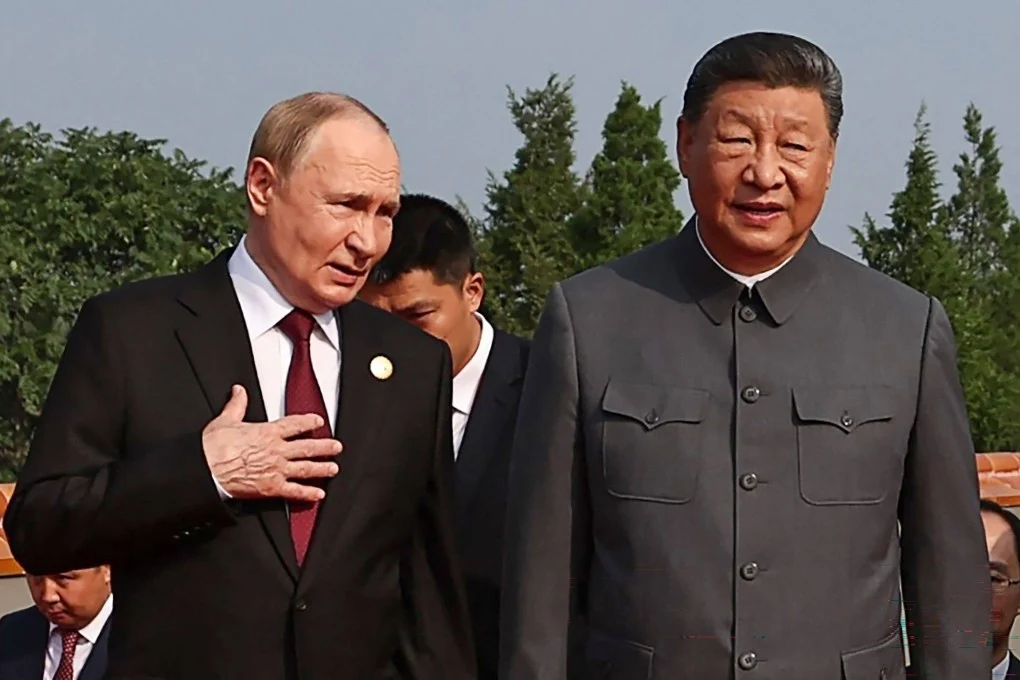
Russian President Vladimir Putin’s two-day visit to China is far more than a ceremonial diplomatic engagement. It is a strategic message to the world that the Moscow-Beijing axis is consolidating itself amid rapidly changing global political and security dynamics. The visit comes at a critical moment when the international order is facing unprecedented stress due to the prolonged Russia-Ukraine war, the escalating confrontation involving the United States and Iran, intensifying geopolitical competition, and the growing fragmentation of global economic systems.
The timing of Putin’s visit is especially significant because it follows closely after the recent engagement between US President Donald Trump and Chinese President Xi Jinping. This sequence has transformed Beijing into the central stage of global diplomacy, where competing powers are seeking influence, strategic understanding, and geopolitical advantage.
At the heart of the visit lies the deepening strategic partnership between Russia and China. Over the last several years, particularly since the outbreak of the Ukraine war in 2022, Russia has increasingly depended on China economically, diplomatically, and strategically. Western sanctions isolated Moscow from much of Europe and North America, compelling Russia to pivot decisively toward Asia. China emerged as Russia’s economic lifeline by purchasing discounted Russian oil and gas, expanding bilateral trade, and providing alternative financial mechanisms outside the Western-controlled banking system.
Economically, Putin’s visit is expected to strengthen cooperation in energy, technology, infrastructure, banking, and regional connectivity. The two countries are actively promoting trade settlements in local currencies to reduce dependence on the US dollar. This growing de-dollarization effort represents a major challenge to Western financial dominance. Beijing and Moscow understand that economic sovereignty has become a strategic necessity in a world increasingly shaped by sanctions and trade wars.
Energy cooperation remains the backbone of the relationship. Russia possesses vast energy resources, while China remains one of the world’s largest energy consumers. Moscow seeks long-term Chinese markets for its oil and gas exports, especially as European dependence on Russian energy continues to decline. Projects such as the Power of Siberia pipelines symbolize the strategic merger of Russian energy resources with Chinese industrial expansion. This partnership not only strengthens both economies but also creates a durable geopolitical bond that is difficult for the West to disrupt.
Beyond economics, the defense and security dimensions of the visit are equally critical. Russia and China increasingly view NATO expansion, US military alliances in Asia, and Western strategic pressure as common threats. As a result, military coordination between the two powers has grown substantially through joint naval exercises, intelligence cooperation, aerospace collaboration, cyber coordination, and diplomatic synchronization in international forums.
Although China has avoided direct military involvement in the Ukraine conflict, Beijing has consistently refused to isolate Moscow diplomatically. China’s support has enabled Russia to resist Western efforts aimed at political and economic collapse. In return, Russia strongly supports China on issues involving Taiwan, the South China Sea, and regional security disputes. The relationship has evolved into what many analysts now describe as an informal anti-Western strategic bloc.
Putin’s Beijing visit also carries immense regional significance for Asia. Countries across the Indo-Pacific are carefully observing how Russia and China are reshaping regional power balances. India, Japan, South Korea, and ASEAN states recognize that closer Russia-China coordination could alter security calculations across Eurasia. For Pakistan and other developing states, the visit reflects the continuing shift toward a multipolar world where Western dominance is gradually being challenged by emerging power centers.
The visit also has direct relevance to the ongoing Russia-Ukraine war. Both the leaders will discuss the future trajectory of the conflict, diplomatic negotiations, and Western military support for Ukraine. Putin appears eager to demonstrate that despite years of war and sanctions, Russia is neither isolated nor strategically defeated. The optics of standing alongside Xi Jinping in Beijing reinforce Moscow’s message that it still possesses powerful global allies.
At the same time, China has its own reasons for strengthening ties with Russia. Beijing understands that if Russia weakens significantly under Western pressure, China itself could become the next primary target of strategic containment by the United States and its allies. Therefore, preserving Russian stability serves China’s long-term geopolitical interests.
Equally important is the emerging Middle East crisis involving the United States and Iran. Putin’s visit is closely connected to these tensions, even if indirectly. Russia, China, and Iran have increasingly developed overlapping strategic interests against what they perceive as American unilateralism. While neither Moscow nor Beijing desires direct military confrontation with Washington, both countries oppose US-led military escalation in the Middle East.
For Russia, instability in the Middle East can further increase global energy prices, benefiting its energy exports and strengthening its wartime economy. China, meanwhile, depends heavily on Middle Eastern energy supplies and seeks regional stability to protect its economic interests. Beijing is also attempting to project itself as a responsible global mediator capable of balancing relations among rival powers.
Putin’s visit reflects a broader strategic coordination regarding multiple global crises simultaneously — Ukraine, Iran, energy security, sanctions, and the future of international governance. The two leaders are signaling that they intend to shape global developments together rather than passively accept Western-led outcomes.
Another critical aspect of the visit is symbolic diplomacy. This year marks the 25th anniversary of the Sino-Russian Treaty of Friendship signed in 2001. By commemorating this treaty at a time of global instability, both sides are emphasizing continuity, trust, and strategic endurance. The symbolism matters because modern geopolitics is increasingly driven not only by military power but also by perception, alliances, and narratives.
Vladimir Putin’s visit to China represents a defining moment in contemporary geopolitics. It highlights the accelerating emergence of a new global alignment centered on strategic cooperation between Russia and China. Economically, the visit strengthens alternative financial and energy systems outside Western influence. Militarily, it reinforces coordination against perceived Western strategic pressure. Diplomatically, it demonstrates that Beijing is becoming the pivotal arena of global power politics.
The visit is deeply connected to both the Russia-Ukraine war and the broader Middle East confrontation involving Iran and the United States. It signals that future global conflicts and negotiations may increasingly revolve around competing blocs rather than a single dominant superpower. The world is witnessing the gradual transition from a unipolar order to a far more complex and competitive multipolar era and Putin’s Beijing visit may well be remembered as one of the clearest symbols of that historic transformation.
About The Author