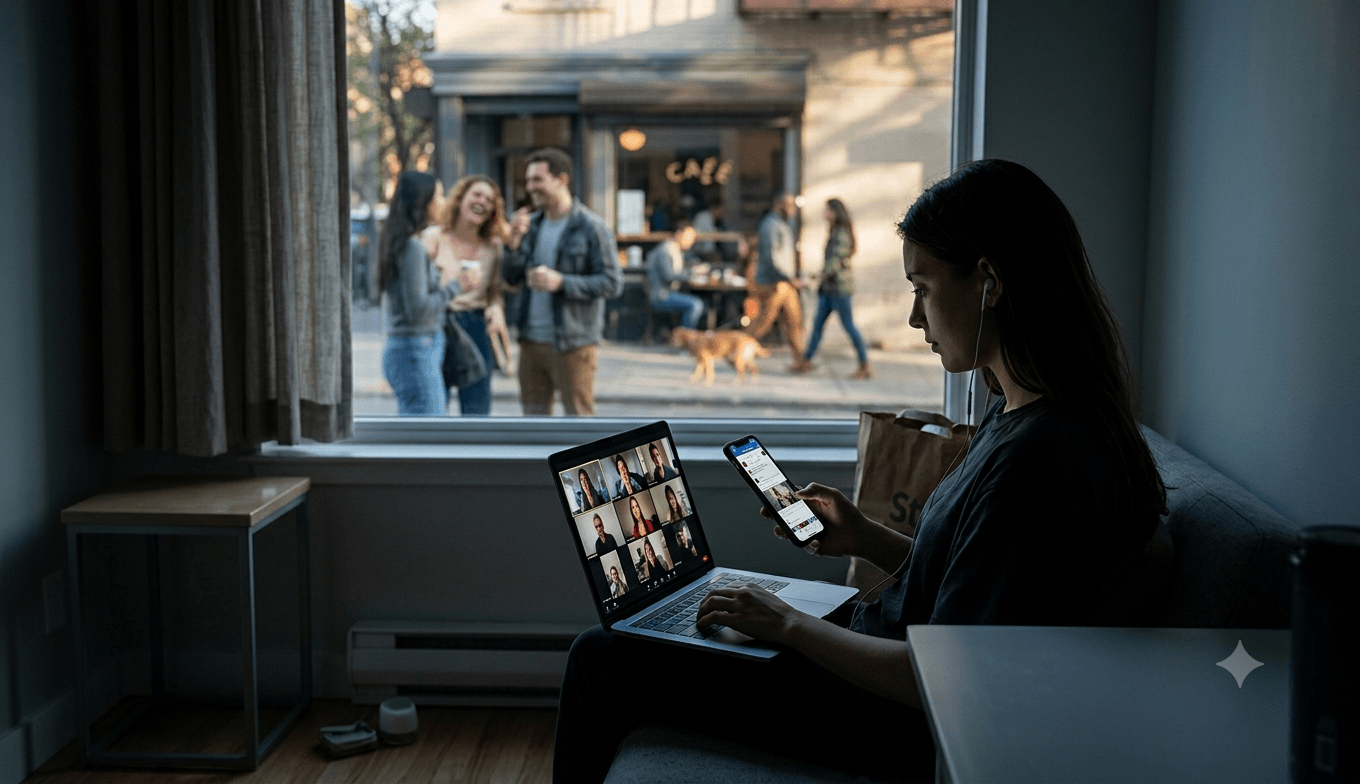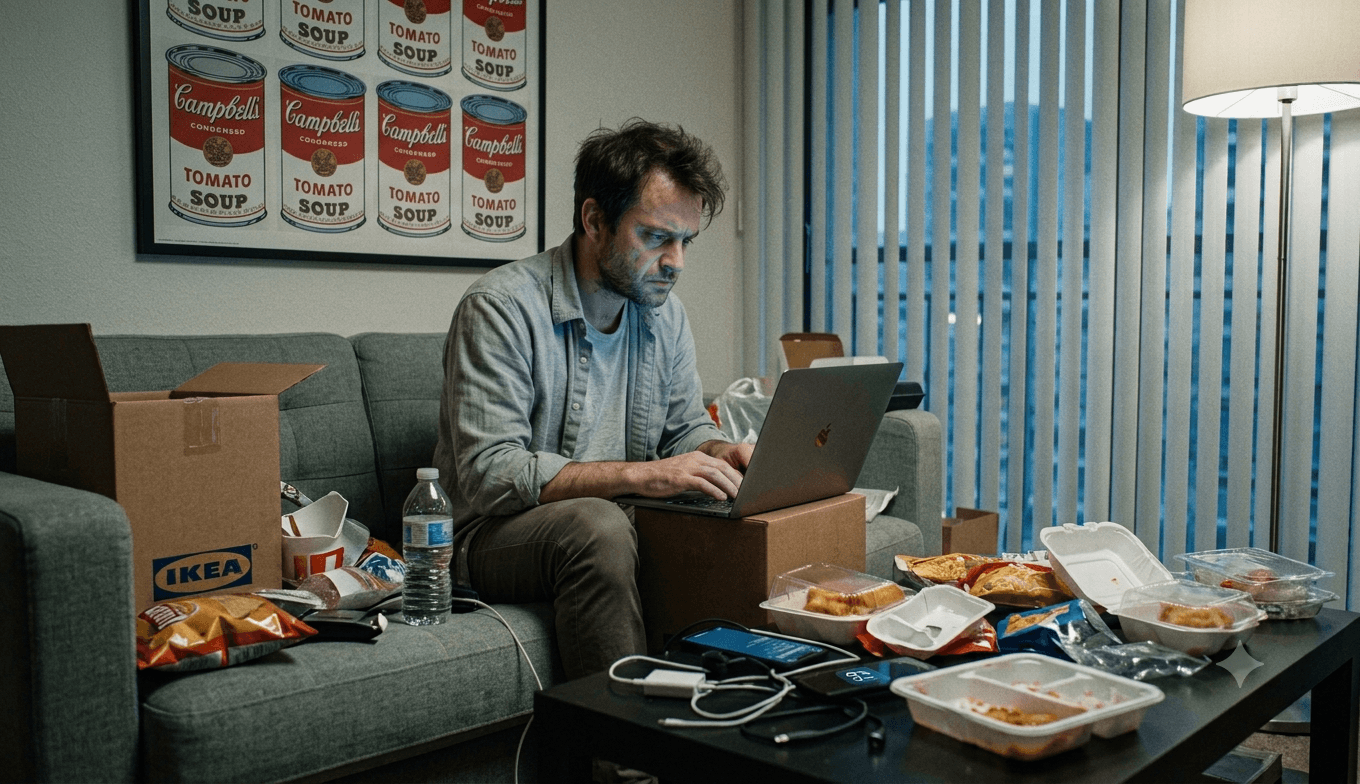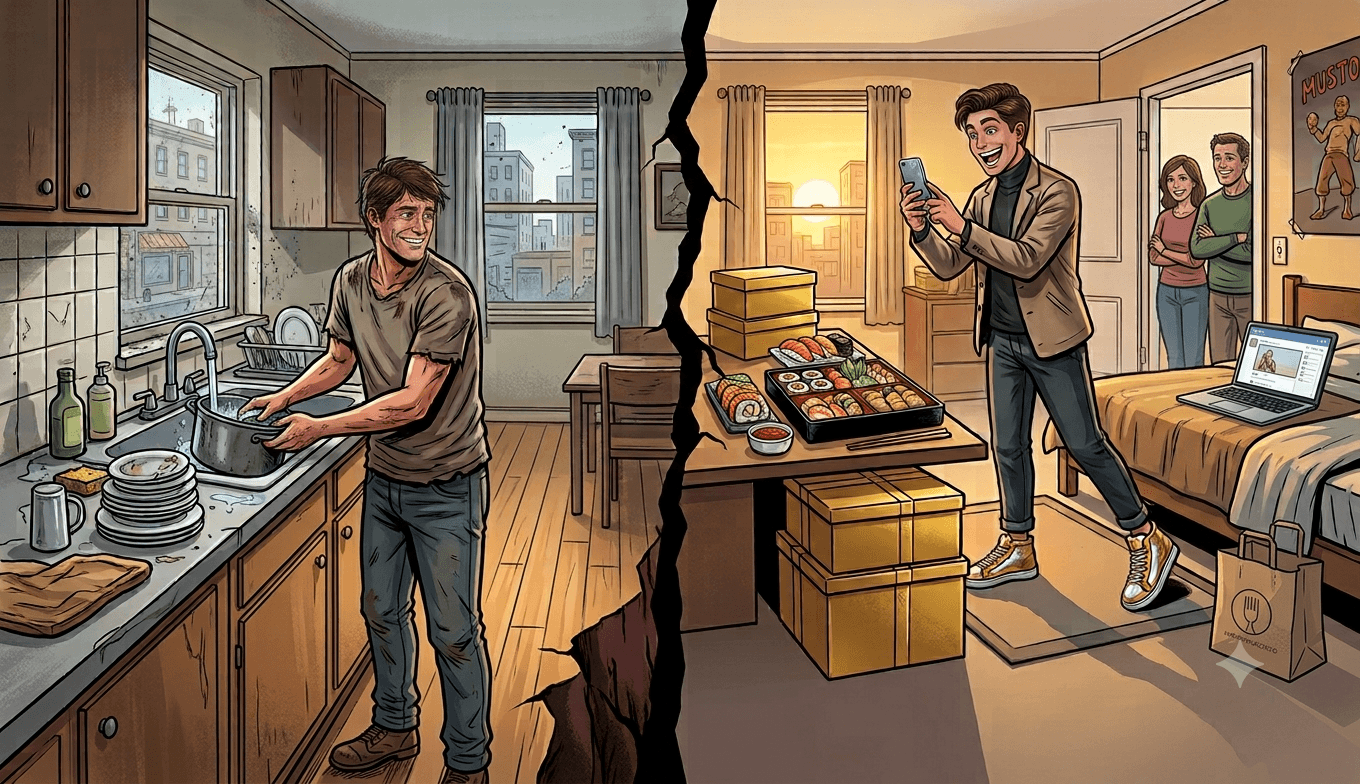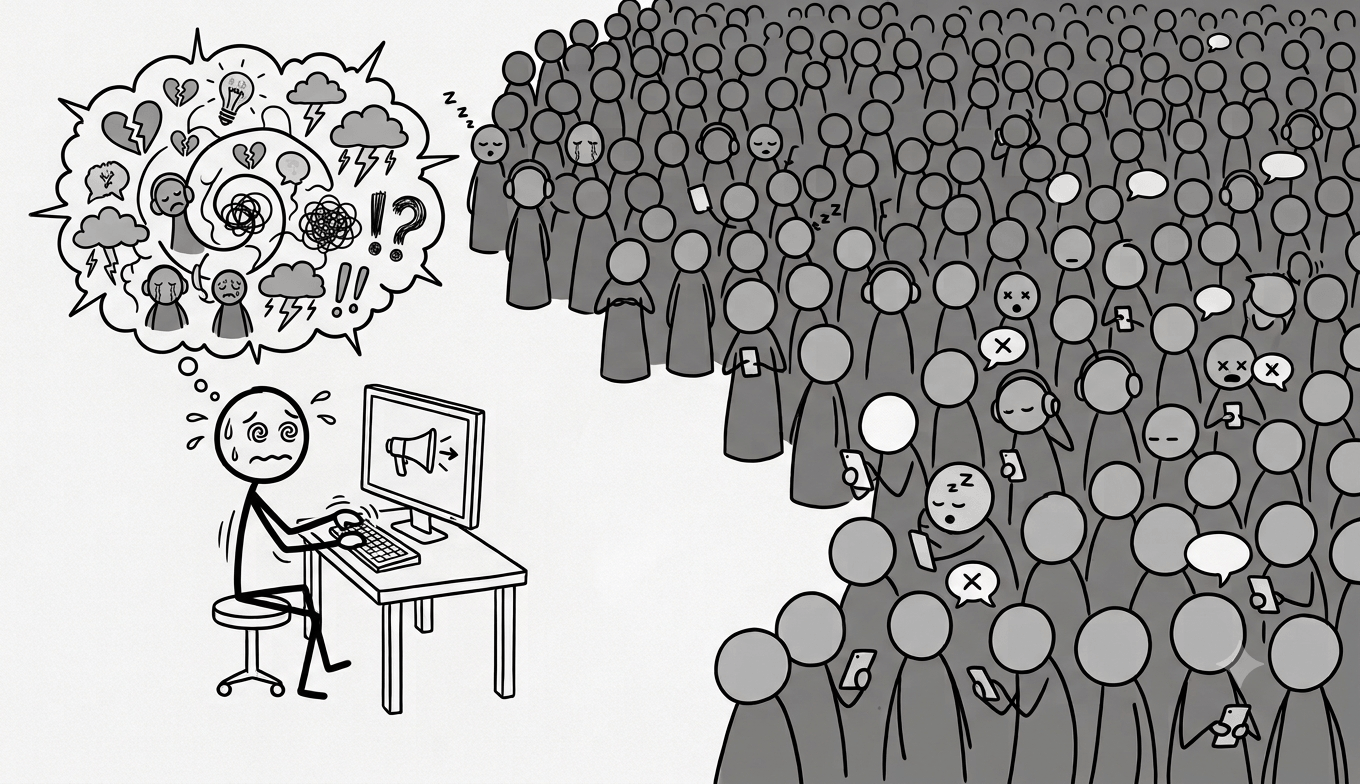
You spend twenty minutes editing a video, syncing the audio, and rewriting the caption three times before finally uploading it to TikTok, Facebook, X, Instagram, etc. Whether it’s a 45-second clip of you around a campfire with family and friends, announcing a gym milestone, or weighing in on trending political discourse, the post-upload ritual is predictable. You close the app, wait two minutes, then reopen it. Zero engagement. Five minutes pass. Three likes: one from your aunt, two from automated bots. You refresh. Wait. Refresh again. A knot forms in your gut, a mix of rejection and creeping regret. You second-guess the video, your timing, and ultimately yourself. It’s a low-grade erosion of self-esteem, looping through millions of minds every minute.
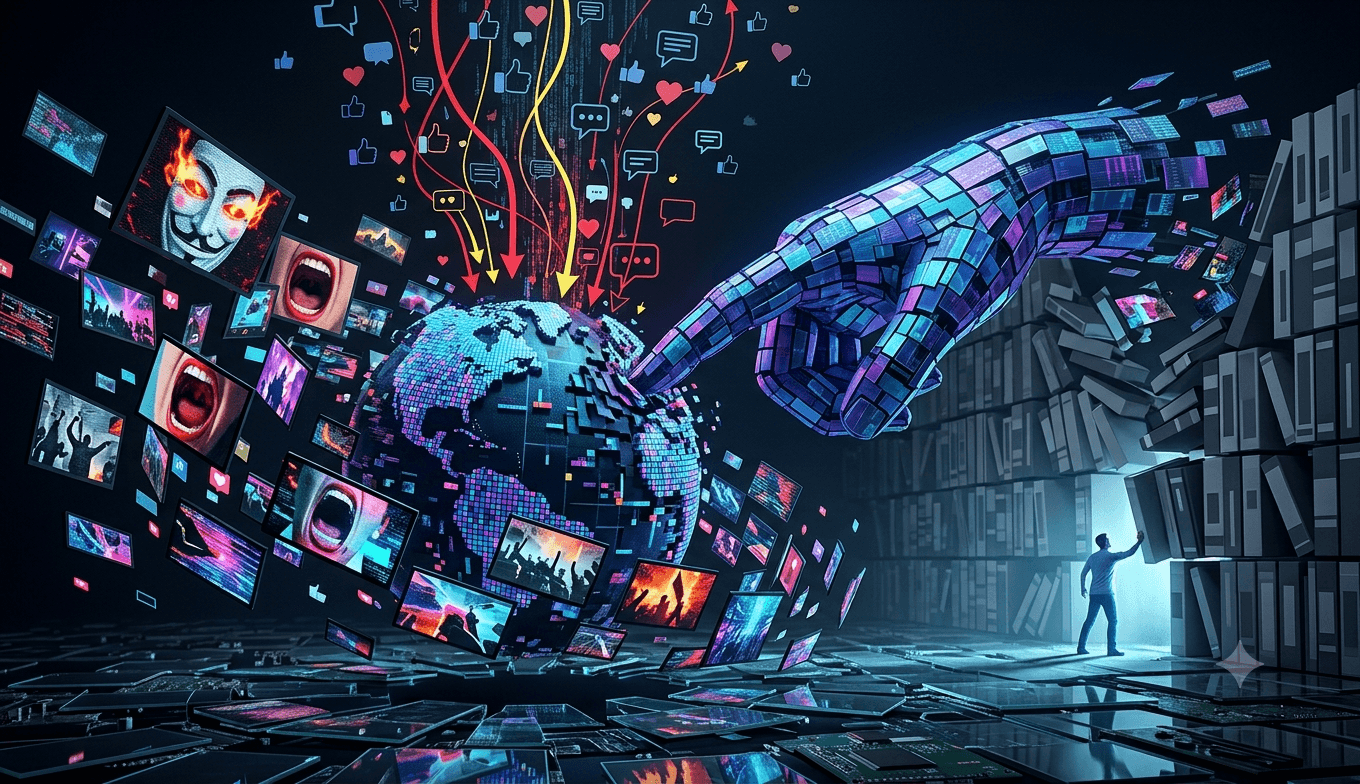
Taking a detached look at Domo’s annual Data Never Sleeps report will dispel any expectation that your work will likely be noticed, let alone engaged with. Every 60 seconds, over 500 hours of video are uploaded to YouTube, 70,000 photos are posted to Instagram, and hundreds of thousands of posts are shared on X. Essays, podcasts, memes, comments, video and corporate marketing propaganda pour into the digital abyss every second. Believing that your personal hot takes, pictures of your consumerism, and thought-provoking memes will rise above this deluge isn’t just optimistic; it’s statistically absurd. It reveals a subtle main-character complex, the delusion that your mundane thoughts and “life happenings,” most of which are staged, are significant enough to cut through the endless chatter. Think of the narcissism it takes to take a selfie and then think, “other people might want to see this.”
Human attention is a finite, rapidly depleting resource. The constant flood of content buries your posts within seconds, but it’s your lingering hunger for validation that keeps you posting repeatedly in hopes of being acknowledged. It’s our need for recognition that makes social media psychologically sticky. A University of California news feature titled Can’t pay attention? You’re not alone; research led by Dr. Gloria Mark shows that our attention spans on any single digital screen have plummeted to an average of just 47 seconds. Your posts aren’t just competing with millions of creators uploading content constantly; they’re also up against multi-billion-dollar algorithmic engines developed by behavioural scientists to capture every microsecond of human attention.
This brings to light an uncomfortable truth about human ego. Expecting strangers scrolling through social media to care about your Italian vacation, bistro dinner, or latest career milestone is sheer self-deception. What makes people think total strangers will pause their routines to congratulate someone on a routine moment? It’s an overinflated ego whispering a nonsensical lie, making a person believe their mundane opinions and personal moments will matter to anyone outside their immediate circle. Yet this delusion is becoming our dominant career ambition. Morning Consult data show that 57% of Gen Zers want to be influencers. Beneath this unrealistic career aspiration lies a collective tragedy: millions desperately want to be heard in a crowded room, where everyone is so preoccupied with telling their own “look at me” stories that they aren’t listening.
When people constantly refresh their feeds, they’re really seeking quick dopamine hits. Social media platforms are deliberately engineered around variable rewards, the same psychological mechanism that keeps gamblers glued to slot machines. When a notification pops up, the brain receives a fleeting chemical surge; when it doesn’t, a quiet psychological crash follows. As social psychologist Dr. Jonathan Haidt documents in his book, The Anxious Generation, social media intentionally reorients users away from real-world relationships and toward an endless quest for digital validation. Surrendering your self-esteem to an algorithm entirely beyond your control is a recipe for a constant state of low-grade anxiety.
When you tie your self-worth to likes, shares, and comments, you’re handing your mental health over to corporate algorithms designed solely to keep you glued to screens. Relying on digital approval turns authentic self-expression into a stressful public performance, leaving you perpetually waiting for approval that never comes.
The healthiest approach to online self-expression is to post strictly for yourself, with zero expectation of an audience. When you share a thought, a photo, or a video, do so because the act of creating brings personal clarity, joy, or satisfaction, and for no other reason. Whether three people see it or three thousand, your internal state shouldn’t waver. Life is too short to spend it begging an algorithm for a fleeting moment of Internet visibility. Real human value never needs permission from an algorithm.
If you post on social media expecting engagement, or worse, you’re chasing digital stardom, consider stopping the habit of throwing your time into the void. Redirect that time and energy to your immediate world: your family, your real friends, and your local community. These are the physical spaces where your presence carries real weight, where character limits don’t truncate conversation, human bonds aren’t measured in double-taps, and your potential to “influence” is exponentially higher. Post online if you must, but do so with absolute indifference to the outcome. Your mental well-being is far too valuable to trade for meaningless digital applause that, given the odds, was never coming anyway
About The Author