We live in a culture pathologically incapable of simply enjoying a good result. We demand the right to inspect the scaffolding, to interrogate the mechanics, and to ensure that someone suffered sufficiently in the creation of the product. We’ve become a society of puritanical accountants, refusing to appreciate a beautiful or functional thing unless we can see a receipt for human labour.
Take last weekend, for instance. My wife and I were at a backyard BBQ, sipping gin and tonics and shooting the breeze with our host’s husband and their college-grad son. A woman walked up to us. It took a few moments to recognize her as Clare, whom we hadn’t seen since Thanksgiving. She’d lost significant weight and now looked incredibly chic and slender.
We spent twenty minutes exchanging the usual pleasantries, during which Clare didn’t mention her weight loss. She didn’t have to; the 20 or so people in the backyard were quietly doing the math. Later that night, as I merged into stop-and-go traffic on the 401 on our way home, my wife shared the backyard consensus.
“Ozempic,” she murmured.
“Ozempic?”
“Clare’s weight loss. Everyone was whispering about it. Her cousin told me that she suspects Clare has been on the shots since December.”
“Suspect?” I said. “Maybe she’s been following a Keto diet. Or she’s cut back on how much she eats, had her stomach stapled, or subsists on cabbage soup. What does it matter? She looks great.”
“She does,” my wife replied, staring out at the taillights. “I’m just curious how she did it so quickly.”
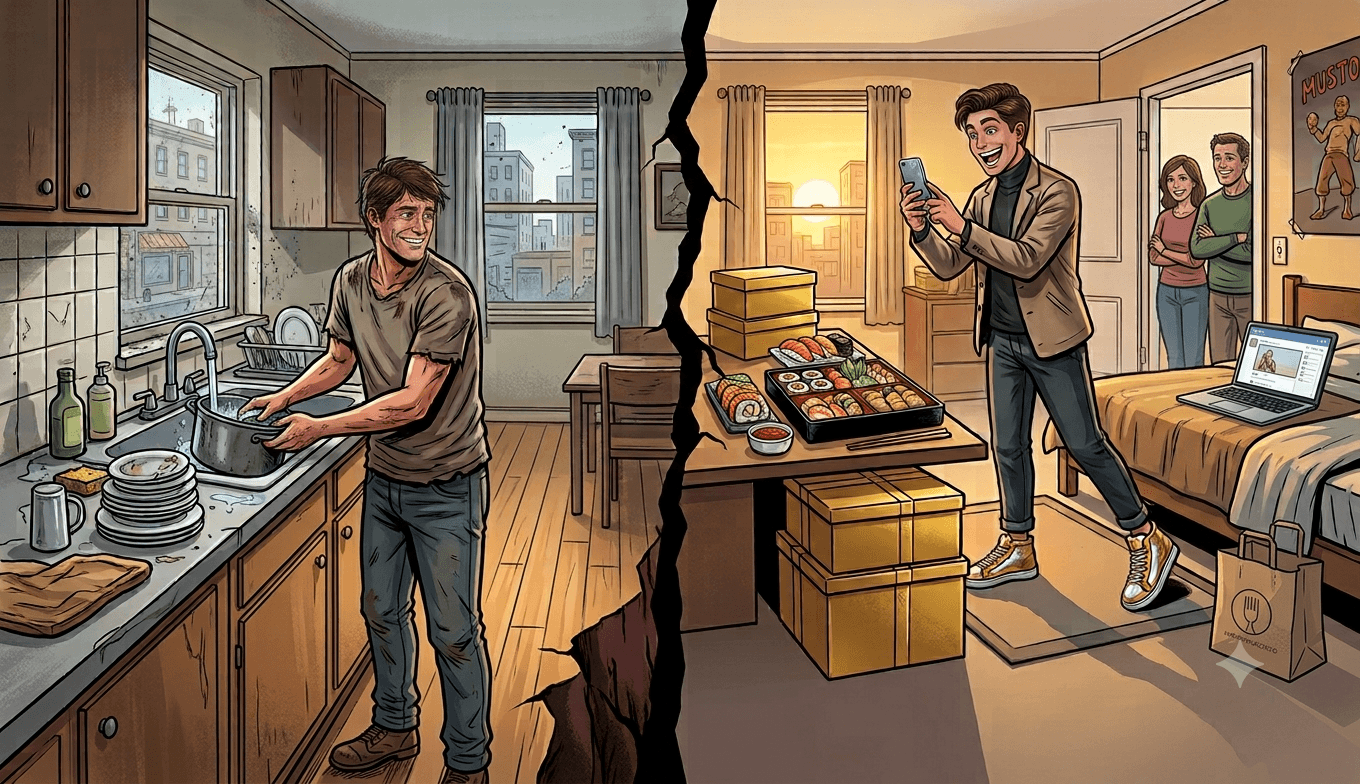
There it was, the need to know, the need to dismiss someone’s success for fear it’ll surpass theirs, that fuels much of today’s anxiety. It wasn’t enough that Clare had achieved a healthy weight, looked attractive, and was likely experiencing whatever version of happiness she was after. Clare’s weight loss was being scrutinized and judged on the unsubstantiated assumption that she was using a pharmaceutical shortcut. We’ve medicalized willpower, yet we still harbour a deep, subterranean resentment toward anyone who silences their appetite with a synthetic peptide rather than the gruelling, sanctified misery of dieting and exercising. Generally, we expect people to do things the hard way, lest their success be deemed cheap, Made-in-China-like, and therefore “unworthy” of being called earned and authentic.
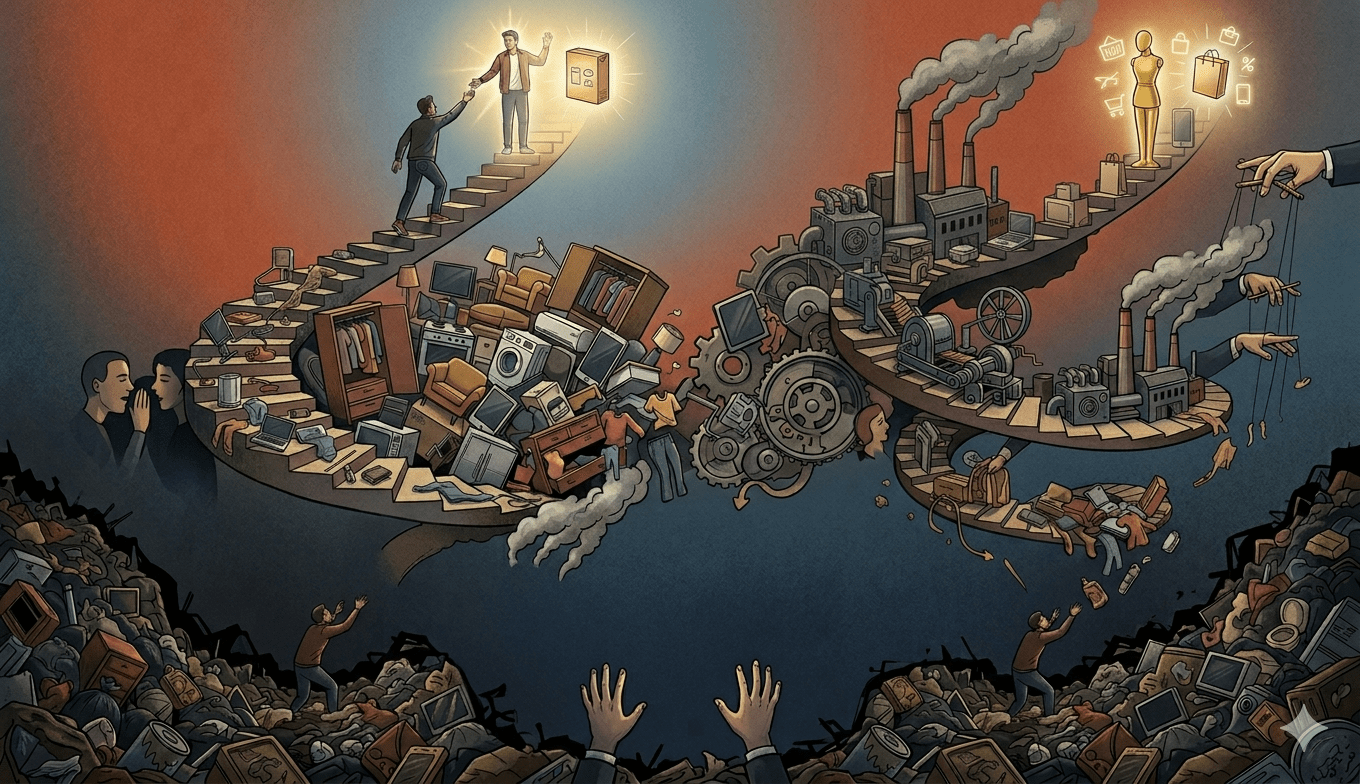
The moral outrage calling for more genuine humanity is, strangely but unsurprisingly, highly selective. It is the same performative tremble, the same collective amnesia, that we bring to the digital world. We live in a culture built on curated hypocrisy. Every morning, we step into a world meticulously engineered to deceive us, and we willingly pay a premium for that deception. Much of what surrounds us is manufactured. We slice into a loaf of supermarket bread proudly stamped ‘artisanal,’ ignoring the factory where it was mixed with mechanical paddles and baked on a conveyor belt. We heat canned soup labelled ‘homemade,’ half-convinced by a rustic font that some mythical grandmother spent her morning chopping celery in a sunlit kitchen. We surround ourselves with mass-produced plastic junk that inevitably ends up in landfills or floating in the ocean, suffocating sea turtles, while succumbing to marketing propaganda that hints at small-batch, limited-run, and handcrafted.
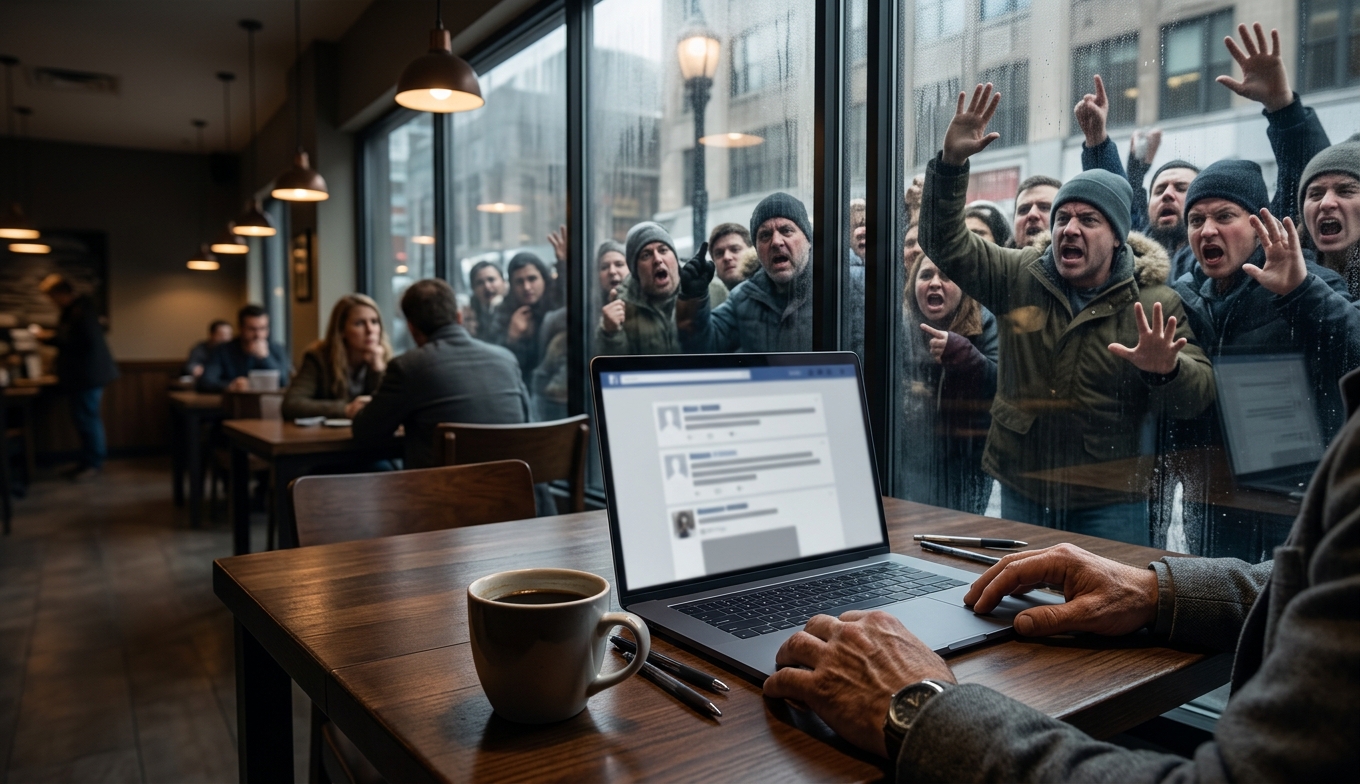
The self-righteous indignation that greets AI-generated content—calling it “AI-slop”—is the ultimate hypocrisy. It’s performative virtue-signalling from a society that long ago traded authenticity for convenience. We’re perfectly comfortable with a world where the human hand rarely touches what we consume. Yet when a machine dares to manipulate syntax or pixels, rather than steel and flour, we treat it as an existential betrayal of the human spirit.
I say, “So what?”
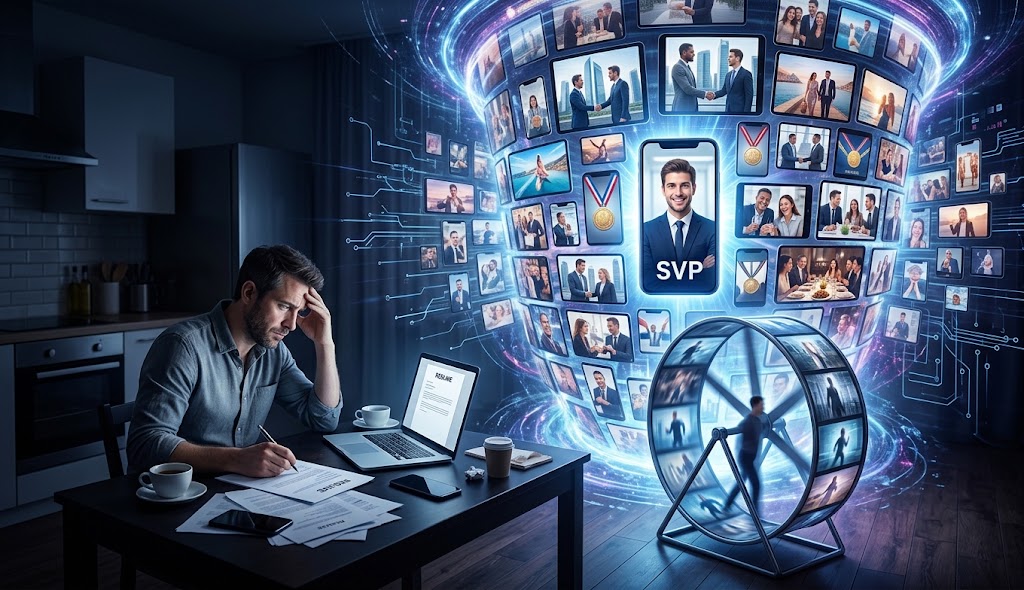
At its core, this high-minded moral outrage isn’t about ethics; it’s about fear. It’s the panic among white-collar professionals—and those in creative fields (writers, filmmakers, marketing professionals, and photographers)—who are beginning to realize that codes and algorithms can do their thinking and artistry just as easily as factory robots have replaced assembly-line workers, if not today, then in the very near future. I give you Exhibit A: the ongoing AI-related layoffs.
People shouldn’t feel guilty or “unworthy” for using AI to create something impactful. If an AI-generated article makes you think, or a machine-synthesized video makes you weep, who cares where the pixels or the wordsmithing came from? A profound piece of work doesn’t need a human birth certificate to give it value. The value comes from the words, imagery, and audio that can shift your perspective or hit you in the gut. Hence, AI-generated content can be every bit as consequential as content born of “human effort’ and “artistic angst.”
There was no sanctimonious fury when factory floors were hollowed out by automation and offshoring. Now, as AI advances into mental work, threatening the privilege of working behind a desk, often from the comfort of their homes, white-collar workers, along with “creatives” who shrugged off factory closures, are preaching the sacredness of human work.
Outrage against AI-created content isn’t a noble battle for human craftsmanship, intellectual monopoly, or original authorship; it’s simply that it’s now the keyboard class’s and creatives’ turn to be affected by technological progress, and they’re afraid of the writing on the wall.
That fierce indignation isn’t about preserving human labour (jobs), control over our intelligence, or creative supremacy; it’s about the deep-seated fear of being found out. AI isn’t degrading the one thing that makes us “human,” our intellectual capacity; it’s merely holding up a mirror to how formulaic, predictable, and mass-produced it already was. Every day, millions fall in love with AI technology, welcoming it into their professional and personal lives. We happily populate our digital spaces with synthetic personas and filter our interactions through automated charm, yet we recoil when AI-generated content becomes too visible.
Recently, I came across Daisy Cashin‘s Substack piece, A Correction, in which he blasts his uncle for using Claude to draft his grandmother’s obituary. His uncle, strapped for time, emotionally drained, and likely lacking a writer’s skill, opened Claude, typed a few key facts about his mother’s life, and let it do the heavy lifting, producing a decent, respectful tribute. Yet when he casually mentioned his digital collaborator to a few family members, the reaction was explosive. They reacted as if he’d bought a prepackaged, mass-produced grief capsule off a drugstore shelf and called it love.
Consider the reality of the pre-AI obituary. For decades, local newspapers offered grieving families rigid, fill-in-the-blank templates. You paid by the line, selected from a menu of approved clichés—survived by, fondly remembered, peacefully passed—and handed over your credit card. Is filling out a standardized form at a newspaper desk inherently more soulful than guiding an algorithm to generate a fluid obituary? In both cases, the result is the same: a formal notice that a life has ended. Cashin’s uncle didn’t deceive or cheat; he used a tool to overcome his writer’s block during a period of grief. He sought a shortcut to achieve a desired outcome.
There isn’t a single person reading this who hasn’t actively sought a shortcut, a convenient workaround, or an easier way.
This craving for shortcuts is the defining trait of our decade. Look at the meteoric rise of Ozempic. Willpower has been medicalized, replacing healthy lifestyle changes with a weekly injection. And the public eats it up. We don’t demand that someone put fifty pounds back on because they didn’t “earn” their weight loss.
Why, then, do we insist that an obituary, podcast, or picture must stem from human suffering to be deemed legitimate? If we can accept that Tito’s “Handmade” Vodka is pumped from automated industrial vats and that Pottery Barn’s “artisan” glassware gets its unique air bubbles from a factory assembly line, we’ve lost the right to play authenticity police when someone uses an AI tool to create [whatever].
Our appetite for entertainment renders this double standard outright comical. Every summer, millions pack cinemas to watch the latest multi-million-dollar superhero spectacle, sitting through two hours of digitized explosions, green-screen landscapes, and entirely synthetic battles. Every audience member knows Spider-Man isn’t swinging between real skyscrapers; he’s a complete digital fabrication, born inside a hard drive. The actors are merely performing in featureless grey rooms, channelling their “acting abilities” into tennis balls on sticks.
Yet no one storms out of the theatre screaming, “This is fake! How dare they!” No one writes scathing op-eds about the death of cinematic artistry when an animator uses software to simulate gravity or muscle tissue on a fictional alien. We know it’s an illusion. We explicitly suspend our disbelief to enjoy the spectacle. We value the thrill of the final product, not the sweat equity behind the process.
We accept automated processes for our entertainment, yet the moment a writer uses ChatGPT to outline and write a blog post, or a graphic designer uses Midjourney to create a background element, the internet erupts in a frenzy of puritanical scolding. “A human didn’t make this!” the critics cry, as if they were giving a masterclass in stating the obvious. A human didn’t build your iPhone, bake your supermarket bagel, or weave the fabric of your fast-fashion jeans either.
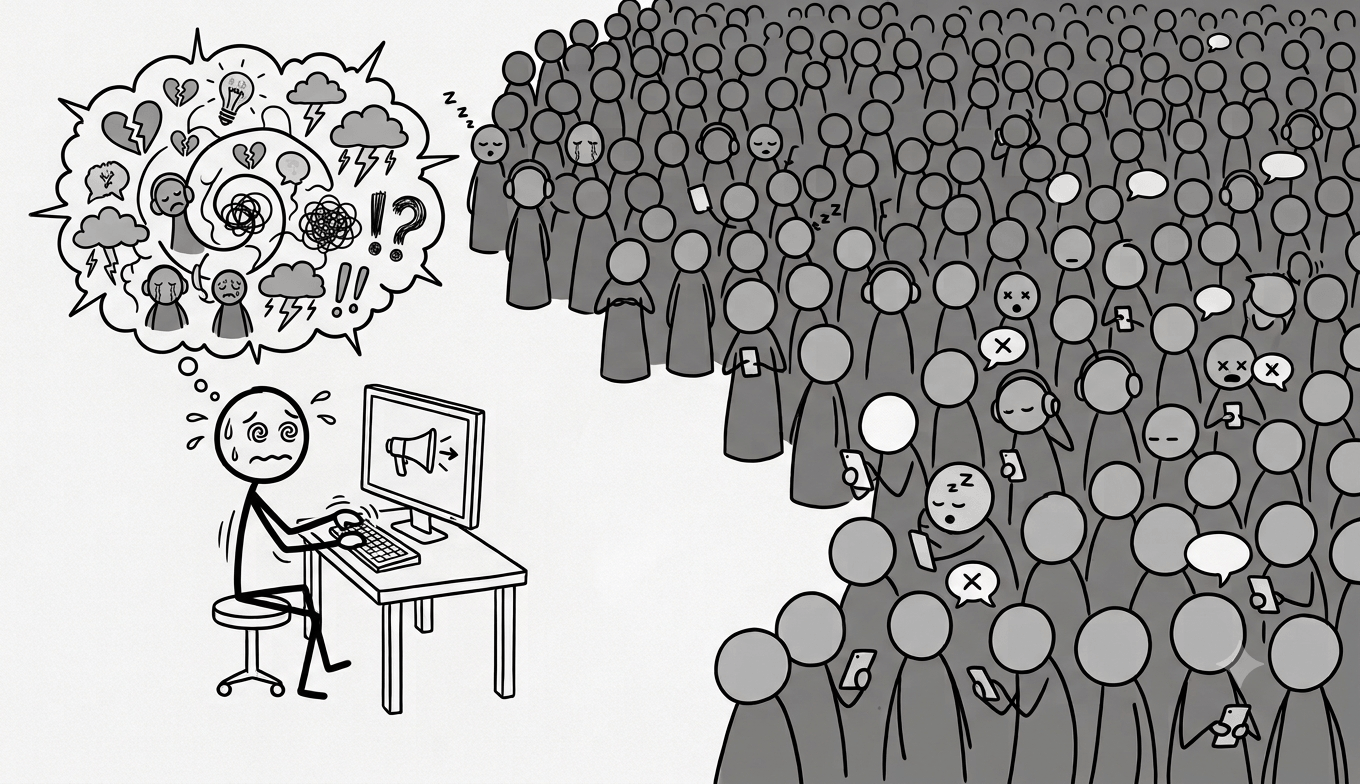
The late American novelist and cultural critic David Foster Wallace often obsessively examined how commercial entertainment functions as candy, designed to bypass our critical faculties and trigger pure, unadulterated pleasure. We’ve become a society addicted to candy while desperately clinging to the delusion that we’re still eating an organic, handpicked orchard apple. The outrage over AI is a desperate defence mechanism. If we admit that a machine can write a compelling marketing email, compose a decent pop song, or craft a sharp social media post, or perform a large percentage of white-collar job functions, we have to admit something far more terrifying: that much of what we produce as humans isn’t actually that complex.
Most daily human writing is bureaucratic, administrative, or purely informational. It is corporate boilerplate, standard real estate listings, routine sports roundups, and formulaic listicles—linguistic manufacturing. The same applies to music, podcasts, and film: wherever commerce and creativity intersect, they marry the capitalist principle that output, including creative output, must sell for the creator to survive. For better or worse—and I, for one, can’t envision “better”—AI is automating the factory work of how we think, interpret, and create.
Looking further down the road, the implications grow darker. It’s not hard to imagine a future in which oligarchical corporations view humans as little more than a primitive data source. When AI, not “if,” which is still in its infancy, surpasses human capabilities, how could this not end badly for us? But that is tomorrow’s apocalypse, or, fingers crossed, the next generations. Today, we’re merely dealing with the bruised egos of white-collar professionals and creatives forced to confront the uncomfortable reality of our predictability. We’ve spent decades consuming serialized television built on predictable formulas, listening to pop songs built on the same four chords, and reading thrillers that follow strict beat sheets. We’ve trained ourselves to crave standardized products; AI is simply delivering that standardization instantly and without paying for human labour.
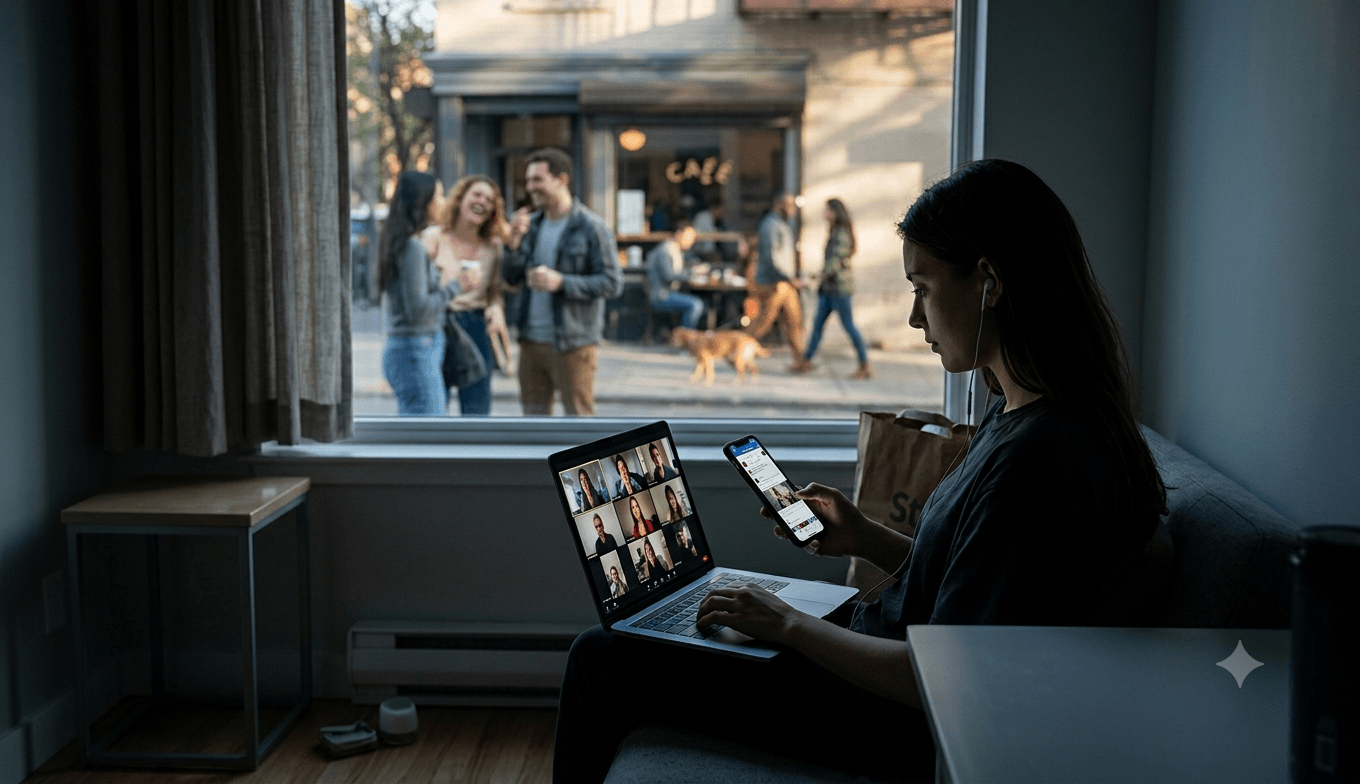
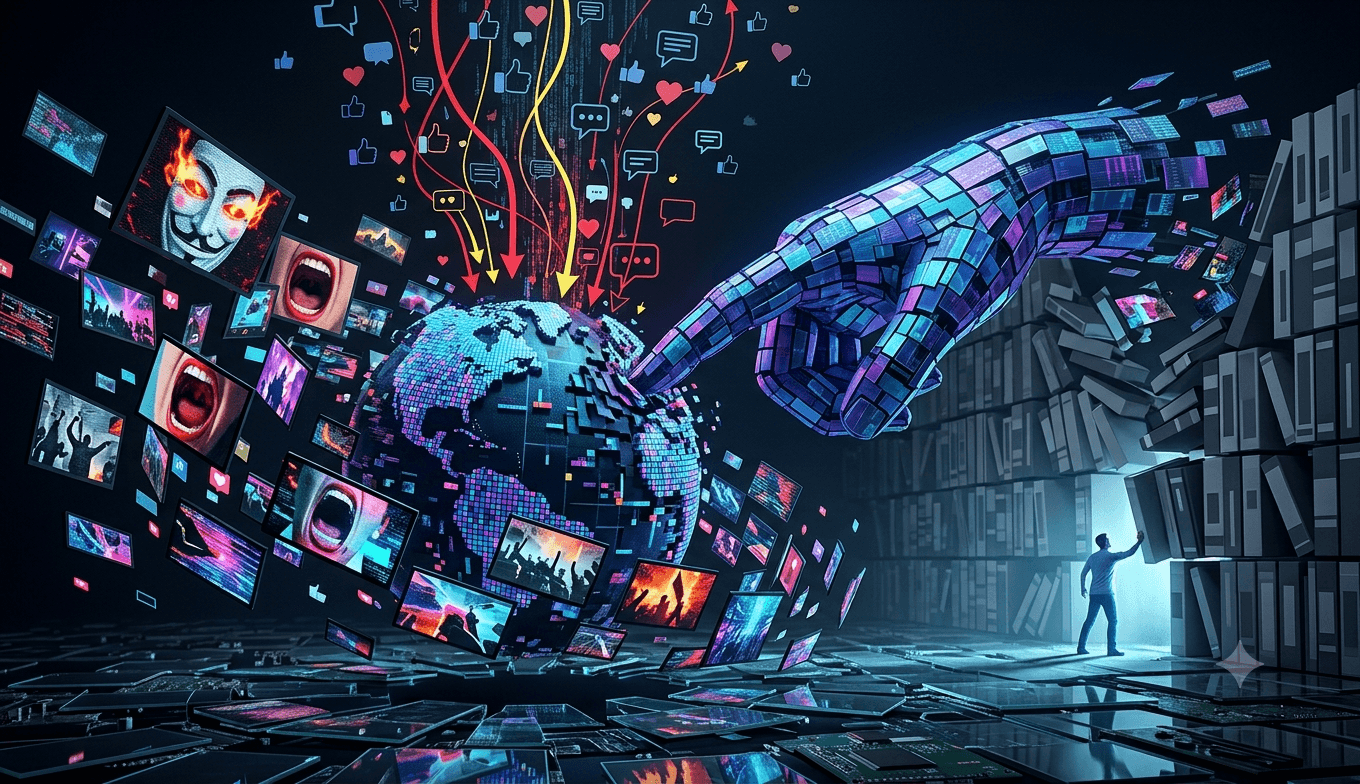
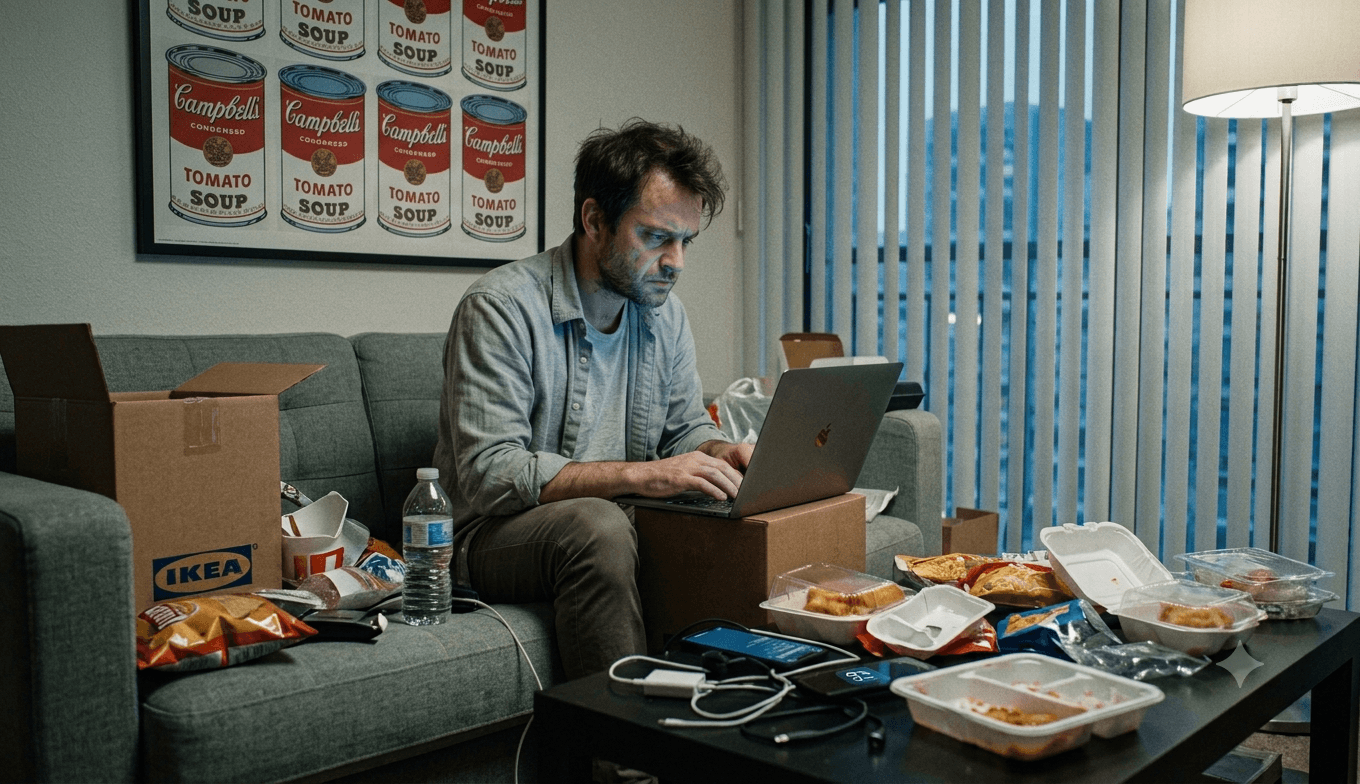
There is a textbook irony in watching someone use a mass-produced smartphone, seated on mass-produced IKEA furniture, to type a furious tirade against the “inauthenticity” of an AI-generated image. We are swimming in a sea of synthetic existence. Our food is chemically processed, our environments are climate-controlled, and our social interactions are curated by algorithms engineered to maximize our screen time.
Drawing a hard moral line at the precise point where a computer assists in creating text or imagery is entirely arbitrary; it’s a nostalgic longing for a bygone era of pure craftsmanship that we abandoned the moment we embraced industrialization.
I am not suggesting we abandon critical thought, nor am I advocating a world devoid of deep, agonizingly human art. The writing that changes lives, the kind with that rare, electric current of genuine human suffering, triumph, and observational genius, will always stand apart because it resonates with so many. AI can mimic Joan Didion’s cool detachment or Gore Vidal’s cynical wit, but it cannot live the lives that forged those perspectives. It does not know the grief of losing a daughter, nor does it understand the intoxicating rot of political power from firsthand experience.
For day-to-day consumption of information, entertainment, and digital white noise, let the machines handle it. If the end result serves its purpose, if it informs, entertains, or saves a grieving man from staring blankly at a blinking cursor while trying to honour his mother’s memory, then the tool has fully justified its existence.
Next time someone points to an article, a picture, a social media post, or a video and declares with righteous anger, “AI created this!” look them in the eye and offer the only rational response left in a manufactured world: “So what?”
About The Author