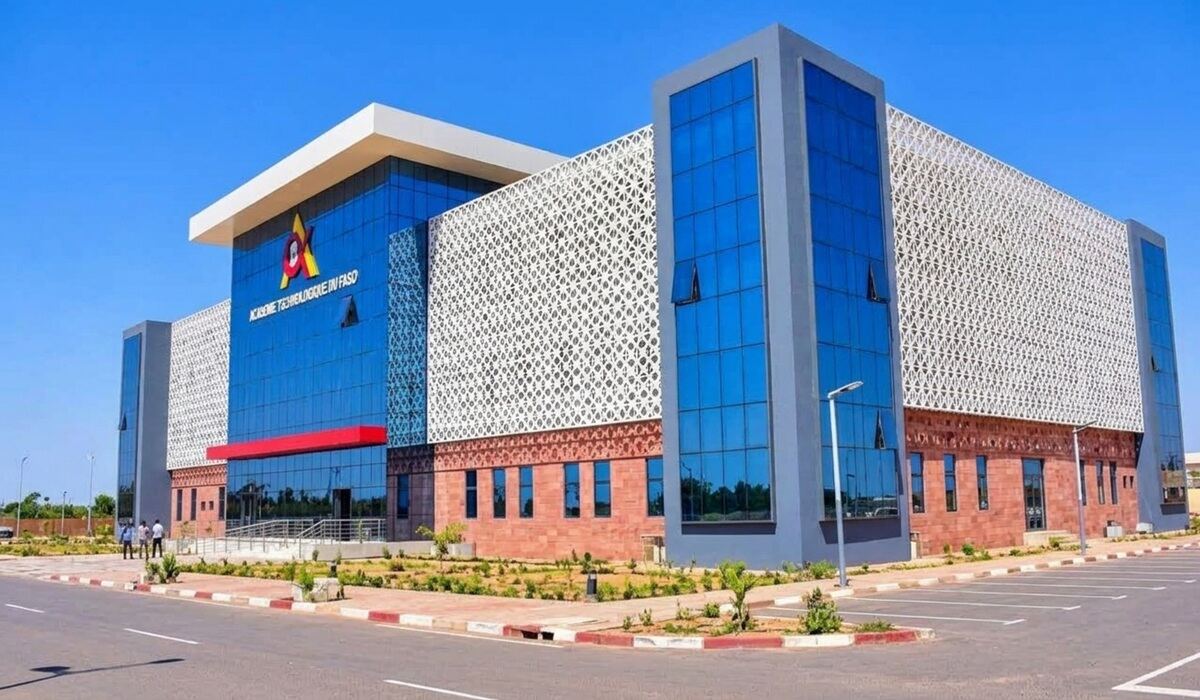
OUAGADOUGOU, Burkina Faso (AP) — Burkina Faso has inaugurated a sprawling new state-funded engineering and technology university on the outskirts of its capital, marking the latest milestone in President Ibrahim Traore’s campaign to overhaul the West African nation’s economy, education system and industrial independence.
Traore, the 38-year-old military leader who took power in September 2022, presided over the opening ceremony Monday for the Technological Academy of Faso in Pabre, located just north of Ouagadougou. Built across 60 hectares at a cost exceeding 37.3 billion CFA francs, or roughly $60 million, the institution was completed in less than a year using domestic budget allocations and local labor without foreign financing.
The launch of the academy reflects a broader transformation underway across Burkina Faso since Traore assumed the presidency. Over the past four years, his administration has systematically restructured the country’s economic policies, diplomatic alliances and public infrastructure around a doctrine of national sovereignty and endogenous development. Rather than relying on traditional Western aid packages or foreign technical consultants, the government has directed state revenues toward domestic manufacturing, agricultural self-sufficiency, mineral processing and higher education in applied sciences.
Addressing the inaugural class of 250 engineering students and faculty members on Monday, Traore emphasized that scientific mastery and discipline are essential to breaking decades of economic dependency. The academy operates under the motto of genius, audacity and discipline, and its curriculum is designed to produce specialists in eight strategic fields critical to national development. Those disciplines include nuclear science and energy, digital technology and cybersecurity, aeronautics and mechanical engineering, mining engineering, materials and metallurgy, civil engineering, industrial chemistry and agricultural production.
Students admitted to the five-year program live on campus under a boarding system and hold the status of reserve officer cadets. Before beginning their technical coursework, the incoming cohort completes 12 weeks of initial military training in Bobo-Dioulasso alongside the national armed forces, followed by continuous civic and military instruction throughout their studies. Education officials stated that the structure is intended to instill technical rigor alongside public service commitment, ensuring graduates deploy their skills directly into domestic infrastructure and industrial projects.
The technological academy is paired with aggressive industrial reforms enacted by Traore’s government over the last two years. Burkina Faso recently inaugurated its first domestic gold refinery in Ouagadougou, an investment valued at roughly $19 million aimed at processing raw bullion locally rather than exporting unrefined ore abroad. As one of Africa’s leading gold producers, the country has also revised its mining code to increase state equity stakes in industrial mines, mandate local content requirements and revoke permits from foreign operators accused of failing to meet development timelines.
In the agricultural sector, the government launched a nationwide mechanization and irrigation initiative that has distributed thousands of tractors, fertilizers and improved seeds to rural cooperatives. State-backed processing plants for tomatoes, cotton and cereals have been constructed to reduce food imports and stabilize domestic prices. Officials report that cereal production has expanded substantially as newly rehabilitated farmland comes under cultivation, even as security forces continue operations to reclaim territory from armed insurgent groups in the northern and eastern regions.
On the diplomatic and security front, Traore has reshaped Burkina Faso’s regional posture. Following the withdrawal of French troops and the termination of legacy military accords, Burkina Faso joined neighboring Mali and Niger to establish the Alliance of Sahel States. The three nations have pooled military intelligence, coordinated joint border operations and announced plans for shared infrastructure, energy grids and unified passport protocols. Simultaneously, Ouagadougou has expanded bilateral trade, technical exchanges and diplomatic ties with Russia, China, Turkey and Iran, securing equipment and training agreements without political conditions.
Domestic governance under Traore has also seen sweeping institutional changes. The administration has prioritized anti-corruption audits across state ministries, reduced executive salaries and mobilized community labor through patriotic fundraising campaigns that have financed road paving, clinic construction and water infrastructure. At the same time, the government has tightened oversight over media outlets, civil society organizations and religious institutions under new national security and anti-radicalization statutes, arguing that strict internal cohesion is required while the nation wages an existential counterinsurgency campaign.
For the 250 students entering the Technological Academy of Faso this week, the immediate focus remains on laboratories, workshops and engineering classrooms. Beyond awarding engineering degrees recognized across West Africa, the facility houses research and manufacturing workshops tasked with designing and assembling electronic devices, agricultural machinery and spare parts locally. Government planners view the Pabre campus as the intellectual anchor of Traore’s long-term vision to transition Burkina Faso from an exporter of raw commodities into a self-reliant industrial economy.
About The Author