There are moments in international politics when a handshake carries greater significance than a military deployment. Turkish Foreign Minister Hakan Fidan’s engagement with Libya’s eastern leadership, including Field Marshal Khalifa Haftar and his son Saddam Haftar, is one such moment. Turkey and Haftar were once bitter adversaries. Ankara backed the government in Tripoli while Haftar’s forces fought to seize the capital. Today, the political landscape is changing. Confrontation is giving way to dialogue, proxy warfare to political engagement, and division to the possibility of a unified Libya.
Fidan’s August 11–12 visit to Benghazi and Turkey’s stated support for “one Libya” represent more than a diplomatic gesture. They signal a significant adjustment in Ankara’s regional strategy. States do not have permanent friends or permanent enemies; they have permanent interests. President Recep Tayyip Erdoğan appears to have recognized this reality and is applying it with increasing pragmatism. Turkey’s earlier confrontation with Haftar produced battlefield consequences but did not unify Libya. If Ankara’s strategic objective is ultimately a stable, sovereign, and economically viable Libya, engaging actors who control substantial parts of eastern Libya and retain significant security influence may be more productive than continuing to exclude them.
This does not mean Turkey has abandoned its former partners in Tripoli or intends to sever its relationship with western Libya. Rather, Ankara appears to have concluded that Libya cannot be stabilized through relations with only one side. Turkey’s growing engagement with eastern Libya has become increasingly visible. Fidan met Saddam Haftar in Ankara in July, while military and diplomatic contacts between Turkey and the eastern camp have also expanded. This represents a notable departure from the earlier Turkish policy under which Ankara was the most important external military supporter of the Tripoli-based government.
Benghazi’s importance extends well beyond Libya’s internal political struggle. Libya may remain politically and geographically divided, but its resources are national assets. Its oil reserves, ports, Mediterranean coastline, trade routes, and enormous reconstruction opportunities cannot indefinitely remain divided among competing administrations. Any sustainable political settlement will require the eastern and western centers of power to be incorporated into a political framework in which authority, resources, and security responsibilities can be distributed in a workable manner.
There is also a powerful economic dimension to Turkey’s approach. Libya occupies a strategically important position on the southern shore of the Mediterranean and offers enormous opportunities in reconstruction, energy, infrastructure, and trade. Turkish construction companies, defense industries, infrastructure firms, and energy businesses could all benefit from a stable Libya. Turkey’s maritime interests in the Mediterranean further increase Libya’s strategic value. For Ankara, a peaceful and unified Libya could ultimately be far more valuable than a country trapped indefinitely in conflict.
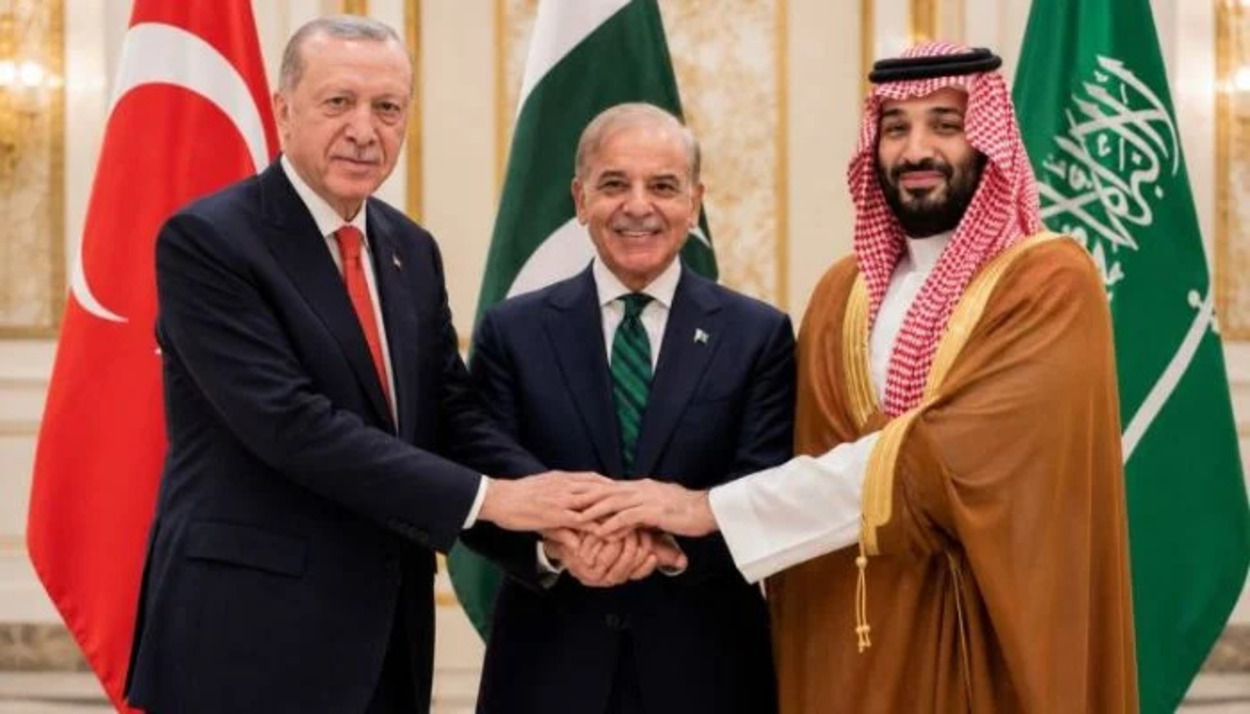
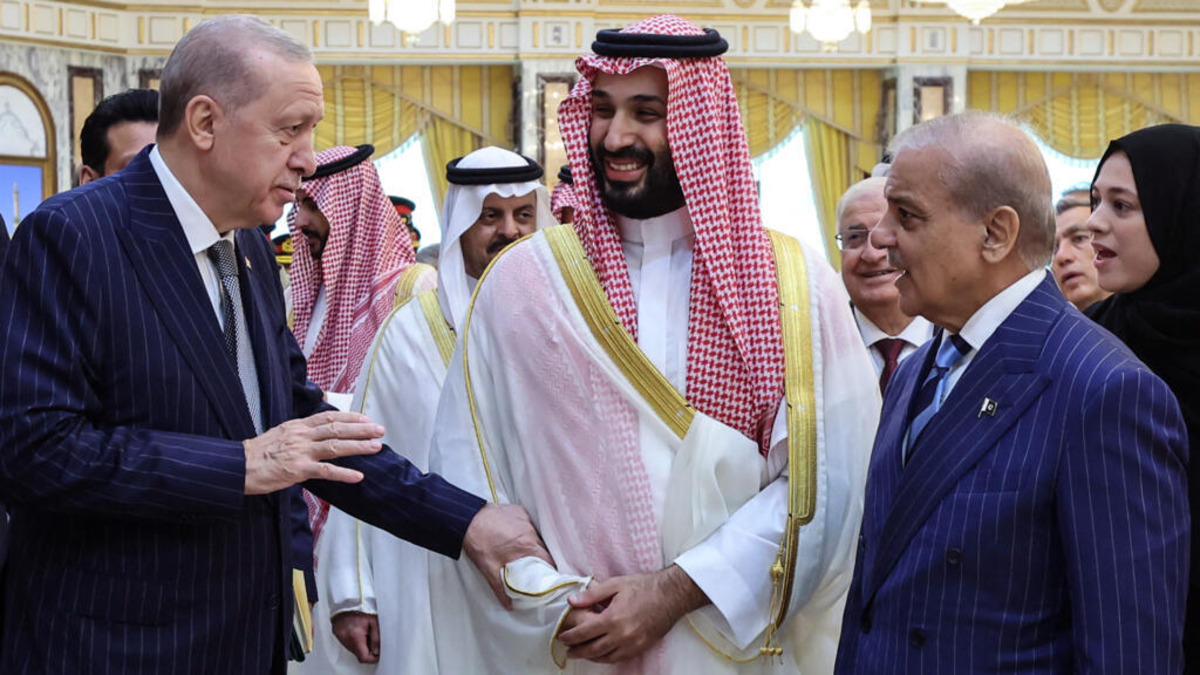
Erdogan’s broader diplomatic strategy also appears to extend beyond Libya. Only days before the Benghazi engagement, Turkey, Saudi Arabia, and Pakistan signed the Makkah Joint Defense Agreement. Signed on August 7, the agreement incorporates a principle of mutual defense under which an armed attack against one member is regarded as an attack against all three. Fidan has compared the framework, in functional terms, with NATO’s Article 5. Yet the agreement is defensive in character and is not officially directed against any particular country.
The significance of this development becomes clearer when viewed alongside the Benghazi diplomacy. Erdogan appears interested in developing a regional model in which Muslim-majority countries are neither compelled to depend exclusively on Western powers nor condemned to remain strategically isolated from one another. Instead, multiple networks of cooperation could emerge in defense, diplomacy, trade, technology, and economic development.
This is where Saudi Crown Prince Mohammed bin Salman assumes extraordinary importance. Erdogan and Mohammed bin Salman represent two major centers of influence in the Muslim world, although the foundations of their power are different. Turkey possesses a powerful military, a rapidly expanding defense industry, extensive diplomatic experience, and a strategic geographic position connecting Europe, Asia, and ME .
Saudi Arabia possesses enormous financial resources, religious significance, global influence in the energy sector, and growing diplomatic weight. Pakistan, under the leadership of Field Marshal Asim Munir, brings military expertise, strategic geographic importance, a substantial defense establishment, and nuclear capability to this emerging triangle.
Yet it would be premature to describe the Makkah agreement simply as a “Muslim NATO.” The phrase is politically attractive, but the realities are far more complicated. The three countries have different national priorities and security concerns. Pakistan’s principal security challenges are not identical to Turkey’s, while Saudi Arabia faces its own complex regional threats and instability.
The real test, therefore, will be whether the agreement can translate political symbolism into practical mechanisms for consultation, deterrence, intelligence cooperation, defense coordination, and crisis management. Symbols matter greatly in international politics. The signing of a defense agreement in Makkah, one of Islam’s holiest cities, carries an exceptional political and emotional message. It suggests that major Muslim states are interested in developing mechanisms through which they can consult one another, cooperate strategically, and collectively deter aggression.
But the greatest danger would be allowing this emerging partnership to become merely another military arrangement. The Muslim world faces challenges that cannot be solved through defense agreements alone. Economic fragmentation, technological dependence, unemployment, weak institutions, political divisions, food insecurity, and limited intra-Muslim trade are equally serious strategic problems. A meaningful framework of Muslim cooperation would therefore need to prioritize joint defense production, agricultural cooperation, energy connectivity, food security, technology transfer, artificial intelligence, education, infrastructure, and expanded trade.
This is precisely where a partnership between Erdoğan and Mohammed bin Salman could acquire historical significance. If Turkey’s strategic and technological capabilities can be combined with Saudi Arabia’s financial and economic influence, while Pakistan contributes its defense expertise and diplomatic reach, a broader architecture of Muslim cooperation could gradually emerge. Egypt, Qatar, Indonesia, and other Muslim countries could eventually participate in different areas without necessarily becoming members of a single rigid alliance.
But genuine unity cannot be built by excluding another Muslim country. Any emerging Muslim diplomatic framework must avoid becoming a sectarian alliance or an anti-Iran bloc. The Makkah agreement has been presented by its members as defensive and non-sectarian. That distinction is fundamental. If “Muslim unity” becomes synonymous with opposition to another Muslim state, the project will reproduce the very divisions it claims to overcome.
The same principle applies to Libya. Turkey’s dialogue with Haftar will be judged successful not simply because former adversaries shook hands, but because Ankara uses its influence to encourage political reconciliation, institutional integration, and economic cooperation between Libya’s eastern and western power centers. The Libyan people have already paid an enormous price for foreign intervention, civil conflict, and political fragmentation. They need a political settlement, peace, and a functioning state far more than they need another arena for geopolitical competition.
For decades, the Muslim world has missed opportunities for practical cooperation because of historical disputes, ideological differences, sectarian tensions, and competing national interests. Erdogan’s decision to engage a former adversary represents a different approach: strategic realism through reconciliation. Mohammed bin Salman’s evolving regional diplomacy similarly reflects Saudi Arabia’s recognition that economic transformation and national development require regional stability, investment, connectivity, and partnerships.
The emerging diplomatic language from Ankara to Riyadh and from Islamabad to Benghazi is therefore worth watching carefully. Yesterday’s enemies can become today’s negotiating partners when national interests change and political leaders recognize that perpetual confrontation rarely produces lasting solutions. Turkey’s engagement with Haftar is not merely a Libyan story; it may be part of a broader transformation in the way influential Muslim states approach regional politics.
Whether this transformation becomes a genuine turning point will depend on what comes next. Handshakes must be followed by institutions, agreements by implementation, and declarations by economic and political cooperation. If Erdogan succeeds in combining Turkey’s strategic capabilities with Saudi Arabia’s economic influence, while Pakistan contributes its defense and diplomatic strengths, and other Muslim countries participate constructively, the long-discussed idea of greater Muslim cooperation could gradually acquire a practical foundation. The Muslim world may indeed be turning a new corner—but unity will not emerge from slogans alone. It will emerge when economic interdependence replaces strategic isolation.
About The Author