Why is Revolutionary Poet Habib Jalib’s Daughter not red line of CM Maryam Nawaz?
- Naveed Aman Khan
- Pinpoint
- August 23, 2026
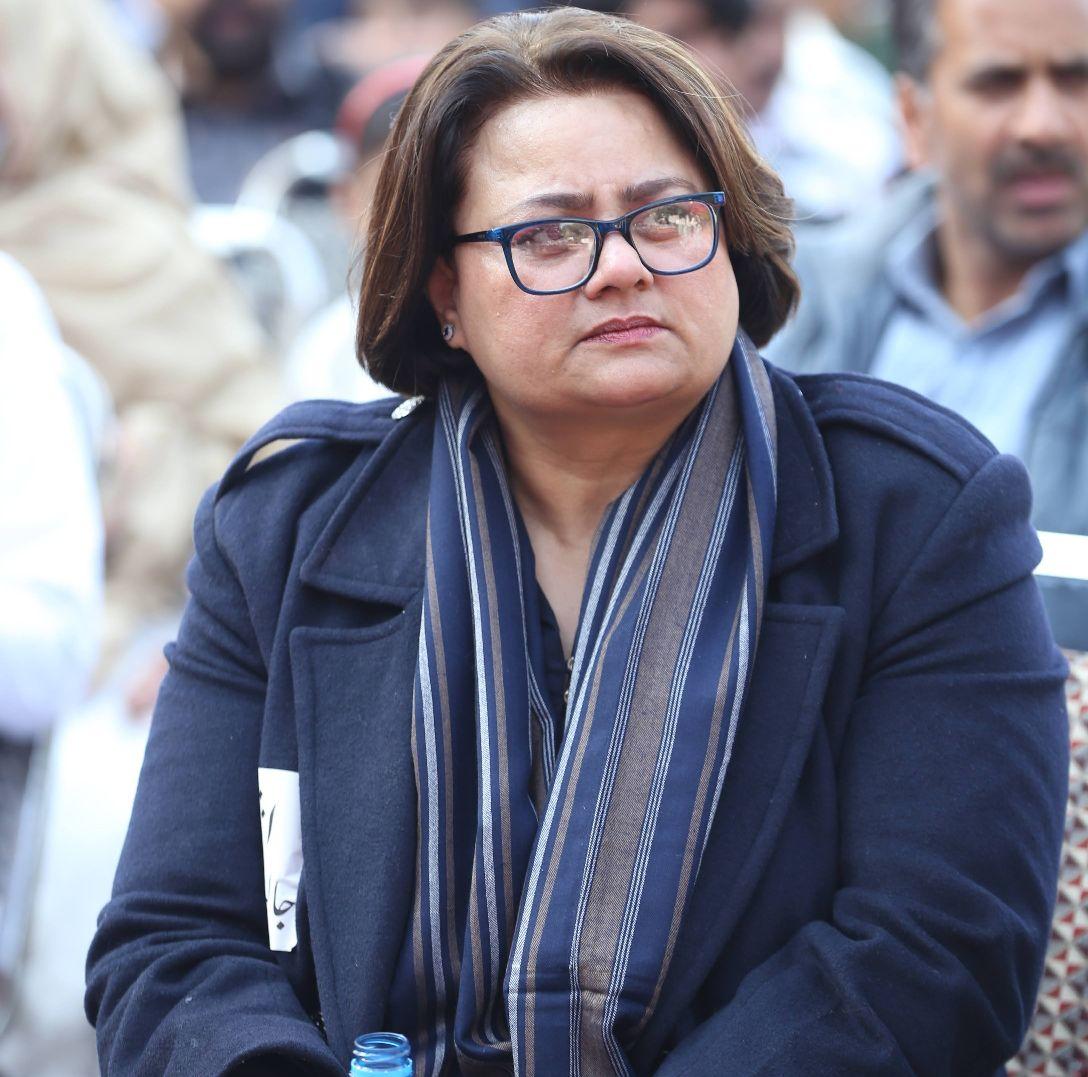
There are moments when the conduct of a poor citizen says more about a country than all the speeches delivered from the floors of parliament. The story of Tahira Jalib, daughter of legendary revolutionary poet Habib Jalib, is one such moment. It is not merely the story of a woman struggling to feed her family. It is a painful test of Pakistan’s political conscience, its claims about women’s empowerment and its treatment of those who refuse to become supplicants before power.
Habib Jalib was not a poet who wrote revolutionary verses merely to entertain crowds. He lived what he wrote. He stood against dictatorship, political repression and the exploitation of ordinary people. He remained close to the working class and repeatedly paid a personal price for speaking truth to power. Even when governments and politicians could have offered him patronage, he chose the difficult road of dignity. His life became inseparable from the principles of self-respect, resistance and independence. The state eventually recognized his literary contribution with posthumous honors, but recognition could never replace the material sacrifices he made during his lifetime. His daughter Tahira Jalib appears to have inherited something far more valuable than a famous surname: the courage to preserve her father’s principles in difficult circumstances. Her economic struggle is not new. Years ago, reports noted that she ran a small driving school to support household expenses. More recently, she entered taxi driving as another means of earning a livelihood.
That is where the real tragedy begins. A society that claims to honor Habib Jalib should have been proud to see his daughter choosing honest labor rather than political patronage. Instead of asking politicians for favors, she reportedly chose work. When fuel prices made taxi driving increasingly difficult, she sought another modest means of survival: preparing and selling lunch to earn bread for her family.
There is nothing humiliating about selling food. There is nothing shameful about driving a taxi. There is nothing dishonorable about standing behind a small stall and serving meals. The shame belongs elsewhere—on a political culture that celebrates the poor in speeches but often makes survival harder for them in practice.
The reported removal of Tahira’s modest food stall, followed by demands for Rs5,000 per week and Rs1,000 per day, raises deeply disturbing questions. If a woman is trying to survive through lawful, honest work, why should the first response of the state be obstruction, harassment or financial pressure? If the stall violated municipal regulations, the authorities should explain the specific law, provide due process and offer a lawful alternative location. But if informal payments or political pressure are involved, the matter becomes much more serious.
Even more serious are allegations that people were sent to threaten or intimidate her in the name of Punjab Chief Minister Maryam Nawaz. Such an allegation must be investigated rather than casually accepted as established fact. No responsible journalist should convict an individual without evidence. But precisely because the allegation is so grave, it demands an independent inquiry.
There is also an extraordinary contradiction here. Maryam Nawaz has repeatedly presented women’s empowerment as a central political priority and has publicly described women as her “red line.” That political message deserves to be judged against the experiences of women who are trying to earn their living at the bottom of the economic ladder. If a woman like Tahira Jalib cannot run a tiny livelihood enterprise without intimidation or excessive financial demands, then what does “women’s empowerment” mean beyond official speeches, ceremonies and social-media campaigns?
Women do not need empowerment slogans when they are struggling to pay household bills. They need safe workplaces, affordable transportation, access to markets, protection from harassment, transparent municipal rules and an administration that treats them as citizens rather than nuisances. This is where Pakistan’s political hypocrisy becomes impossible to ignore.
The Pakistan Peoples Party invokes the legacy of progressive politics. The Pakistan Muslim League-Nawaz speaks constantly about development, public welfare and women’s empowerment. The Pakistan Tehreek-e-Insaf has built much of its political narrative around change, justice and the common citizen. Yet when a poor woman refuses to beg and instead chooses dignified work, the political system appears strangely indifferent.
Tahira Jalib has political connections and has, at different times, been associated with political activity. She even contested an election in 2025, and the PPP publicly backed her in the NA-129 by-election. But political support during an election campaign is one thing; protecting the dignity and livelihood of an ordinary citizen is another.This distinction is crucial. Politicians often remember the poor when they need votes. They remember revolutionary poets when they need a crowd. They remember women when they need a photograph. They remember workers when they need slogans. But after elections, the same citizens can become invisible. That is precisely why Tahira’s refusal to seek favors deserves respect.
A politician can survive by changing alliances. A powerful person can make a telephone call. A wealthy individual can pay a fine or move to another business. A poor woman has none of these luxuries. Her only capital may be her labor and her dignity. And dignity was Habib Jalib’s greatest inheritance.
Jalib’s daughter has publicly spoken about her father’s ideals and described him as her inspiration. She has also worked to preserve his intellectual and political legacy through the Fikr-i-Jalib Foundation. It is therefore deeply ironic that the daughter of a man remembered as the “poet of the masses” should be forced to confront the very conditions against which he spent his life protesting. The larger question is not whether Tahira Jalib should receive special treatment because she is Habib Jalib’s daughter. She should not. She should receive equal treatment because she is a citizen.
In fact, that is the most important point of this entire controversy. The state should not protect her merely because she carries a famous surname. It should protect every woman who is selling food, driving a taxi, stitching clothes, cleaning houses, working in factories or running a tiny roadside business. If the rules apply to her, they must apply transparently. If her stall was illegal, the same standard should apply to every politically connected vendor and commercial operation. If fees are legitimate, they should be officially notified, receipted and uniformly enforced.
What Pakistan cannot afford is a two-tier system in which the powerful receive public land, contracts, permits and privileges while the poor are chased away from the tiny spaces where they attempt to earn a living. This is also a test of the Punjab government’s administrative credibility. If the chief minister’s name has been invoked in threats against Tahira Jalib, the government should not dismiss the matter as political propaganda. It should investigate it. If officials or individuals misused the chief minister’s name, they should be held accountable. If no such instruction was ever issued, the government should make that clear publicly and protect the woman from intimidation.
Silence would only deepen suspicion. There is an even larger lesson here. Pakistan’s politicians have spent decades appropriating the language of Habib Jalib while ignoring the economic realities that gave his poetry its moral force. They quote his verses from political stages, invoke his name during literary ceremonies and praise his courage. But the real tribute to Jalib would not be another commemorative event. It would be ensuring that his daughter—or any other Pakistani woman—can earn an honest living without being forced to surrender her dignity.
Habib Jalib once represented the voice of people who had little power. His daughter’s predicament has created an uncomfortable mirror for the same political class that continues to celebrate him. The mirror asks a simple question: What is the value of honoring a revolutionary poet if his daughter must struggle alone for the right to sell a meal and feed her family? The answer should not come through another speech. It should come through action.
The Punjab government should ensure an impartial inquiry into the allegations, clarify the legal status of the stall, investigate the reported financial demands, identify anyone who used political influence to threaten or intimidate Tahira Jalib, and establish transparent rules for small vendors. More importantly, the government should create an environment in which women can choose self-employment without fear.
Tahira Jalib does not need charity. She needs justice. She does not need a politician to hand her an envelope. She needs the state to stop putting obstacles in the path of her labor.
And perhaps that is the most fitting tribute to Habib Jalib: not to turn his daughter into a beneficiary of political patronage, but to ensure that she can stand on her own feet without being punished for refusing to bow. The tragedy of Pakistan is not that a poet’s daughter is selling lunch. The tragedy would be if a country that proudly quotes Habib Jalib cannot tolerate his daughter doing honest work.
If the rulers truly believe that women are their “red line,” then that red line must be drawn not only at elite conferences and political speeches, but also around the poorest woman’s right to work, earn and live with dignity. Otherwise, the rhetoric of empowerment becomes what Jalib spent his life fighting against: a beautiful slogan concealing an ugly reality.
About The Author