Why Pakistan Is Facing difficulties in War Against Terrorism in Balochistan, KP
- Naveed Aman Khan
- Pinpoint
- August 19, 2026
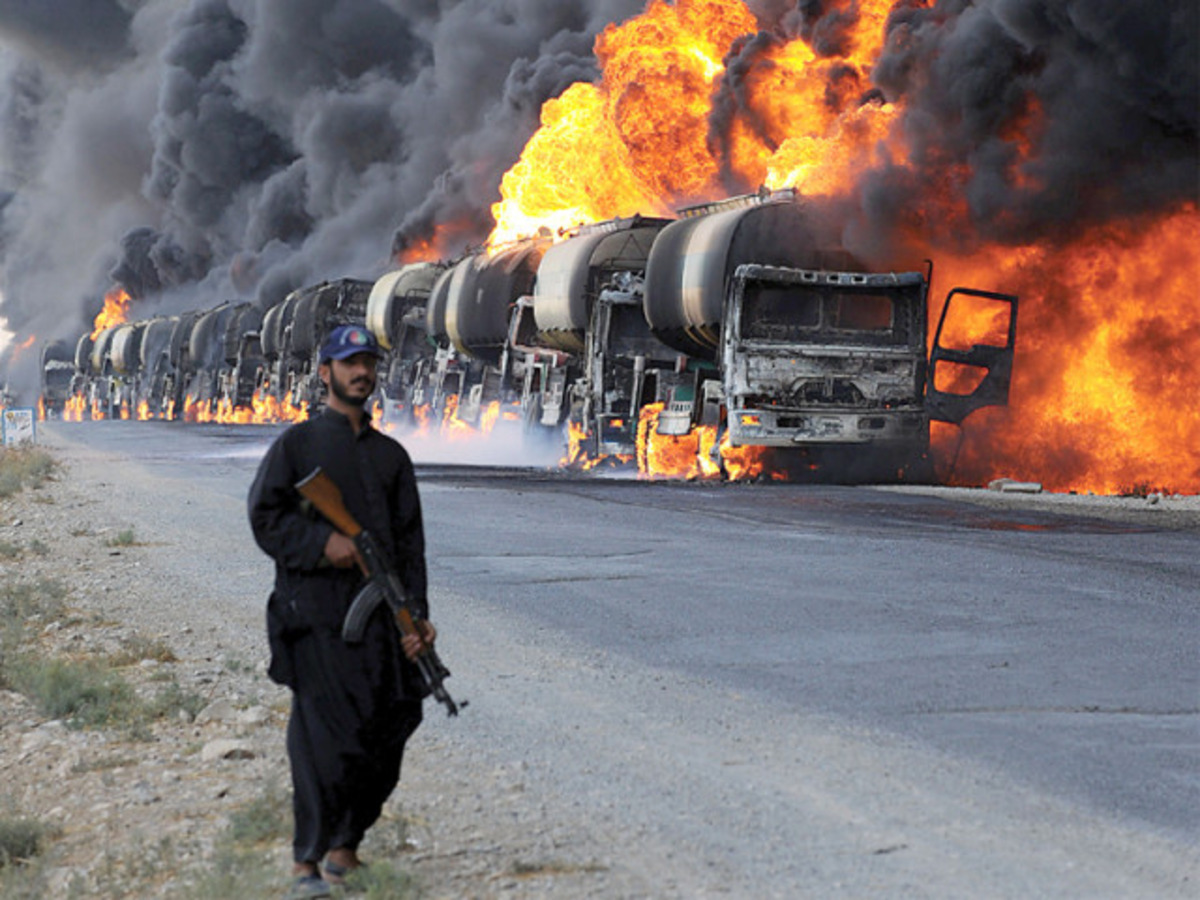
Pakistan is confronting a dangerous resurgence of terrorism in two strategically vital provinces, Balochistan and Khyber Pakhtunkhwa (KP). The Balochistan Liberation Army (BLA) and Balochistan Liberation Front (BLF) have intensified attacks aimed at state institutions, security forces, infrastructure and economic interests, while the Tehrik – e -Taliban Pakistan (TTP) continues to exploit the difficult terrain and porous frontier in KP. July 2026 has been particularly alarming, with Pakistan recording its highest level of terrorism-related casualties and counter-terrorism losses since July 2023. The statistics are not merely numbers; they represent a profound challenge to the state’s authority and its ability to guarantee security to its citizens.
The immediate security picture is complicated by Pakistan’s increasingly bitter relationship with Afghanistan. The TTP terrorists are operating from Afghan territory. Afghan Taliban authorities are providing them sanctuary or failing to take effective action against them. India, exploit Afghan territory and networks to facilitate terrorism against Pakistan. There is evidence of terrorist networks operating across borders, and Pakistan has disclosed operational links between BLA, TTP and other terrorist organisations.
Foreign sponsorship should not become a substitute for examining Pakistan’s own weaknesses. Pakistan needs to build its international case through verifiable intelligence, diplomatic pressure and multilateral mechanisms. The deterioration of Pakistan-Afghanistan relations has created a strategic environment in which militant groups can exploit geography, political mistrust and weak border management.
Despite possessing one of the region’s most experienced security establishments, has failed to permanently defeat terrorism in Balochistan and KP. Pakistan has conducted successive operations — from Rah-e-Rast and Rah-e-Nijat to Zarb-e-Azb and Radd-ul-Fasaad — and has inflicted enormous losses on terrorist organisations. But military victories have repeatedly been followed by periods of resurgence.
This suggests that the state has often treated terrorism primarily as a battlefield problem rather than as a multidimensional political, economic, administrative and ideological challenge. Intelligence-based operations can eliminate commanders, destroy hideouts and disrupt networks, but they can’t alone remove the conditions that allow terrorist organisations to recruit, finance themselves and acquire local support.
Separatist organisations exploit genuine grievances relating to political representation, development, employment, resource distribution and governance. None of these grievances justifies terrorism or attacks on civilians and security personnel. But defeating an insurgency requires separating legitimate grievances from violent separatism. The state must combine uncompromising action against armed groups with credible political engagement and visible economic justice.
KP presents a somewhat different challenge. Here, the TTP benefits from the geographic complexity of the Afghanistan-Pakistan border, militant sanctuaries and longstanding social and tribal networks. Pakistan cannot secure KP permanently through checkpoints and periodic operations alone. It needs stronger policing, intelligence coordination, border control, judicial capacity and local governance.
China’s approach in Xinjiang has combined security operations with extensive surveillance, preventive counter-terrorism, ideological deradicalisation and economic development. Chinese policy documents emphasise a shift from emergency responses towards regularised, law-based prevention, while also highlighting employment, education and public welfare as instruments of stability.
Counter-terrorism becomes more sustainable when intelligence, policing, development, education and governance operate as one integrated strategy. Security must reach the village, district and community level rather than remaining concentrated around major military operations.
Sri Lanka’s defeat of the Liberation Tigers of Tamil Eelam (LTTE) in 2009 offers another important lesson. The Sri Lankan military ultimately succeeded because it developed a clearer national strategy, improved military adaptation, isolated the insurgents diplomatically and financially, and secured greater popular support. But Sri Lanka’s experience also carries a warning: military victory does not automatically produce political reconciliation. Post-war reconstruction, inclusion, accountability and reconciliation remain essential to preventing renewed alienation.
Pakistan’s political class must stop treating terrorism as an issue belonging exclusively to the armed forces. National security requires political consensus. Governments in Islamabad, Quetta and Peshawar need a common counter-terrorism framework, while intelligence agencies, police, paramilitary forces and the military must operate through a genuinely integrated command and information architecture. The state must also close the financial arteries of terrorism. Terrorist organisations can’t operate without money, recruitment, weapons, communications and logistical networks. Financial intelligence, border controls, cyber monitoring and prosecution of facilitators should receive the same attention as kinetic operations.
The most dangerous mistake would be to assume that every Baloch or Pashtun political grievance represents terrorism, or conversely, that every separatist narrative can be accommodated through political concessions. The state must make a sharp distinction between peaceful dissent and armed violence. Citizens who demand rights through constitutional means must be heard; organisations that deliberately kill civilians and security personnel must be confronted by law. Pakistan does not lack experience in fighting terrorism. What it lacks is a sufficiently consistent, long-term national strategy that survives changes of government and political confrontation. July’s bloodshed should therefore be treated as a strategic warning rather than another episode in an endless cycle of attack and retaliation.
The objective must be more ambitious than simply killing terrorists. Pakistan needs to make Balochistan and KP environments in which terrorist organisations cannot recruit, hide, finance themselves or acquire political legitimacy. That requires secure borders, capable civilian institutions, accountable governance, economic opportunity, political inclusion and an intelligence-led security system. The armed forces and security agencies can win battles, but only the state as a whole can win the peace. Unless Pakistan learns that distinction, Balochistan and KP will remain vulnerable to successive waves of terrorism — regardless of how many operations are launched or how many terrorists are eliminated.
About The Author