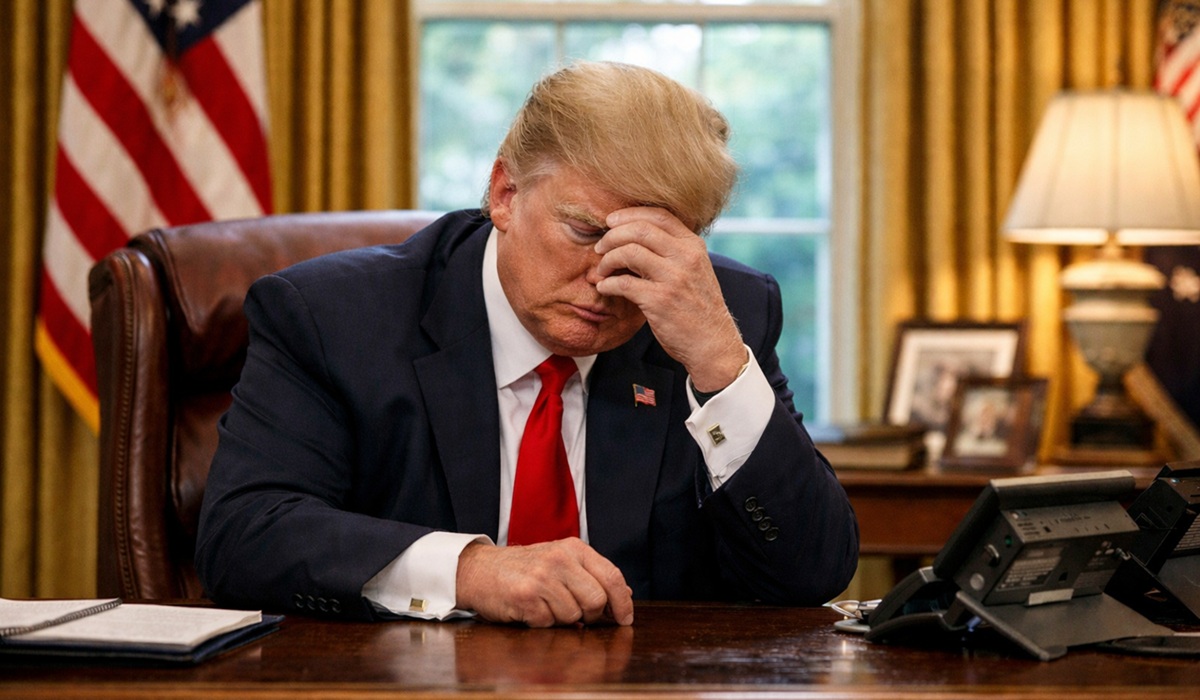
The landscape of American foreign policy took a remarkably aggressive turn when President Donald Trump leveled a direct military threat against Oman, a longtime regional partner and strategic Gulf ally.Speaking to national media during a phone interview, Trump addressed ongoing diplomatic friction over the critical Strait of Hormuz by stating that if Oman “gets in the way,” the United States would “bomb the shit out of them”.This unfiltered declaration highlights the high-stakes tensions defining the ongoing conflict and underscores a growing concern among international observers: the increasing willingness of Washington to target or threaten even traditional allies to secure its geopolitical objectives.
At the center of this brewing diplomatic storm is control over the Strait of Hormuz, a vital maritime chokepoint through which a significant fraction of the world’s traded oil supplies transit.Following the outbreak of the broader U.S.-Iran conflict, the waterway has remained largely paralyzed.With a sixty-day negotiating window expiring without a breakthrough peace agreement, Iran and Oman have been actively holding parallel talks to establish a provisional arrangement for managing shipping traffic.The proposed framework aims to map out transit lanes allowing commercial vessels to navigate safely. However, Washington has insisted on maintaining a rigid naval blockade, viewing any independent regional deals as potential obstacles to its broader strategic pressure campaign against Tehran. Rather than relying purely on traditional diplomatic channels to manage these overlapping talks, the administration’s response has been defined by overt volatility.
Trump’s latest remark is not an entirely isolated incident, though its bluntness on national television stunned international analysts. The president previously floated similar threats in private and semi-public settings, warning Muscat to behave like everybody else or face catastrophic retaliation. Oman has historically functioned as a crucial, neutral diplomatic bridge between Washington and various regional actors, frequently hosting delicate backchannel negotiations. For decades, it has played the role of a stabilizing mediator in the volatile Persian Gulf. Threatening military action against such a nation signals a profound shift in how the U.S. treats diplomatic intermediaries, effectively declaring that neutrality or independent mediation will no longer be tolerated if it complicates Washington’s immediate military or economic maneuvers.
The public reaction to the threat has been one of shock and dismay, as critics and foreign policy analysts question the sanity of casually threatening a friendly Gulf state on live television. Direct threats against sovereign partners alienate long-standing allies who expect mutual diplomatic respect, potentially driving regional powers to seek security and economic partnerships elsewhere. By framing complex geopolitical negotiations in black-and-white terms of absolute compliance or destruction, the administration dramatically narrows the pathway for peaceful resolution. Furthermore, the ongoing instability in the Strait of Hormuz continues to threaten global energy markets, and ratcheting up hostilities with neighboring states risks widening the conflict into a full-scale regional conflagration.
As the standoff persists, the administration’s aggressive posture leaves little room for traditional diplomacy. The collapse of recent diplomatic frameworks and the insistence on unilateral control over international waterways mean that Washington is increasingly isolated in its methods, even among those nations that have historically stood beside it. By choosing intimidation over collaboration, the White House continues to push the envelope of international norms, leaving allies and citizens alike to wonder just how far this rhetoric will go and what collateral damage will be left in its wake as tensions continue to boil over across the region. The broader implications of such unbridled hostility stretch far beyond the immediate shipping lanes, threatening to unravel decades of delicate security architecture in the Middle East and plunging global markets into deeper uncertainty.
About The Author