The Politics of Deprivation Keeps Pakistan’s Peripheries Poor?
- Naveed Aman Khan
- Pinpoint
- Tiger's Eye Advisory Group - Trending News
- August 12, 2026
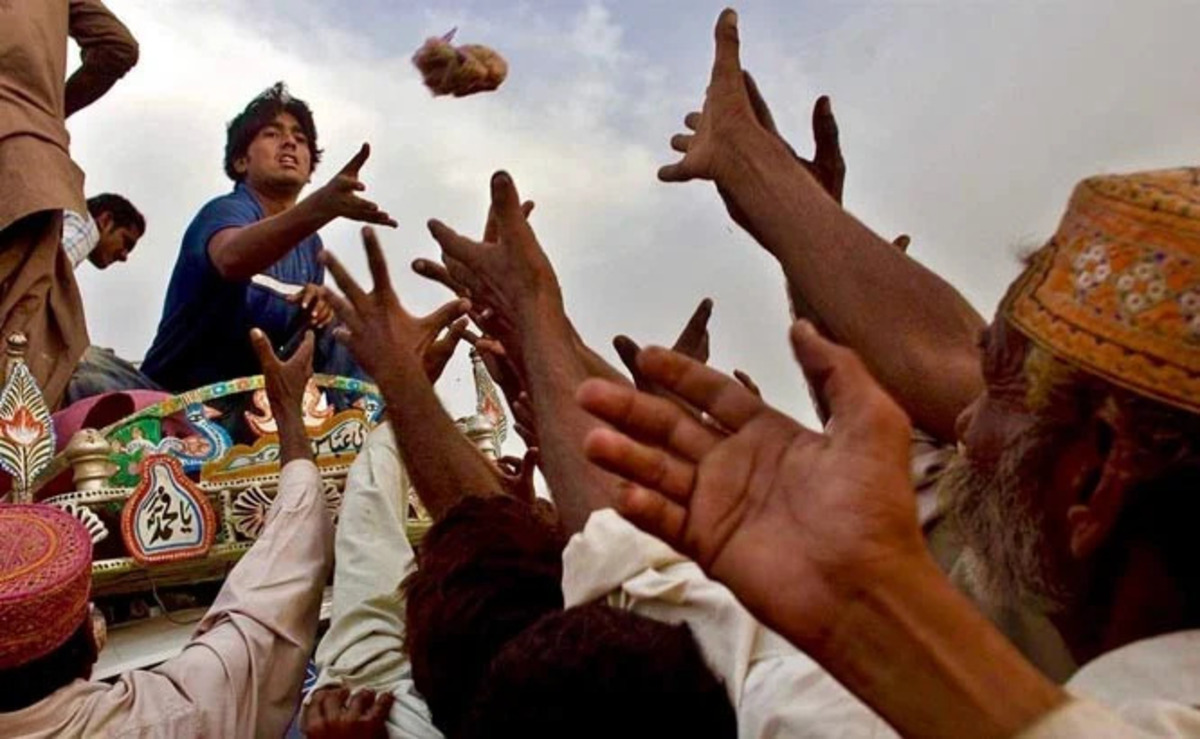
Pakistan has spent decades asking the wrong question about the deprivation of its peripheral regions. Whenever a village has no school, a district lacks a functional hospital, a university is absent, or young people have no economic future, the blame game begins. The establishment is blamed. The federal government is blamed. Punjab is blamed. Islamabad is blamed. Yet one question is rarely asked loudly enough: what have the Nawabs, Sardars, Waderas, tribal chiefs, landlords and hereditary political elites who have dominated these regions for generations actually built for their own people?
If Islamabad must answer for a neglected district, then the elected representatives and influential local elites who have controlled that district for decades must answer as well. Pakistan has never systematically asked its traditional ruling families a simple question: after generations of political influence, land ownership and representation, how much have you personally invested in the education and healthcare of the people who vote for you?
Consider Balochistan. The provincial government’s own 2023 – 24 education statistics reported that 23.7 percent of schools were non-functional. At the primary level, the proportion was even higher. Kalat had the highest district-level share, with 45.2 percent of schools classified as non-functional.
That is not merely a story about Islamabad. Education is a provincial responsibility, and provincial governments have existed for decades. Ministers, chief ministers, members of provincial assemblies, senators, parliamentarians, tribal chiefs and local political families have all participated in this system. If thousands of children remain outside functioning classrooms, responsibility must therefore extend beyond the federal capital.
Where are the large charitable hospital networks established by the region’s wealthiest political and tribal families? Where are the universities founded through their personal endowments? Where are the scholarship trusts that could have educated thousands of young people without waiting for Islamabad?
There are honorable exceptions across Pakistan—wealthy individuals, philanthropists, some political families and social organizations , have built some schools, colleges and hospitals. But exceptions cannot become an excuse for a broader system in which political influence is frequently inherited while social responsibility is treated as somebody else’s job.
The most troubling question is why some influential actors appear to benefit politically from deprivation. An educated population is difficult to control through patronage. A citizen who can read government budgets, understand constitutional rights, compare development promises and demand audited accounts is less dependent on a local patron. A patient with access to a functioning hospital is less dependent on a powerful landlord for medical favors. A young person with employment and education is less vulnerable to political coercion, tribal pressure or militant recruitment.
This creates a potentially dangerous incentive structure: poverty can become politically useful. That does not mean every tribal chief or politician deliberately keeps people poor. Such a sweeping accusation would be unfair. But Pakistan must honestly examine whether systems of patronage, hereditary influence and electoral dependency have discouraged genuine social transformation in some regions.
The destruction of schools and hospitals presents an even more serious contradiction. When terrorists attack educational institutions and healthcare facilities, they are not merely attacking buildings. They are attacking the future of the population. In May 2026, a girls’ primary school in Tank, Khyber Pakhtunkhwa, was destroyed in an explosive attack. It was the ninth attack on a school in the province since the beginning of that year.
Who benefits when a school disappears? Who gains when children cannot study? Who gains when a hospital cannot function? The answer is certainly not the ordinary citizen.
The destruction of educational infrastructure is devastating because rebuilding a school does not automatically rebuild a generation. A child who loses two or three years of education may never return. A girl prevented from attending school may be pushed permanently into illiteracy. A doctor who can’t safely serve in an area may leave. A qualified teacher may refuse to return.
Yet another contradiction deserves attention. Some political voices portray their regions exclusively as victims of federal exploitation while simultaneously remaining powerful participants in provincial and national governments.
If a politician has served as a minister, member of parliament, provincial legislator or influential coalition partner, he cannot forever present himself as an innocent spectator to the failures of the system. Political responsibility follows political power. Nor is Punjab an acceptable explanation for every failure.
Punjab is Pakistan’s largest province by population and consequently possesses enormous political and economic weight. It is legitimate to debate resource distribution, federal allocations, representation, water, employment and development disparities. It is equally legitimate for smaller provinces to demand greater political and economic justice.
Punjab’s population itself contains enormous disparities, and many districts within the province face problems similar to those elsewhere. The real issue is not ethnicity. It is governance, accountability, institutional capacity and political incentives.
After the 18th Amendment, provinces possess substantial responsibility for education and healthcare. That decentralization was intended to bring government closer to citizens. If services remain poor, provincial political leadership and administrative institutions must therefore face serious scrutiny.
The deeper tragedy is that ordinary citizens particularly those with limited education can be trapped between competing political narratives. One side tells them that Islamabad is responsible. Another tells them Punjab is responsible. A third tells them the establishment is responsible. Meanwhile, the local political elite may escape the main question: what did you do with the power you already possessed? Pakistan needs to replace the politics of accusation with the politics of measurable accountability.
Every district should publish a public record showing how many schools, colleges, hospitals and universities exist; how many are functional; how much money has been allocated; who received development contracts; how many projects were completed; and which elected representatives championed or obstructed them. Political families with decades of influence should voluntarily disclose their philanthropic contributions to education and healthcare.
Federal funds should be transparently tracked. Provincial governments must be audited. Development schemes should be independently evaluated. Security agencies must protect educational and medical institutions. Terrorists who destroy schools and hospitals must be treated as enemies of the people, not romanticized as representatives of the deprived. Most importantly, Pakistan’s citizens must be encouraged to judge politicians not by their titles, tribal affiliations, emotional speeches or anti-Punjab rhetoric, but by measurable outcomes.
About The Author