Winnipeg – We Have a Littering Problem
- Contributor
- Tiger's Eye Advisory Group - Trending News
- July 25, 2026
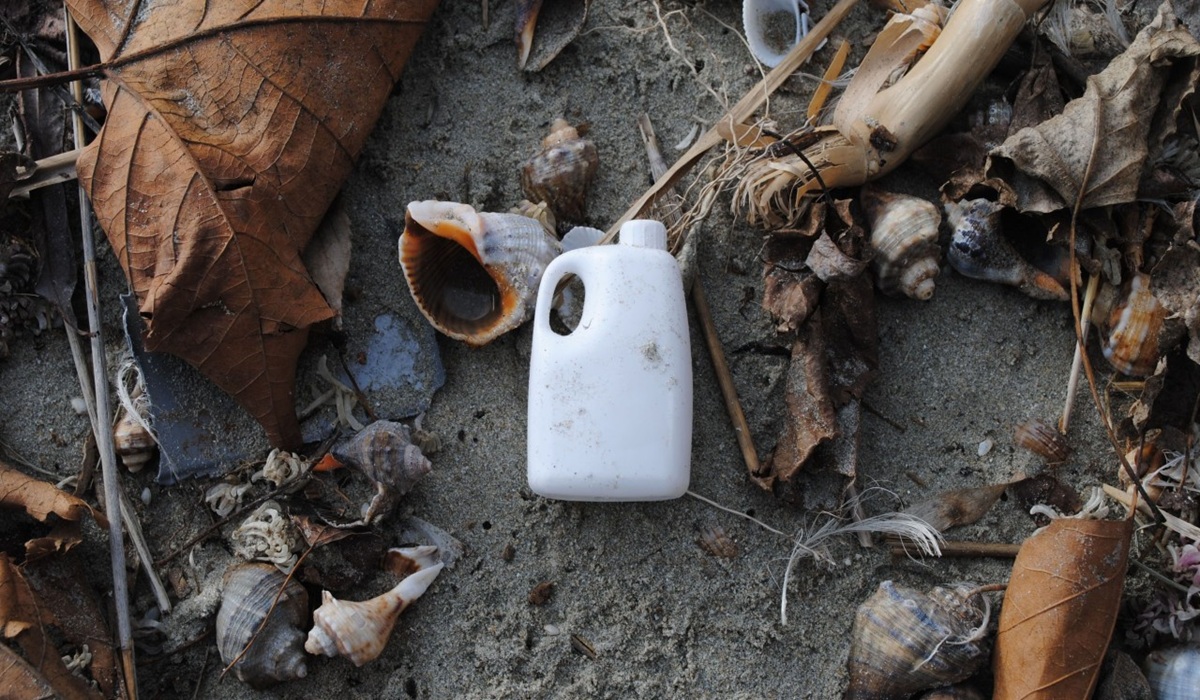
Every April, Winnipeg confesses. Except its now July and we’re still seeing it. In fact, this year its worse than ever.
The snowbanks go first along the boulevards, then in the back lanes, then in the ditches that run along the Perimeter highway. And underneath; every single year, like clockwork is everything we dropped in November and forgot about by December. Tim Hortons cups gone soft and grey. Plastic bags snagged on dead grass. A single mitten. Fast food wrappers fossilized in ice for five months, released all at once into the mud.
Nasty.
We call it the thaw. I’ve walked and driven past those reveals for years with a bit of an embarrassed familiarity. There it is again. And every year, someone writes the same op-ed, some politician promises a fine schedule, a well-meaning group organizes a cleanup, and we all feel briefly, collectively virtuous for a Saturday morning.
Except its now July and we’re still seeing it. In fact, this year is probably the worst year of littering I’ve experienced in Winnipeg since 2002.
What a candy wrapper on the sidewalk is actually telling you
Here’s the thing: littering isn’t really a personal failing. Well maybe it is a little, but that’s the least interesting bit. Researchers who study this have known for decades that whether a person litters has almost nothing to do with their character and almost everything to do with what they believe everyone else around them is already doing.
Robert Cialdini and his colleagues ran a set of studies back in 1990; handing out flyers in a parking structure, then watching what people did with them. This became foundational to how we understand the phenomena. When the environment was already littered, people littered more. When it was clean, they carried their flyer to the trash, sometimes for an embarrassingly long walk. The garbage on the ground wasn’t just garbage.
It was a signal. It said: this is what’s normal here. Go ahead.
This is, more or less, the logic behind “broken windows theory,” the idea James Q. Wilson and George Kelling wrote about in the early eighties; that one broken window left unrepaired invites the next one, and the one after that, until a building or a block reads as abandoned, ownerless, maybe even up for grabs. Now, like all things in society, some folks took that theory to justify aggressive policing of the very neighbourhoods most starved of investment in the first place. So, I want to be careful with it. Underneath the theory, that is before it got weaponized, is something simpler: environments talk. And people listen to what an environment is telling them.
Joan Nassauer wrote about this from a different angle. She studied why ecologically healthy, wild-looking landscapes (prairie grasses, un-mowed edges, the stuff that’s actually better for the land) so often get complained about as “messy” or “neglected.” Her answer was that we read landscapes for what she called cues to care. A trimmed edge, a visible border, a sign someone’s hand has been there recently. Without those cues, even a thriving ecosystem reads as abandoned.
An abandoned-reading place, it turns out, is a place people feel license to abandon further.
Fascinating, isn’t it?!
So when I look at litter, I’m looking at a question Winnipeg is asking all of us, on repeat, every spring: does anyone here believe this place is loved?
A city that has always argued with its own reputation
Winnipeg has a complicated relationship with the idea of being cared for. There, I said it.
This is a city that was sold (long before I showed up in the scene and learnt about it) in its earliest booster(ish) years, as the “Chicago of the North” a happening metropolis, gateway to the West (Artibise’s work here is quite interesting for Planning nerds). And underneath that promotional shine, for a long stretch, were mud streets that swallowed wagon wheels, open sewage running where it shouldn’t, and sanitation systems built reactively, after disease outbreaks forced the issue, rather than as something the city simply decided it deserved. The gap between how Winnipeg described itself and how Winnipeg actually smelled in July is, I think, older than any of us like to admit.
We’ve inherited that gap. We joke about it before anyone else can. Winterpeg. A bit of a dump. I’ve said versions of these jokes myself, and I’ve laughed at them, and I want to gently ask… what does it do to a place, to a people, to get so good at insulting your own home before a stranger has the chance to? At some point self-deprecation stops being armour and starts being a kind of permission.
If we’ve already decided we’re a dump, why would any one of us feel the tug of conscience about one more wrapper?
To be fair (and this matters!) Winnipeg has also always had people who refused that story. Take Pride Winnipeg has been running community cleanups for over forty years now, unglamorous work, mostly volunteers, mostly unphotographed. Adopt-a-Highway programs exist because someone, somewhere, decided a stretch of ditch was worth their Saturday. None of this makes headlines the way the litter itself does. Care rarely does. It’s quieter than neglect, and neglect is louder by nature. Maybe this an area for improvement? Can we make care louder?!
Before we blame anyone…
Here’s where I want to slow down, because this is the part we usually rush past.
Its very easy (suspiciously so) to picture a litterer. Most of us have a face in mind already. Sadly so. Teenagers outside a 7-Eleven. Someone who “doesn’t care about their neighbourhood.” Someone who doesn’t look like us. Someone struggling with addictions. Someone from somewhere else. The sad list goes on and on.
But let’s challenge this for a second.
How would you explain the litter along a highway? Out past the last subdivision. Nobody’s neighbourhood claims that ditch. Someone rolled down their window in a car (so they can afford the car, the fuel, the commute), at a 100 kilometers an hour and decided this is where they were going to dump their trash.
That, I think, is the real diagnosis. Litter clusters wherever there is no felt relationship to the land. The tidiest lawns in this city and the filthiest ditches can belong to the very same driver, on the very same day. Which means the highway litter and the sidewalk litter aren’t actually two different failures of character.
They’re the same failure of belonging. We take care of what we feel connected to.
I keep coming back to a phrase that many elders I’ve had the honour of working with keep reminding us of: land as kin.
Robin Wall Kimmerer writes about this (check out Braiding Sweetgrass); the shift from thinking of land as something you use to a relative you owe something to. Not a metaphor, more like a different set of instructions for how to walk this planet. Said bluntly – you don’t litter on your grandmother. You don’t leave your grandmother’s yard the way some of us leave the ditch on Route 90.
Robert Putnam, writing about American civic life, tracked something related. The long, slow decline in the ordinary threads that used to connect neighbours to each other: bowling leagues, community basements, block parties, the unglamorous infrastructure of knowing the people around you. He argued that when those threads fray, we don’t just lose friendships. We lose the felt sense that we’re accountable to a shared place at all. And accountability, it turns out, is the whole engine.
You don’t need a law against littering in your grandmother’s yard. You need to feel like it’s your grandmother’s yard.
Or if it were my grandma, maybe a chappal (slipper) threat or the Naano look. It came from the mountains of Kashmir so believe me the look was effective. Every time.
So what would it take for a ditch on Route 90 to feel like anyone’s grandmother’s yard? I don’t have a tidy answer. I’m not sure a tidy answer exists. But I notice that every serious attempt I’ve read about points the same direction: making a place feel held, so that the people moving through it start, almost without noticing, to hold it too. And perhaps for those who respond better to sticks, heavier fines and shame campaigns. Recycle Everywhere has been doing this with their ‘really? Its hard for you?’ being said by children to adults who refuse to recycle. Maybe we need that vibe for littering now.
Back to the thaw
So, as summer moves along and we continue to feel the tinge of embarrassment, with some of us organizing a cleanup, and others writing another op-ed that gets circulated, I’d like to ask a different question than how do we stop people from littering. I want to ask: what would this city have to feel like, to us, for us to stop being able to imagine it as anyone else’s mess to clean up?
So, I ask you: What would it take for you to feel like the ditch on your commute was yours to love?
What’s your theory – based on your cities – is this a bylaw problem, a design problem, or something closer to what I’m describing here? I’d love to hear where you land.
About The Author