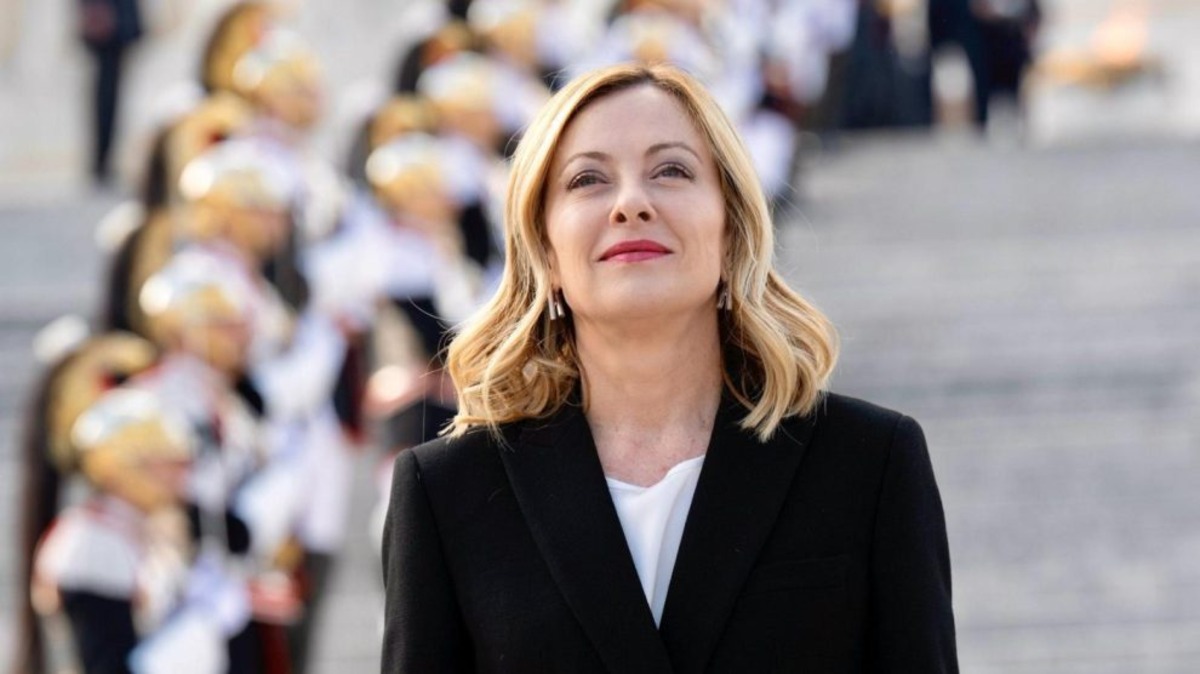
In an era when international politics is increasingly shaped by powerful personalities and geopolitical rivalries, Italian Prime Minister Giorgia Meloni has emerged as one of Europe’s most assertive political leaders. Since taking office in October 2022, Meloni has demonstrated that Italy is prepared to pursue its own national interests while remaining committed to its alliances. Whether dealing with the European Union, NATO, migration, economic policy, or relations with the United States, she has projected an image of confidence that has strengthened her political standing at home. Her supporters argue that she has transformed Italy from a hesitant middle power into a country willing to speak with a stronger and more independent voice.
Meloni’s political style is characterized by decisiveness and clarity. She rarely avoids difficult issues and has cultivated the image of a leader who is willing to defend Italian interests even when doing so creates diplomatic friction. Unlike many contemporary European politicians who rely heavily on cautious consensus-building, Meloni often presents herself as a leader prepared to make politically risky decisions if she believes they serve Italy’s long-term national interests. This approach has resonated with many Italian voters who have grown frustrated with years of political instability and rapidly changing governments.
One of the defining features of Meloni’s leadership has been her insistence that Italy should not simply follow the preferences of larger powers. She has maintained positions that differed from those advocated by U.S. President Donald Trump. Such moments have fueled a perception among supporters that she is willing to engage even close allies from a position of national confidence rather than unquestioning alignment. While diplomatic disagreements between allied governments are not unusual, they have reinforced her domestic image as a leader who prioritizes Italy’s sovereignty.
Political courage is often measured not by avoiding conflict but by managing it without sacrificing national interests. Meloni has repeatedly emphasized that alliances must be based on mutual respect rather than political pressure. Whether discussing trade, defense, migration, or international crises, she has argued that Italy’s elected government must ultimately make decisions that reflect Italian priorities. This message has appealed to voters who favor a more assertive role for Rome in international affairs.
Interestingly, some members of Italy’s opposition have also defended the principle that Italy’s government should not be publicly pressured by foreign leaders, regardless of domestic political disagreements. Such episodes illustrate an important feature of mature democracies: while parties compete fiercely at home, they may unite in defending national sovereignty when external pressure is perceived. This does not eliminate political divisions, but it can strengthen a country’s negotiating position abroad.
Domestically, Meloni remains one of Italy’s most influential politicians. Her coalition has generally maintained significant public support compared with many previous Italian governments, reflecting voter appreciation for political stability after years of fragmented administrations. Supporters credit her with focusing on economic resilience, energy security, industrial competitiveness, border management, and institutional reforms. Critics disagree with aspects of her policies, particularly on migration and civil liberties, yet even many opponents acknowledge her political discipline, communication skills, and ability to maintain coalition unity.
On the international stage, Meloni has sought to balance nationalism with alliance commitments. Rather than rejecting Western institutions, she has consistently reaffirmed Italy’s membership in both the European Union and NATO while arguing that these organizations should better reflect the interests of member states. This balancing act has enhanced her reputation as a pragmatic conservative leader capable of combining ideological conviction with practical diplomacy.
Within NATO, Meloni is generally viewed as a reliable ally. Italy continues to support the Alliance’s collective defense commitments and remains an important contributor to European security. Her government has supported strengthening NATO’s southern flank, addressing Mediterranean security challenges, and maintaining transatlantic cooperation. Although she occasionally emphasizes Italian national priorities, these positions have generally been expressed within the framework of alliance solidarity rather than confrontation.
Her foreign policy has also emphasized Italy’s strategic role in the Mediterranean. She has argued that Europe cannot address migration, energy security, or regional instability without giving greater attention to North Africa and the broader Mediterranean region. This vision has increased Italy’s diplomatic profile and positioned Rome as an important bridge between Europe, Africa, and the Middle East.
Meloni’s image among Muslim communities worldwide is more complex than simple popularity or opposition. Some Muslims have appreciated instances in which Italy has supported humanitarian assistance for civilians affected by conflicts or advocated diplomatic engagement. Others have criticized aspects of her government’s migration policies and positions on cultural issues. As a result, it would not be accurate to describe her as broadly popular across Muslims globally. Views vary significantly depending on country, political perspective, and specific policy issues.
Similarly, perceptions of Meloni differ across Europe. Conservative parties often regard her as proof that right-of-center governments can combine electoral success with governmental stability. Progressive parties, meanwhile, continue to criticize several of her domestic policies. Nevertheless, few dispute that she has become one of Europe’s most consequential political figures.
Another factor contributing to Meloni’s influence is her communication style. She speaks directly, projects confidence, and rarely appears intimidated during international negotiations. In modern politics, leadership is shaped not only by policy outcomes but also by public perception. Her ability to present herself as determined and self-assured has become one of her greatest political assets.
International diplomacy, however, is rarely about dramatic confrontations alone.
Effective leadership requires balancing national interests with alliance management, economic cooperation, and long-term strategic relationships. Meloni has generally sought to preserve Italy’s close partnerships with both Europe and the United States while making clear that Rome expects its own priorities to be respected. This balancing strategy has allowed her to cultivate an image of independence without fundamentally disrupting Italy’s traditional alliances.
Ultimately, Giorgia Meloni has reshaped Italy’s political narrative by emphasizing sovereignty, stability, and confident leadership. Her willingness to articulate independent positions has strengthened her reputation among many supporters who believe Italy should play a more influential role in global affairs. At the same time, her government continues to face scrutiny over domestic reforms, migration, and economic management, ensuring that political debate remains vigorous.
The true measure of Meloni’s leadership will not rest solely on moments of diplomatic disagreement with powerful foreign leaders but on whether her policies deliver lasting benefits for Italy’s economy, security, and international standing. If she succeeds in combining national confidence with responsible diplomacy, she may ultimately be remembered as one of the most significant Italian prime ministers of the twenty-first century—one who demonstrated that a middle power can pursue an independent voice while remaining a committed partner within the Western alliance.
About The Author