Strategic significance of Canadian FM Anita Anand’s visit to Pakistan and meeting with FM Ishfaq Dar, CDF FM Asim Munir
- Naveed Aman Khan
- Pinpoint
- July 21, 2026
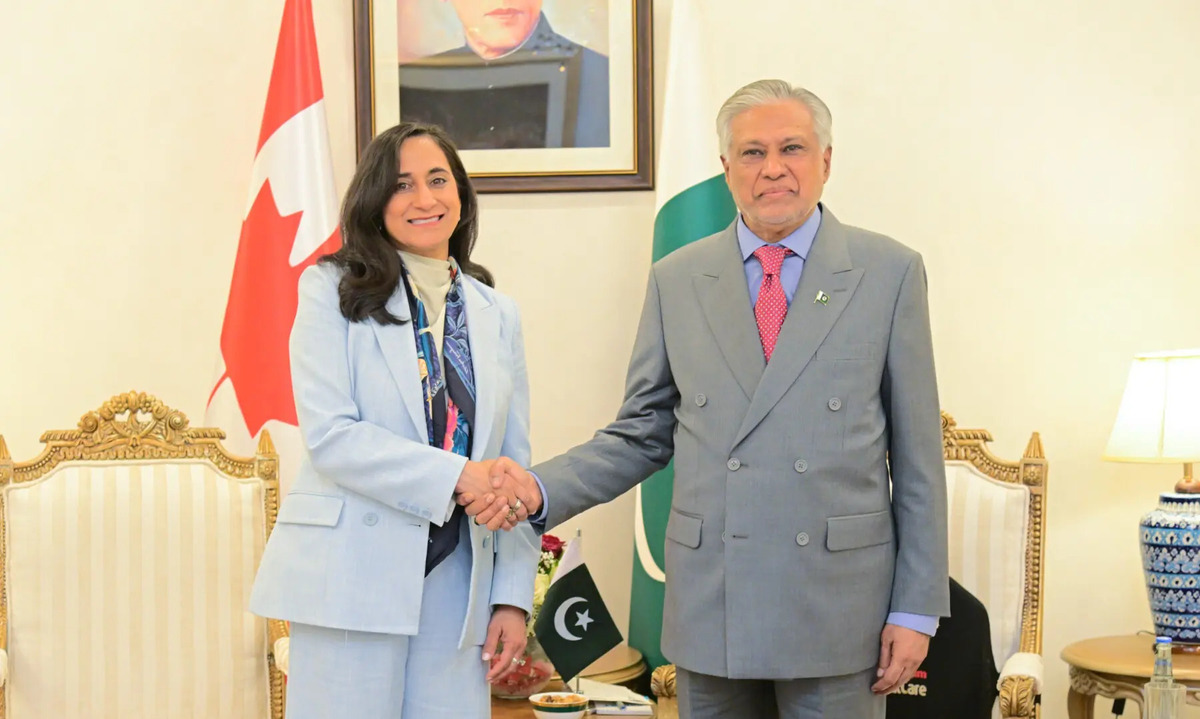
Canada’s Foreign Minister Anita Anand’s visit to Pakistan marks an important diplomatic development at a time when the international system is being reshaped by geopolitical rivalries, economic uncertainty, climate challenges, and regional security concerns. Although Canada and Pakistan have maintained diplomatic relations for decades, high-level visits between the two countries have been relatively infrequent. Therefore, this visit should be viewed not merely as a ceremonial engagement but as an opportunity to redefine bilateral relations through pragmatic cooperation and strategic dialogue.
The visit assumes greater significance because of meetings with Pakistan’s Deputy Prime Minister and Foreign Minister Ishaq Dar as well as Field Marshal Syed Asim Munir. Such engagements indicate that Canada recognizes Pakistan’s growing importance in South Asia and the wider Indo-Pacific region. Pakistan occupies a strategic geographic position linking South Asia, Central Asia, China, and the Middle East. In an era where geopolitical alignments are constantly evolving, Canada appears interested in expanding constructive engagement with Islamabad beyond traditional diplomatic exchanges.
The discussions between Canadian Foreign Minister Anita Anand and Ishaq Dar were expected to encompass a wide range of bilateral and international issues. Economic diplomacy likely featured prominently on the agenda. Bilateral trade remains below its true potential despite the presence of a large and dynamic Pakistani-Canadian community that contributes significantly to Canada’s economy and multicultural society. Both sides have considerable opportunities to increase cooperation in information technology, agriculture, education, clean energy, mining, public health, and climate resilience.
Education has long been one of the strongest pillars of Pakistan-Canada relations. Thousands of Pakistani students pursue higher education in Canadian universities every year, creating lasting people-to-people connections. Expanding academic partnerships, research collaboration, and skilled migration pathways can further strengthen bilateral relations while benefiting both economies. Canada may also seek greater cooperation in innovation, artificial intelligence, renewable energy, and digital transformation.
Regional security undoubtedly formed another major component of discussions with Ishaq Dar. Pakistan continues to face terrorism challenges along its western frontier while simultaneously pursuing regional peace and economic connectivity. Canada has consistently supported international efforts to combat terrorism and promote stability. Both countries therefore have shared interests in counterterrorism cooperation, intelligence sharing within legal frameworks, and combating violent extremism while respecting international law and human rights.
Climate change represents another area where Pakistan and Canada possess significant common interests. Pakistan remains among the countries most vulnerable to climate-induced disasters despite contributing only a small share of global greenhouse gas emissions. Canada’s expertise in climate adaptation, disaster management, green technology, and environmental governance could help Pakistan strengthen resilience against floods, droughts, and other climate-related emergencies. Expanding climate financing and technical cooperation would serve the interests of both countries.
The Canadian Foreign Minister’s meeting with Field Marshal Syed Asim Munir also carries strategic importance. In Pakistan, discussions between senior foreign dignitaries and the military leadership often reflect the country’s integrated approach toward national security, regional stability, and strategic affairs. Security cooperation, regional peace, counterterrorism, maritime security, and evolving geopolitical developments were likely among the principal subjects of discussion.
Field Marshal Asim Munir has repeatedly emphasized the importance of national stability, counterterrorism operations, border management, and regional peace. Canada, meanwhile, seeks a stable South Asia that supports international security, secure trade routes, and rules-based international cooperation. Dialogue between both sides can help build greater understanding regarding Pakistan’s security environment and the challenges posed by terrorism, transnational crime, and regional instability.
Developments in Afghanistan were also likely an important subject. Pakistan continues to bear the humanitarian, economic, and security consequences of instability across its western border. Canada has consistently supported humanitarian assistance for the Afghan people while advocating inclusive governance and respect for human rights. Both countries share an interest in preventing Afghanistan from becoming a sanctuary for international terrorist organizations while encouraging long-term regional stability.
Beyond bilateral relations, the visit possesses considerable regional significance. South Asia remains one of the world’s most strategically sensitive regions, characterized by nuclear deterrence, unresolved political disputes, and growing competition among major powers. Canada’s enhanced diplomatic engagement with Pakistan demonstrates recognition that sustainable regional peace requires dialogue with all major stakeholders rather than engagement with only one regional actor.
Pakistan should also utilize such high-level diplomatic engagements to clearly present its perspective on the Indus Waters Treaty. The treaty has long been regarded as one of the world’s most durable water-sharing agreements despite periods of political tension between Pakistan and India. Islamabad should explain its concerns regarding the faithful implementation of treaty obligations and emphasize that international agreements governing transboundary rivers should be respected in accordance with established legal mechanisms. Water security is increasingly becoming a global strategic issue, making responsible international attention both relevant and necessary.
Similarly, Pakistan should continue presenting its longstanding position on the Kashmir dispute through peaceful diplomatic channels. Islamabad should emphasize the importance of dialogue, regional stability, respect for international law, and the protection of civilian populations. Pakistan can encourage Canada to support peaceful conflict resolution, confidence-building measures, and sustained diplomatic engagement that contributes to lasting stability in South Asia. Constructive diplomacy remains more effective than confrontation in advancing durable regional peace.
The visit also presents an opportunity to strengthen parliamentary exchanges, cultural diplomacy, tourism, investment promotion, and cooperation within multilateral institutions. Canada and Pakistan are active participants in numerous international forums addressing sustainable development, climate change, global health, migration, and peacebuilding. Greater coordination in these areas could produce tangible benefits extending beyond bilateral relations.
The Pakistani diaspora in Canada serves as one of the strongest foundations of the bilateral relationship. Successful Pakistani Canadians have made important contributions in business, medicine, engineering, academia, politics, public administration, and entrepreneurship. Their achievements provide a natural bridge that can facilitate greater investment, technology transfer, educational collaboration, and commercial partnerships between the two countries.
At a broader level, Canada’s engagement with Pakistan reflects an understanding that middle powers increasingly play influential roles in shaping regional diplomacy. As international politics becomes more multipolar, countries like Pakistan and Canada possess opportunities to cooperate on shared global challenges including climate resilience, food security, energy transition, cybersecurity, humanitarian assistance, and sustainable development.
The success of this visit, however, should ultimately be measured not by diplomatic symbolism but by concrete outcomes. Agreements on trade facilitation, educational partnerships, investment promotion, climate cooperation, counterterrorism collaboration, and regular strategic dialogue would demonstrate meaningful progress. Establishing institutional mechanisms for continuous engagement can ensure that bilateral momentum continues beyond a single high-level visit.
Canadian Foreign Minister’s visit represents a timely opportunity to elevate Pakistan-Canada relations into a broader strategic partnership based on mutual respect, shared interests, and practical cooperation. Meetings with Ishaq Dar and Field Marshal Syed Asim Munir underscore the multidimensional nature of the bilateral relationship, encompassing diplomacy, security, economic cooperation, and regional stability. Pakistan should confidently present its perspectives on the Indus Waters Treaty and the Kashmir issue while simultaneously expanding cooperation in trade, education, climate action, technology, and counterterrorism. If both governments capitalize on this diplomatic momentum with vision and consistency, the visit could mark the beginning of a more mature, balanced, and forward-looking partnership that contributes not only to bilateral prosperity but also to peace and stability across South Asia and the wider international community.
About The Author