The World Cup Didn’t Lose Its Integrity on the Pitch. It Lost It in the Boardroom.
- Kingston Bailey
- Sports
- July 7, 2026
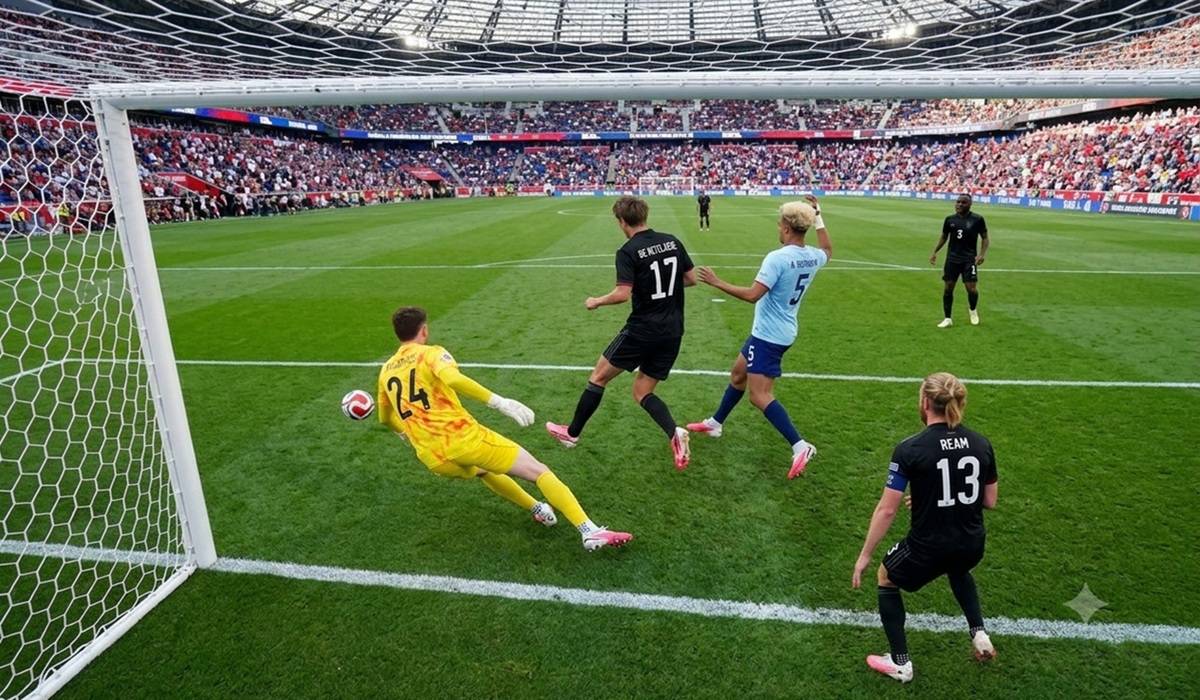
The biggest controversy of this World Cup did not come from a missed penalty, a controversial offside call or a referee reaching too quickly for his pocket. Instead, it came from a decision made far away from the stadium lights, one that has left supporters across the globe questioning whether the sport’s most sacred principle still exists. For generations, football has sold itself as the ultimate equalizer. Rich or poor, powerful or powerless, every nation is supposed to compete under the same laws. A red card means a suspension. A suspension means you miss the next match. There is comfort in that certainty because it tells every player that no one is bigger than the game itself. That certainty disappeared the moment Folarin Balogun’s suspension was overturned, allowing him to suit up against Belgium after intervention from U.S. President Donald Trump.
Whether anyone believes the striker deserved another opportunity is almost irrelevant. Football supporters argue about refereeing decisions every weekend, and that has always been part of the sport’s appeal. What makes this situation fundamentally different is that the conversation shifted away from the player and toward political influence. Once the President of the host nation publicly weighs in on an active disciplinary matter and the original punishment suddenly disappears, people are naturally going to ask difficult questions. Those questions become even louder when they involve the largest sporting event on the planet, where billions of viewers expect every nation to be treated equally regardless of its economic or political influence.
The United States ultimately lost convincingly to Belgium, proving that one player’s availability was never going to determine the outcome of the match. In many respects, that scoreline spared the tournament from an even greater controversy. Had the Americans advanced behind a decisive performance from Balogun, the result itself would forever have carried an asterisk in the minds of many supporters. Instead, Belgium settled the sporting debate on the field, but the administrative controversy survived long after the final whistle. Today, very few people are discussing Belgium’s outstanding performance. Instead, they are talking about how one of football’s oldest disciplinary principles suddenly appeared far more flexible than anyone believed.
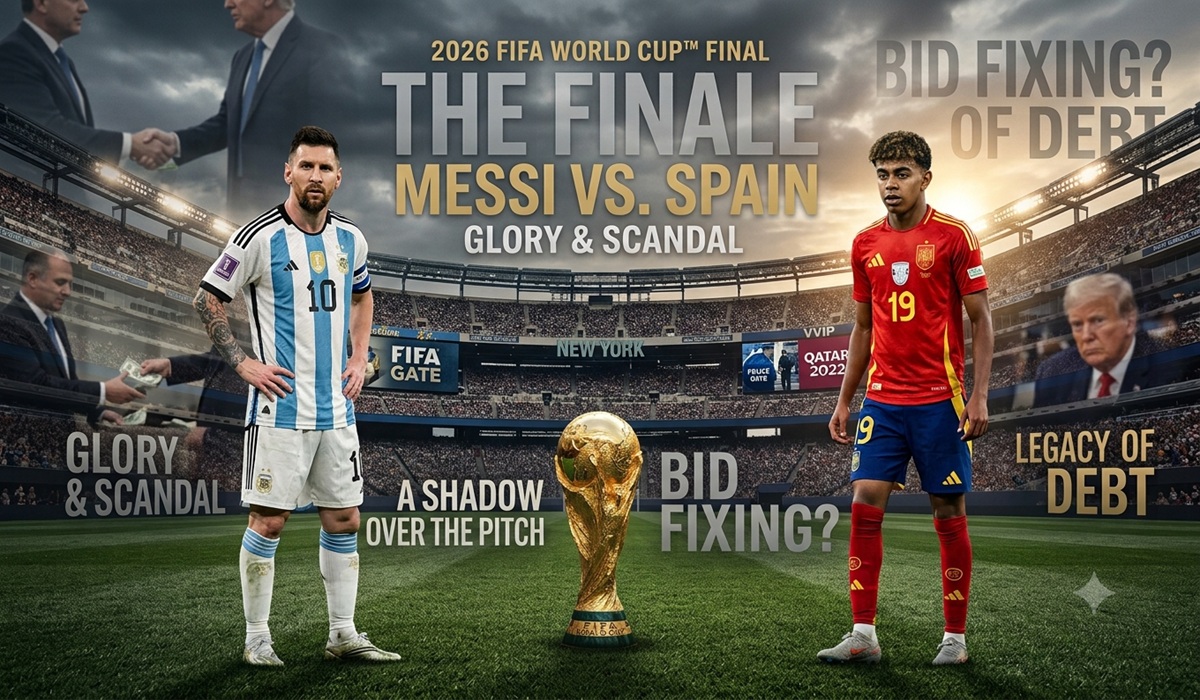
This is where history becomes impossible to ignore. The international governing body has spent decades attempting to repair a reputation battered by corruption investigations, bribery allegations, questionable World Cup bidding processes, financial misconduct and the arrests of some of its most senior officials. Entire leadership structures were reshaped after scandals exposed how deeply politics and money had become intertwined with the world’s most popular sport. Years of reforms were designed to convince supporters that those days were over, that transparency had replaced secrecy and that accountability had replaced backroom deals. Unfortunately, trust is much harder to rebuild than it is to destroy. Every controversial decision now carries the weight of that history, whether fair or not.
Perhaps that explains why this latest episode has generated such a strong reaction. Supporters are not simply evaluating one disciplinary ruling. They are measuring it against decades of broken confidence. When an organization has previously struggled with credibility, it no longer receives the benefit of the doubt. Every unusual decision invites suspicion, every exception raises eyebrows and every unexplained reversal becomes another chapter in a story many believed had finally reached its conclusion. That may not always be fair, but it is the reality any governing institution must accept after years of controversy.
There is another issue that deserves far more attention than it has received. Rules exist precisely because influential people occasionally want exceptions. If exceptions become easier to obtain for countries with greater political influence, then the rules themselves begin to lose meaning. One of the greatest strengths of international sport has always been its ability to place every competitor on equal footing once the match begins. Wealth cannot buy extra time. Political power cannot award an additional substitution. National prestige cannot erase a defeat. Those principles matter because they remind the world that competition is supposed to reward performance rather than influence. Once supporters begin believing otherwise, confidence in the competition begins to erode.
No public evidence has emerged showing that President Trump received any private assurances or that anything was promised in exchange for the suspension being lifted. That distinction matters because speculation should never replace facts. At the same time, perception has always played an enormous role in public confidence. Even if every procedural rule was followed perfectly behind closed doors, the optics remain extraordinarily difficult to defend. Millions of supporters watched a punishment that appeared automatic suddenly disappear after public intervention from one of the world’s most powerful political leaders. Fair or unfair, many will conclude that ordinary football nations would never receive the same level of consideration.
That perception may become the organization’s biggest challenge moving forward. Every future appeal involving a suspended player will now be compared to the Balogun decision. Every rejected request will invite accusations of inconsistency, while every successful appeal will reopen this controversy all over again. Coaches, national associations and legal advisers will inevitably point to this case whenever a star player faces missing an important match. What was once viewed as a straightforward disciplinary process has suddenly become open to debate, interpretation and comparison.
For decades, football has reminded us that nobody is bigger than the game. Legendary players have missed finals because of suspension. World-class stars have watched championship matches from the stands after accumulating too many yellow cards. Their reputations never placed them above the laws of the sport because that was exactly how the system protected its credibility. It was often heartbreaking, but it was consistent. Consistency, even when painful, is what allows supporters to accept outcomes they may not like.
The greatest irony of this controversy is that Belgium’s victory ultimately rendered the original decision meaningless from a competitive standpoint. The better team won, advanced and continued its pursuit of the World Cup. Yet the administrative fallout remains very real because credibility is measured over years, not ninety minutes. The tournament will eventually crown a champion, the celebrations will end and another World Cup will arrive four years from now. What may endure far longer is the lingering belief that football’s governing institutions are still vulnerable to political pressure at precisely the moment they should be demonstrating complete independence.
The World Cup has always represented something larger than sport. It is one of the rare moments when nearly every nation gathers under a common set of rules and agrees to let the players decide the outcome. That idea has inspired generations of supporters because it reflects the very essence of fair competition. When the headlines shift from remarkable goals and unforgettable performances to questions about influence, governance and political intervention, everyone loses a little faith in what they are watching. That may prove to be the most damaging consequence of this entire episode—not that one player was allowed back onto the field, but that millions of supporters were left wondering whether the rules still apply equally to everyone.
About The Author