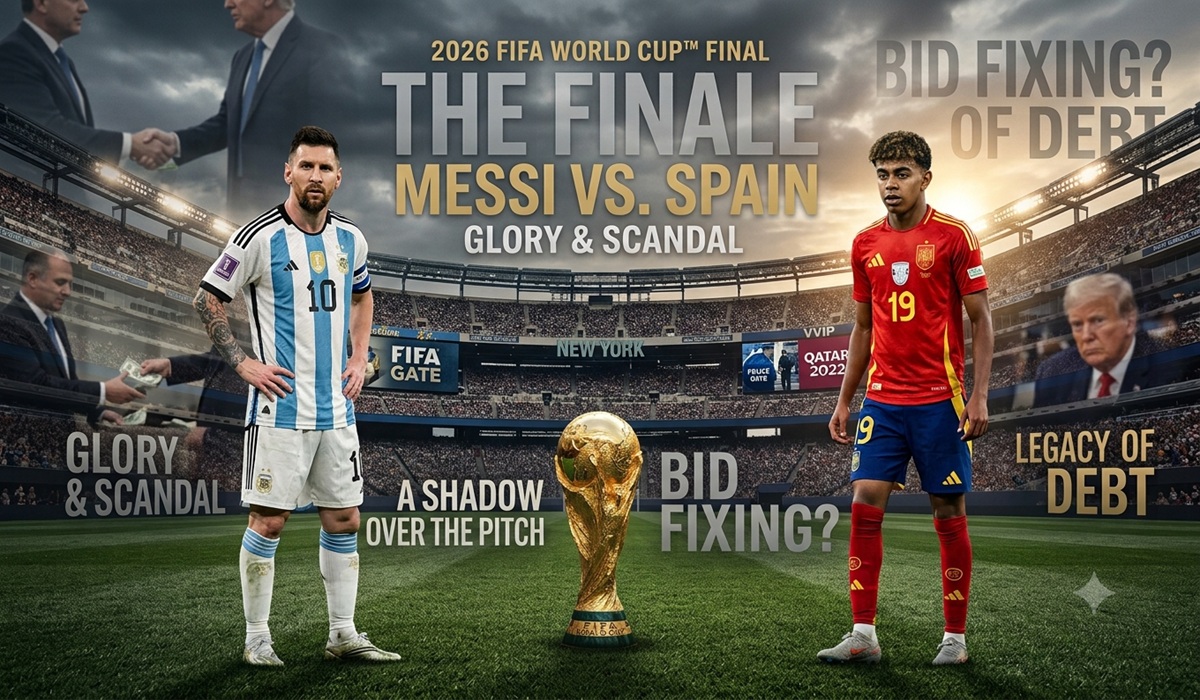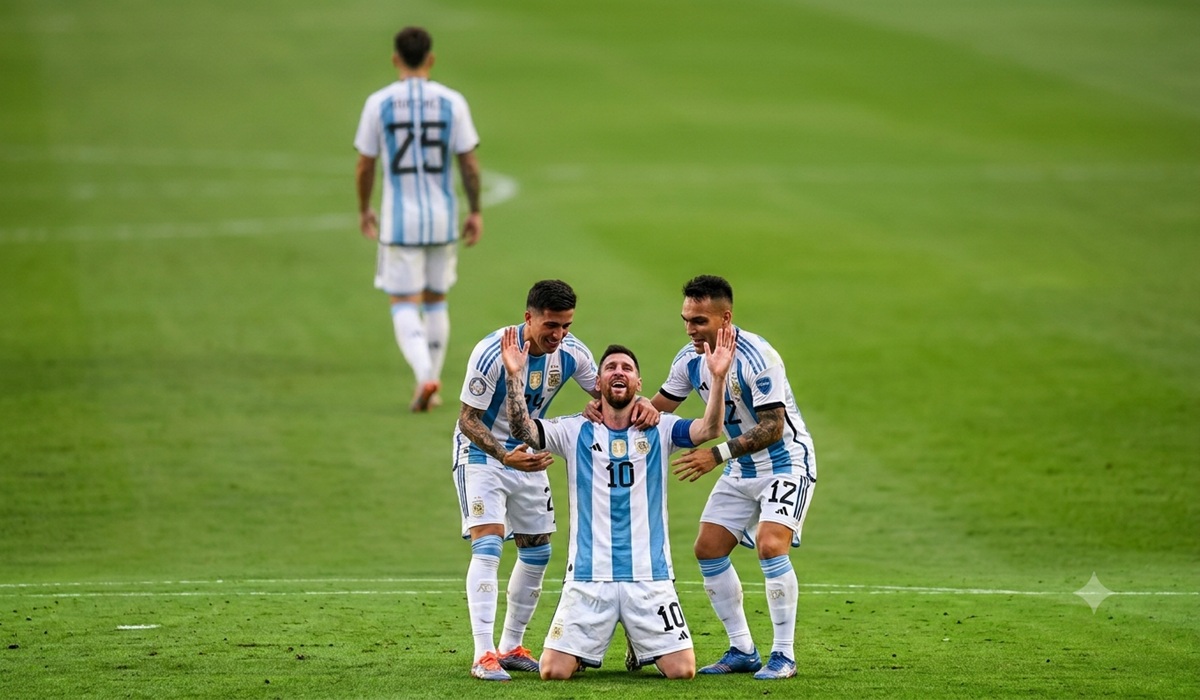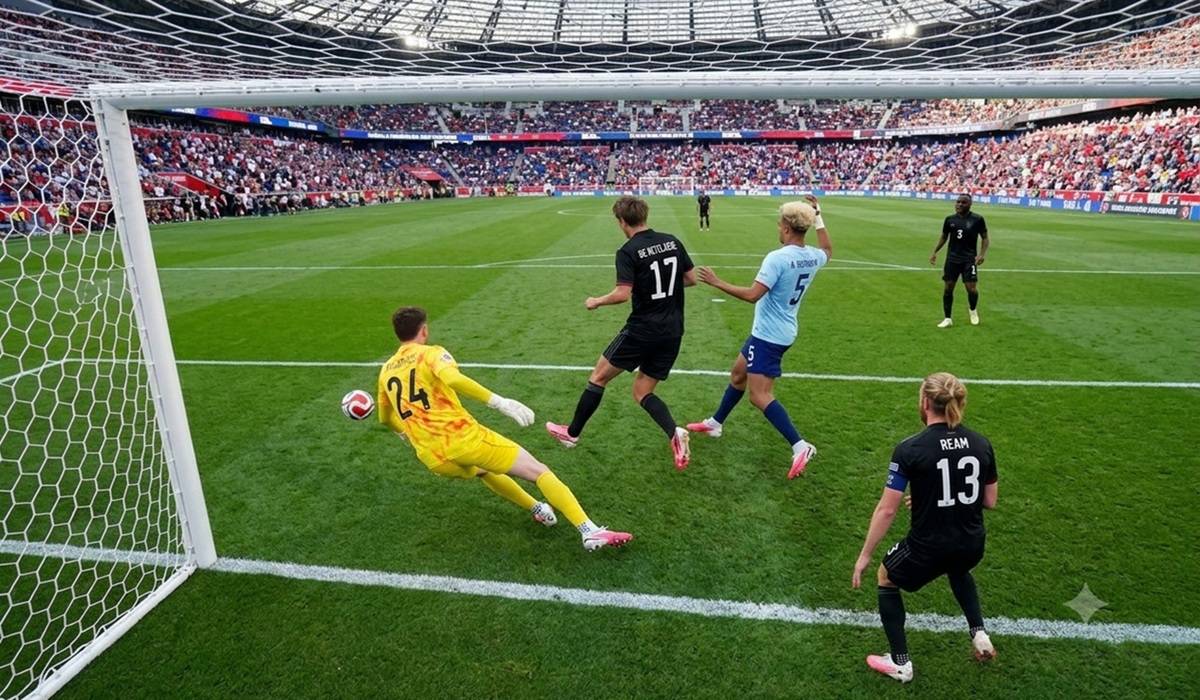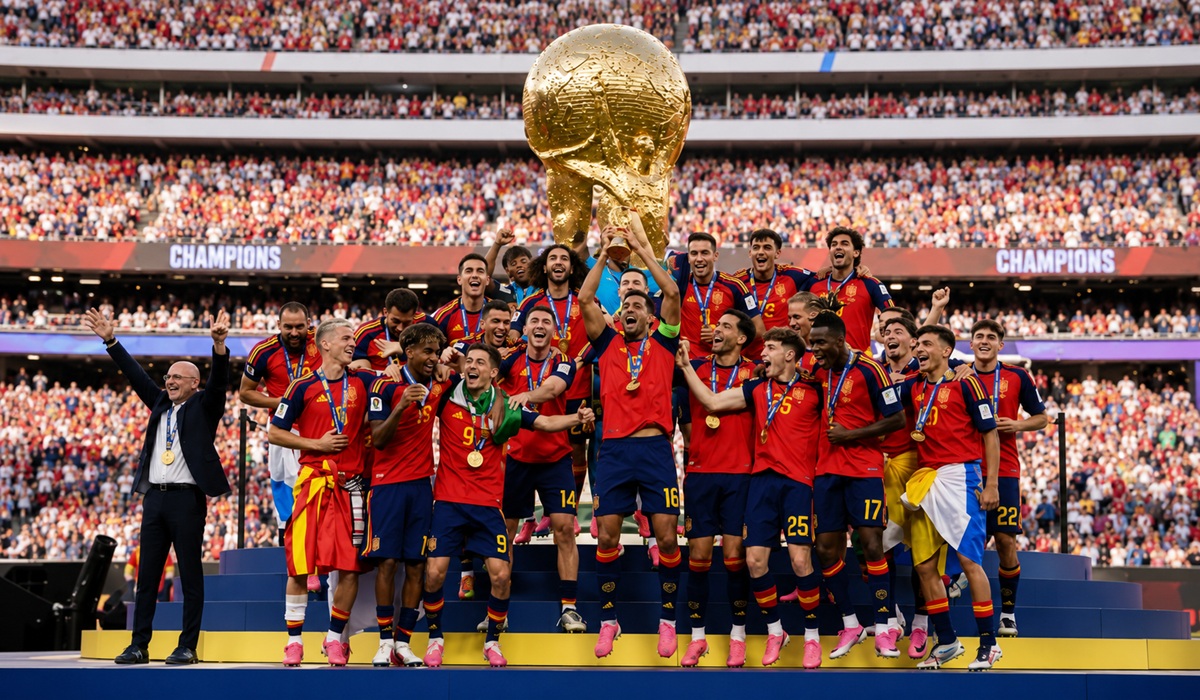
EAST RUTHERFORD, New Jersey — Spain captured its second men’s World Cup title in thrilling fashion Sunday, defeating defending champion Argentina 1-0 after extra time in a tense final at New York New Jersey Stadium. Substitute forward Ferran Torres scored the decisive goal in the 106th minute, breaking a grueling deadlock to cap off a historic tournament run.
The victory returned the Spanish national team to the pinnacle of international soccer sixteen years after its maiden triumphs in South Africa. For Argentina, the dramatic defeat ended its quest for back-to-back world titles and marked a heartbreaking conclusion to what may be Lionel Messi’s final World Cup appearance.
Spain dominated possession throughout the ninety minutes of regulation, pressing high up the pitch and suffocating Argentina’s offensive transitions. Despite creating numerous scoring opportunities, the European champions were repeatedly denied by goalkeeper Emiliano Martinez, who produced twelve spectacular saves to keep the match scoreless through standard time.
The physical intensity of the match escalated late in the second half. Argentina was reduced to ten men during added time when midfielder Enzo Fernandez received a second yellow card following a late challenge on Spanish defender Pau Cubarsi.
Despite playing with a numerical advantage throughout extra time, Spain had to remain patient against a deep and disciplined Argentine defense. The breakthrough finally arrived early in the second period of extra time. Defender Pedro Porro floated a deep cross toward the far post, where Nico Williams rose above the defense to head the ball back across the six-yard area. Torres reacted quickest, firing a powerful right-footed volley into the top corner of the net to trigger wild celebrations among the Spanish supporters.
Head coach Luis de la Fuente praised his squad’s resilience following the match, highlighting the combination of experienced leadership and emerging talent that defined the team’s success throughout the monthlong tournament. De la Fuente noted that his players showed remarkable maturity in managing the tempo of the final under immense international pressure.
The tournament highlighted a remarkable generational shift for Spanish soccer. Teenaged starters Lamine Yamal and Pau Cubarsi became the youngest players to feature in a men’s World Cup final since 1958, demonstrating exceptional composure on the game’s biggest stage. Throughout the competition, Spain established a defensive record by allowing only a single goal across seven matches, combining ball retention with tactical discipline.
Argentine manager Lionel Scaloni expressed pride in his team’s efforts, acknowledging that his squad left everything on the field despite playing down a man for the final thirty minutes of action. Scaloni noted that reaching consecutive finals was a tremendous achievement for Argentine sport, even if the outcome fell short of another trophy.
In the tournament awards ceremony following the match, Spanish midfielder Rodri was named the tournament’s best player, while France’s Kylian Mbappe received the golden boot as top goalscorer. The 2026 World Cup, jointly hosted by the United States, Mexico, and Canada, concluded as the largest expansion in tournament history, featuring forty-eight national teams competing across sixteen host cities.
As night fell over the stadium, thousands of Spanish supporters continued their celebrations outside the venue, singing traditional chants and waving flags as the team prepared to return home to Madrid for an official victory parade.
About The Author