Natalie Baker and America’s New Language in Pakistan: A Genuine Shift or a Strategic Rebranding?
- Naveed Aman Khan
- Pinpoint
- Tiger's Eye Advisory Group - Trending News
- June 5, 2026
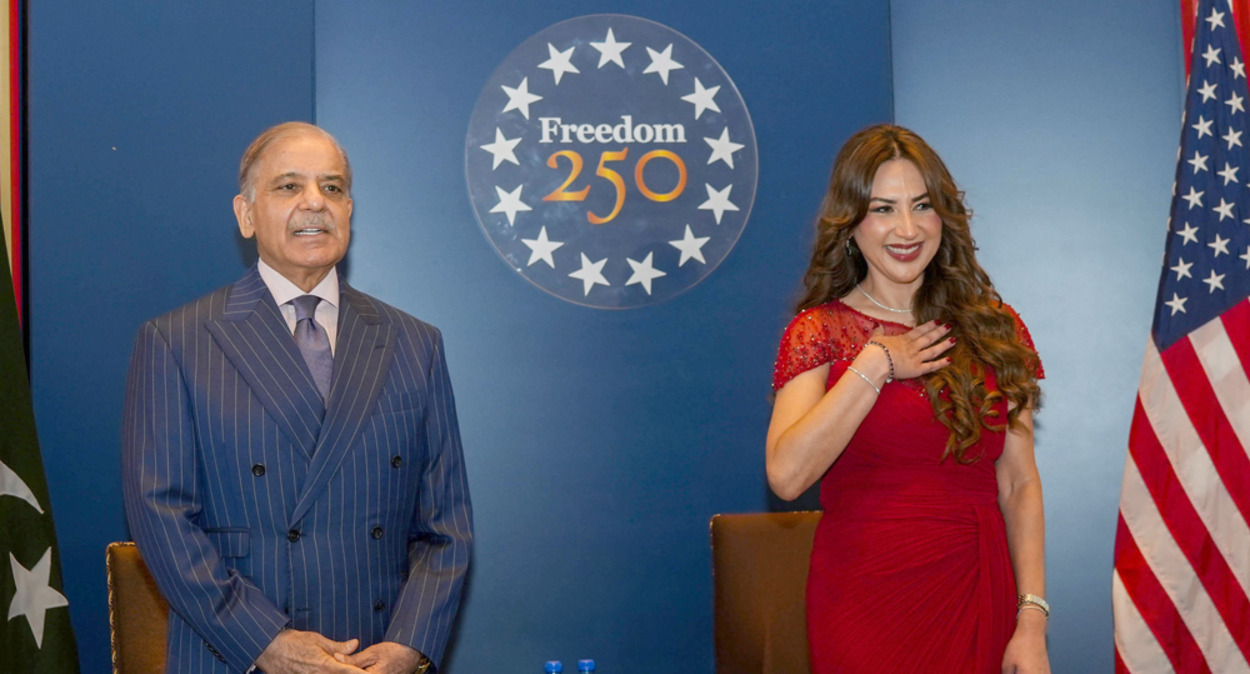
The arrival and public engagement of American diplomat Natalie Baker in Pakistan have attracted considerable attention in diplomatic and political circles. More than a routine diplomatic representative, Baker appears to symbolize a changing tone in the way the United States seeks to engage with Pakistan. Her outreach, public appearances, emphasis on economic cooperation, and friendly interaction with ordinary Pakistanis have generated an important debate. Washington genuinely is changing its approach toward Pakistan. It simply is presenting its traditional strategic interests in a more attractive language.
For decades, Pakistan-U.S. relations were largely defined by security concerns. During the Cold War, Pakistan was viewed as a frontline ally against Soviet expansion. Following the events of September 11, 2001, the relationship once again revolved around counterterrorism, military cooperation, and the conflict in Afghanistan. Economic cooperation and people-to-people engagement often remained secondary cqonsiderations. Many Pakistanis came to view American interest in their country as episodic and driven primarily by Washington’s immediate strategic needs.
The vocabulary of American diplomacy appears markedly different. Conversations increasingly focus on technology, innovation, renewable energy, critical minerals, entrepreneurship, education, climate resilience, and investment opportunities. Natalie Baker’s public messaging reflects this shift. Instead of emphasizing security partnerships, she frequently highlights Pakistan’s young population, growing digital economy, and untapped economic potential.
Diplomacy is not only about policies; it is also about perception. The language diplomats use often reveals broader strategic thinking. When a major power begins discussing trade, investment, and technological cooperation rather than military assistance and security concerns, it suggests an attempt to redefine the foundations of the bilateral relationship.
Great powers rarely abandon their strategic interests. Rather, they adapt their methods to changing global realities. In the twenty-first century, economic influence, technological leadership, and supply chain security have become as important as military alliances. The United States is increasingly competing with China for global economic influence, particularly across Asia. Pakistan occupies a strategically important position at the intersection of South Asia, Central Asia, the Middle East, and the Indian Ocean region.
Natalie Baker’s friendly and approachable style reflect a transformed American mindset.
Diplomats today are expected to connect directly with students, entrepreneurs, journalists, and civil society. Social media, public events, and informal communication have become important tools of statecraft. In this context, Baker’s smile, accessibility, and positive messaging represent contemporary diplomatic practice.
It would be naïve to interpret a friendly diplomatic style as evidence that national interests have disappeared. Diplomats are trained to build trust, reduce tensions, and create favorable environments for cooperation. Smiles and friendly gestures facilitate dialogue, but they do not replace strategic calculations. The true test of change lies not in rhetoric but in measurable outcomes such as investment flows, market access, technology transfers, educational partnerships, and long-term economic cooperation.
This evolving American approach reflects Pakistan’s growing success. Despite political instability and economic challenges, Pakistan has demonstrated resilience. The country possesses one of the world’s largest youth populations, a rapidly expanding IT sector, significant mineral deposits, and a strategic geographic location. International investors increasingly recognize opportunities in Pakistan’s digital services, mining sector, renewable energy projects, and export-oriented industries.
Pakistan’s recent efforts to stabilize its economy and attract foreign investment have improved its attractiveness as an economic partner. Global powers tend to engage more actively with countries that offer economic opportunities. Increased American interest may partly reflect recognition of Pakistan’s emerging economic potential rather than merely traditional geopolitical calculations.
The Indian dimension cannot be ignored in this discussion. Over the past two decades, the United States has significantly strengthened its strategic partnership with India. Washington views India as an important partner in maintaining balance within the Indo-Pacific region and in responding to China’s growing influence. This reality has often created concerns in Pakistan that it has been relegated to secondary importance in American strategic thinking.
Improved U.S.-Pakistan relations do not necessarily come at India’s expense, nor does cooperation with India automatically diminish Pakistan’s importance. The United States increasingly appears interested in maintaining productive relations with both South Asian powers, albeit for different reasons. India represents a large market and strategic partner, while Pakistan offers geographic connectivity, security relevance, mineral resources, and economic opportunities that remain difficult to ignore.
Too often in the past, Islamabad focused on the intentions of external powers rather than on its own strategic preparedness. If opportunities exist in technology, mining, trade, education, and investment, Pakistan must strengthen institutions, improve governance, ensure policy continuity, and create a business-friendly environment capable of attracting sustainable international partnerships.
Natalie Baker’s significance lies less in her personality and more in the broader questions her presence raises. Her engagement style symbolizes an American effort to communicate with Pakistan through the language of economics, innovation, and partnership rather than through the traditional vocabulary of conflict and security. Whether this represents a fundamental policy transformation or simply a strategic rebranding remains uncertain.
If the coming years witness substantial American investment, expanded trade, deeper technological cooperation, and meaningful economic partnerships, historians may view this period as the beginning of a new chapter in Pakistan-U.S. relations. If not, critics will argue that only the language changed while the underlying priorities remained the same. Pakistan should neither embrace every American gesture uncritically nor reject it through the lens of historical distrust alone. Nations advance not by interpreting smiles but by converting opportunities into tangible national gains. Natalie Baker’s diplomacy may signal a new American language toward Pakistan, but Pakistan’s success will depend on how effectively it responds to that language and transforms it into lasting economic and strategic benefits.
About The Author