The World Keeps Pretending This Is Not War While Everything Around It Looks Like One
- TDS News
- Canada
- May 24, 2026
By: Donovan Martin Sr, Editor in Chief
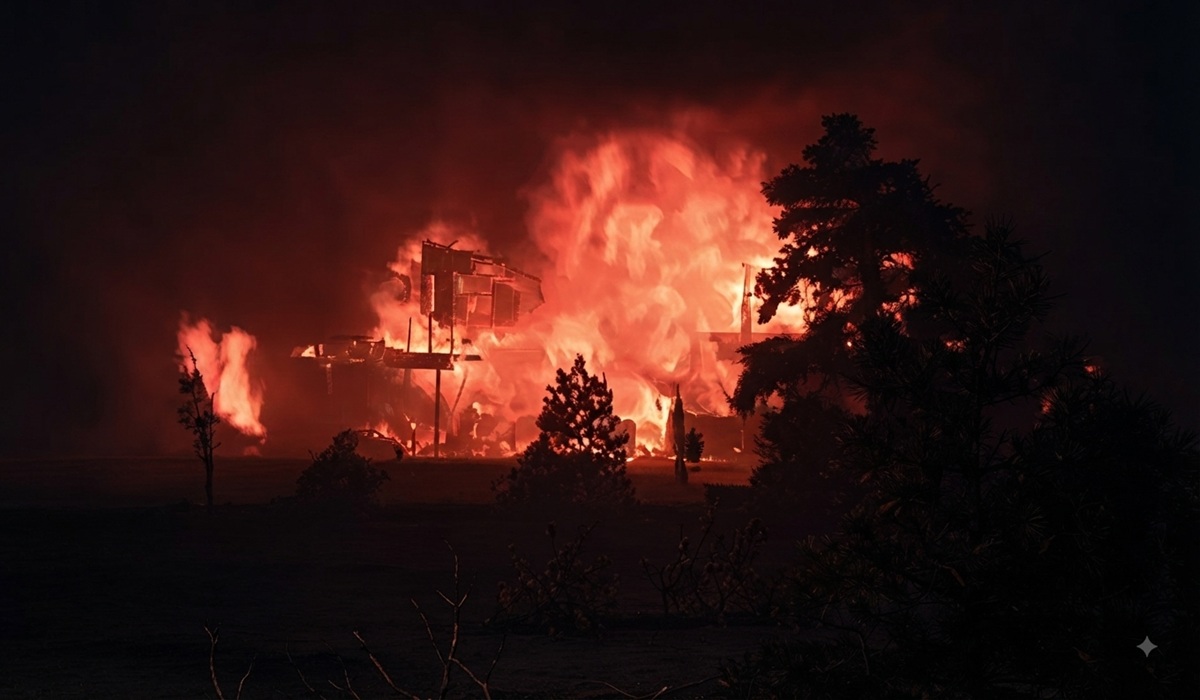
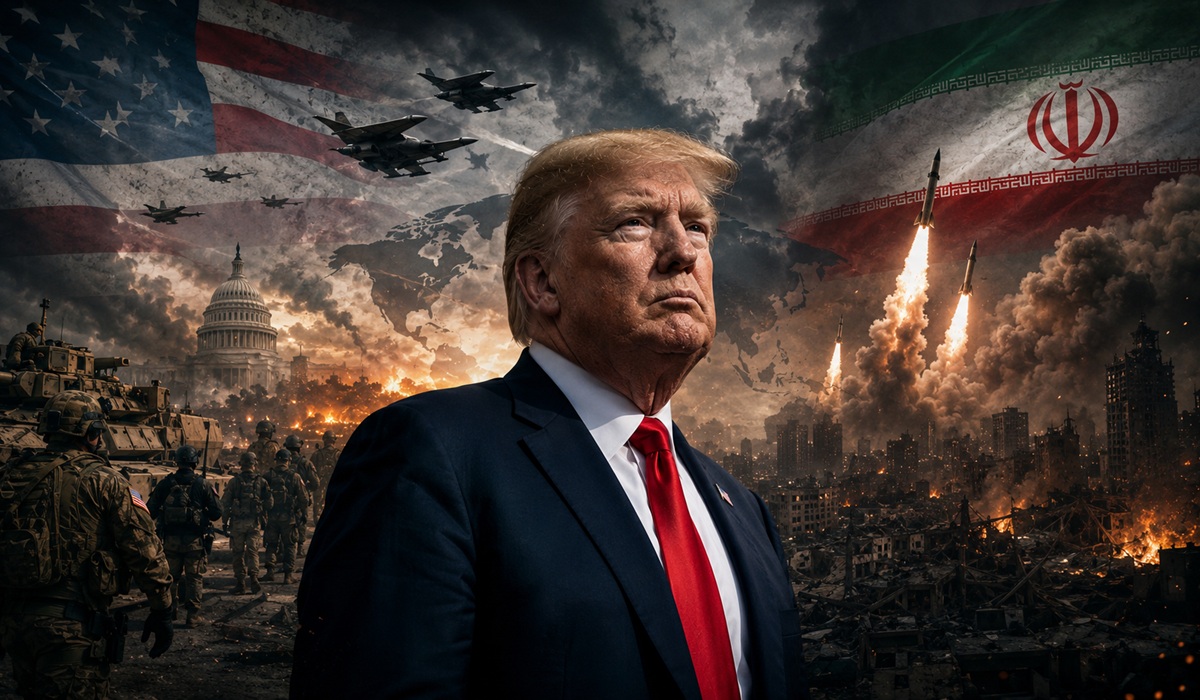
There is something deeply surreal about watching world leaders stand behind podiums insisting the United States is not at war with Iran while the rest of the world watches missiles fly, soldiers mobilize, military hardware flood strategic regions and civilians continue dying in the middle of escalating violence. At some point, language begins feeling less like leadership and more like public relations. The terminology changes depending on the political objective of the day, but the reality itself does not change. Families are still burying loved ones. Entire regions are still living under fear. Global markets continue reacting to every new escalation. Oil prices swing wildly with each military movement. Yet the debate somehow continues revolving around what exact label should be attached to the chaos instead of confronting the fact that the chaos itself is becoming the defining feature of modern geopolitics.
What makes the situation even more unsettling is the growing disconnect between official messaging and what ordinary people are actually seeing unfold. The White House talks about peace while simultaneously overseeing expanding military operations, increasing troop presence and broader strategic positioning throughout the region. Statements about diplomacy arrive alongside fresh warnings, new sanctions, military exercises and increasingly aggressive rhetoric. The contradictions are becoming impossible to ignore because the world no longer feels stable enough for carefully crafted political ambiguity. People are exhausted. They are tired of watching governments speak in polished language while conditions on the ground continue deteriorating.
For critics of Donald Trump, this entire situation has become symbolic of a larger problem that has followed his presidency from the beginning: the constant blending of unpredictability and spectacle into foreign policy. Supporters continue insisting there is a larger strategy at work, that every escalation, every threat, every economic disruption and every diplomatic fracture is part of some broader chess match designed to reposition American power in a changing world. That explanation has become almost reflexive among loyalists whenever instability intensifies. Markets collapse, allies panic, tensions rise and immediately the response becomes that Trump is “playing chess” while everyone else is supposedly too shortsighted to understand the bigger picture.
The problem is that even if there is a larger strategy, the visible consequences are becoming harder to defend. Global confidence is weakening. Longstanding alliances are fraying. Trade relationships are becoming more fragile. International trust in Washington’s consistency and reliability has been eroded by years of sudden policy reversals, economic threats, tariff battles and escalating confrontations with both rivals and allies. Nations that once automatically aligned themselves with American leadership are now increasingly cautious, not necessarily because they suddenly oppose the United States, but because they no longer know what direction it may move next.
That uncertainty carries enormous consequences far beyond military conflict itself. Modern economies are built on confidence, predictability and interconnected stability. When instability becomes constant, every sector begins feeling the pressure. Shipping routes become vulnerable. Investment slows. Energy markets react violently to geopolitical tension. Inflation worsens. Supply chains weaken. Businesses delay expansion. Consumers lose confidence. Governments begin shifting spending priorities away from social investment and toward defence and emergency preparedness. The ripple effects spread quietly at first, then all at once.
Many analysts believe part of the broader objective behind escalating tensions may involve reshaping the global economic order itself. There are theories suggesting the United States wants to disrupt strategic trade corridors tied to Chinese economic expansion while simultaneously forcing NATO partners and Western allies to increase military spending dramatically. Others argue the administration believes permanent pressure and controlled instability can be used as leverage to maintain American dominance in a world where economic power is becoming more decentralized. Whether those theories are true or not, the fact that so many people are even entertaining them reflects how uncertain and unstable global politics now feels.
At the center of all this is a growing perception that the world is drifting toward permanent confrontation without any meaningful long-term vision guiding it. That may be the most dangerous aspect of the current moment. Previous generations often feared massive wars because they understood how catastrophic they could become. Today, the world seems trapped in an endless cycle of smaller conflicts, proxy battles, economic warfare, cyber threats and geopolitical brinkmanship that never fully explodes into one defining global catastrophe but never truly calms down either. The result is a planet existing in a permanent state of low-grade crisis.
Human beings eventually normalize whatever surrounds them long enough, and that normalization may now be occurring on a global scale. Missile strikes that once would have dominated international headlines for weeks now disappear within hours. Threats between major powers barely shock the public anymore. Military buildups become background noise. Entire populations are psychologically adapting to conditions that would have once triggered widespread fear because there is simply no emotional energy left to react with the same intensity every single time another escalation occurs.
That emotional exhaustion is becoming increasingly visible across the world. Citizens are watching governments pour billions into military positioning while housing costs rise, inflation strains households and social systems weaken under economic pressure. Younger generations are inheriting a world defined less by optimism than by instability. Climate anxiety, economic uncertainty, geopolitical tension and political division now dominate everyday conversation in ways that would have seemed unthinkable only a couple decades ago. Trust in institutions continues eroding because institutions increasingly appear reactive instead of competent, theatrical instead of reassuring.
Meanwhile, America’s global image continues shifting in ways that may ultimately reshape international power structures for decades. Allies are diversifying economic relationships. Nations are quietly building alternatives to overreliance on Washington. Strategic partnerships are evolving. Countries that once viewed the United States primarily as a stabilizing force now increasingly see it as both a protector and a source of unpredictability at the same time. That contradiction may prove historically significant long after current political leaders are gone.
For Canada and many other countries closely tied to the American economy, the stakes are enormous. Every major escalation reverberates across financial systems, energy prices and trade networks. Political instability abroad quickly becomes economic stress at home. Citizens who may never set foot in the Middle East still feel the consequences through rising costs, market volatility and growing uncertainty about the future. The world is now too interconnected for any major conflict to remain geographically isolated for long.
Perhaps historians years from now will develop more precise language for this era. They will likely debate whether this period represented a transition into a new global order, a prolonged geopolitical restructuring or the beginning of a larger historical decline in American dominance. They will argue over terminology, strategy and doctrine. But for ordinary people living through it in real time, those distinctions already feel increasingly irrelevant.
When bombs continue falling, economies continue shaking, alliances continue weakening and governments continue speaking in contradictions while insisting everything remains under control, people eventually stop caring what politicians choose to call it. Reality becomes impossible to disguise behind carefully selected language.
And right now, reality looks an awful lot like war.
About The Author