Between Rivalry and Partnership: Trump and Putin’s Contrasting China Visits
- Naveed Aman Khan
- Pinpoint
- Tiger's Eye Advisory Group - Trending News
- May 22, 2026
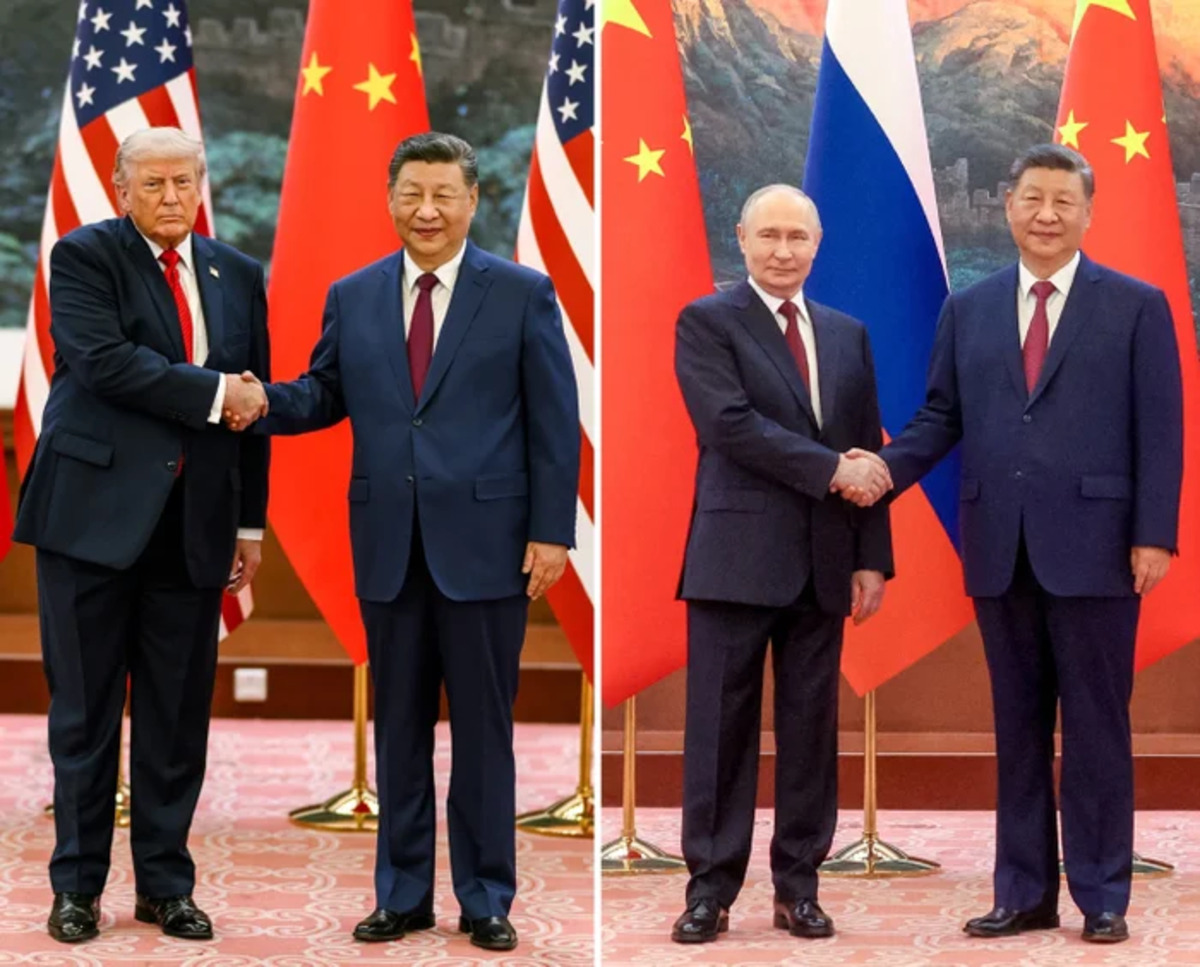
The recent visits of President Donald Trump and President Vladimir Putin to China offered the world two sharply contrasting diplomatic spectacles. Although both leaders arrived in Beijing seeking strategic advantage, the objectives, tone, outcomes, and symbolism of their engagements with Chinese President Xi Jinping revealed the evolving structure of global power politics. These visits were not merely ceremonial exchanges; they represented competing visions of the international order, economic influence, security arrangements, and the future balance of power in Asia and beyond.
Trump’s visit to China was primarily transactional and economic in nature. As a leader who consistently emphasized “America First,” Trump approached Beijing with a mixture of competition and negotiation. His central concerns revolved around trade imbalances, market access, tariffs, technological rivalry, and the growing economic dominance of China. Even while maintaining a confrontational posture toward Beijing on issues such as intellectual property, semiconductor controls, and strategic competition in the Indo-Pacific, Trump also recognized that the US could not entirely disengage from the Chinese economy. Therefore, his engagement with Xi was designed to reduce tensions where possible while safeguarding American strategic interests.
In contrast, Putin’s visit to China carried a far deeper geopolitical and strategic dimension. Russia and China currently share what both countries describe as a “no limits partnership.” Unlike Trump, Putin did not arrive in Beijing as a competitor seeking concessions. He arrived as a strategic partner attempting to consolidate an anti-Western geopolitical bloc. Since the outbreak of the Russia-Ukraine war and the unprecedented sanctions imposed by the West on Moscow, China has become Russia’s most critical economic and diplomatic lifeline. Putin’s visit therefore focused heavily on energy cooperation, military coordination, regional security, alternative financial mechanisms, and strengthening a multipolar global order aimed at reducing American dominance.
The difference in diplomatic treatment extended beyond policy discussions and was reflected clearly in symbolism and gestures. Xi Jinping appeared noticeably warmer and more ideologically aligned with Putin than with Trump. Putin was welcomed with highly coordinated state ceremonies, public displays of personal friendship, and repeated affirmations of strategic trust. Xi often refers to Putin as his “dear friend,” and the two leaders have developed a close personal rapport over the years. Their meetings projected the image of two powers united against Western pressure and determined to reshape the global order.
Trump, on the other hand, received a respectful but more cautious diplomatic reception. Xi treated him as the leader of the world’s most powerful rival state rather than as a strategic ally. Although China values stable ties with the US due to economic interdependence, Beijing remains deeply suspicious of Washington’s long-term intentions. Trump’s unpredictable style, trade wars, restrictions on Chinese technology firms, and strong support for Indo-Pacific alliances created significant distrust in Beijing. The atmosphere surrounding Trump’s engagement lacked the ideological closeness visible during Putin’s visit.
The differing treatment also reflected China’s strategic calculations. Beijing sees Moscow as a useful geopolitical partner in counter balancing the West. Russia provides China with energy security, military cooperation, and diplomatic support in forums such as the SCO and BRICS. At the same time, China understands that Russia, weakened economically by sanctions and war, increasingly depends on Beijing. This dependence gives Xi considerable leverage over Putin. The relationship with the US is far more complicated. China’s economy remains deeply connected to US markets, technology, and global financial systems. Beijing cannot afford direct confrontation with Washington, yet it also refuses to accept American strategic containment. Xi uses engagement with American leaders to manage tensions, avoid economic disruption, and buy time for China’s long-term rise. Trump’s visit was thus less about friendship and more about strategic management between competitors.
One of the most important questions emerging from Trump’s China engagement concerns the future of Taiwan. Taiwan remains the most sensitive issue in China-US relations and the greatest potential flashpoint in Asia. Beijing views Taiwan as an inseparable part of China and has warned against foreign interference. The US, adheres to the “One China” policy simultaneously maintaining relations and military support for Taiwan.
Trump’s approach toward Taiwan appeared more ambiguous and transactional than that of Biden government . While US continues to support Taiwan strategically, Trump’s broader foreign policy philosophy often emphasized burden-sharing and cost-benefit calculations. This created uncertainty in Taipei regarding the reliability of long-term US commitments. China likely interpreted this ambiguity as an opportunity to increase pressure on Taiwan diplomatically, economically, and militarily. It would be premature to conclude that Taiwan has been abandoned.
The US still views Taiwan as strategically vital to the balance of power in the Indo-Pacific, global semiconductor supply chains, and regional alliance credibility. Even if Trump preferred negotiation with Beijing over confrontation, the US political establishment—including Congress, defense institutions, and strategic planners—continues to strongly support Taiwan’s security. The future of Taiwan will likely remain uncertain but highly contested rather than predetermined.
Xi Jinping appears to be pursuing a sophisticated balancing strategy through both American and Russian engagements. From Russia, China gains strategic depth against Western pressure, secure energy supplies, and support for a multipolar world order. From engagement with the US, China gains economic stability, access to global markets, technological breathing space, and reduced risk of direct military confrontation. Xi is carefully positioning China as the central power capable of engaging both Washington and Moscow while maximizing Chinese national interests.
Another critical difference between Trump’s and Putin’s visits lies in the global perception they generated. Putin’s trip reinforced the image of an emerging authoritarian alignment challenging the Western-led international system. Trump’s engagement, highlighted the reality that despite tensions, the US and China remain too economically intertwined to pursue complete decoupling. One relationship was based on strategic convergence against the West; the other on competitive coexistence between superpowers.
The broader implications of these visits extend far beyond bilateral diplomacy. Together, they reflect the gradual transition from a unipolar world dominated by the US to a more fragmented and multipolar global order. China is emerging as the pivotal state capable of influencing both Western and anti-Western blocs. Xi Jinping’s diplomacy demonstrates that Beijing no longer views itself merely as a regional power but as a global actor shaping international politics, economics, and security structures.
The visits of Trump and Putin to China revealed two entirely different diplomatic realities. Trump came to negotiate with a rival; Putin came to consolidate a partnership. Trump sought economic leverage and strategic management; Putin sought geopolitical solidarity and survival amid Western isolation. Xi Jinping’s differing treatment of the two leaders reflected China’s nuanced understanding of power, dependency, and long-term strategic interests. While Beijing maintains cautious engagement with Washington, it shares deeper strategic alignment with Moscow. Yet China prioritizes its own rise above all partnerships.
As China continues to rise and America attempts to preserve its influence, Taiwan will remain at the center of the geopolitical struggle defining the twenty first century. Future of Taiwan remains one of the most dangerous unresolved issues in global politics. Trump’s engagement may have introduced uncertainty, but the strategic contest over Taiwan is far from settled.
About The Author