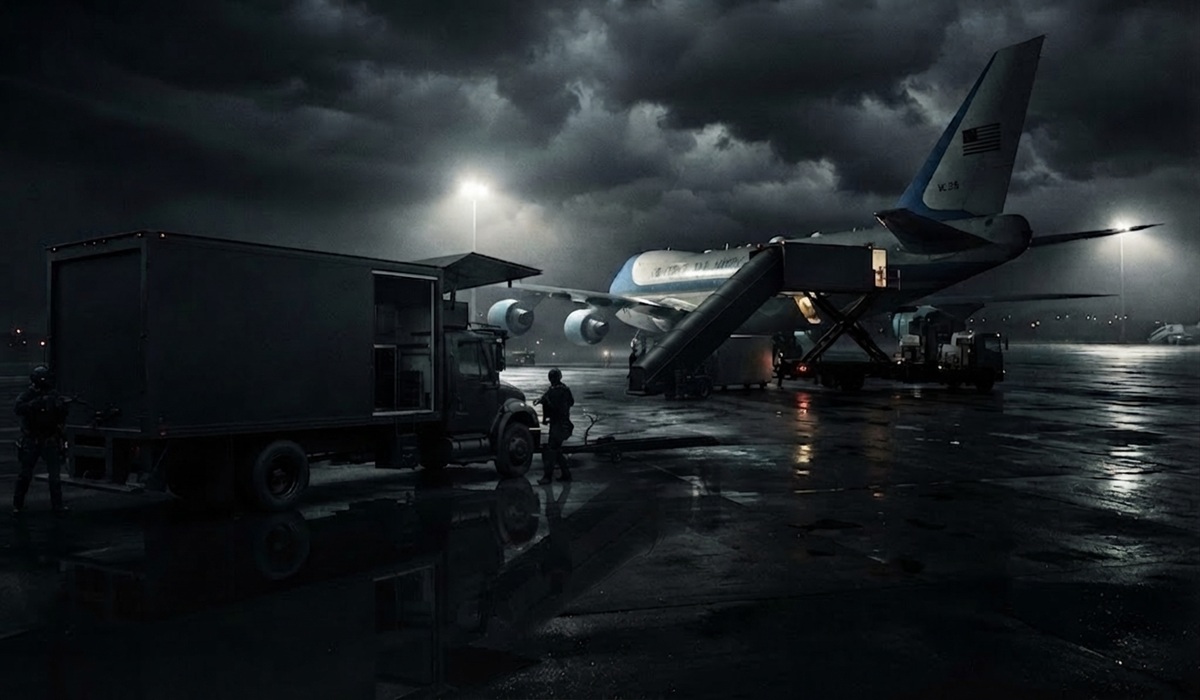
A Show of Force or a Strategic Misfire? Why Trump’s Strait of Hormuz Threat Is Already Unraveling
- Ingrid Jones
- U.S.A
- April 14, 2026
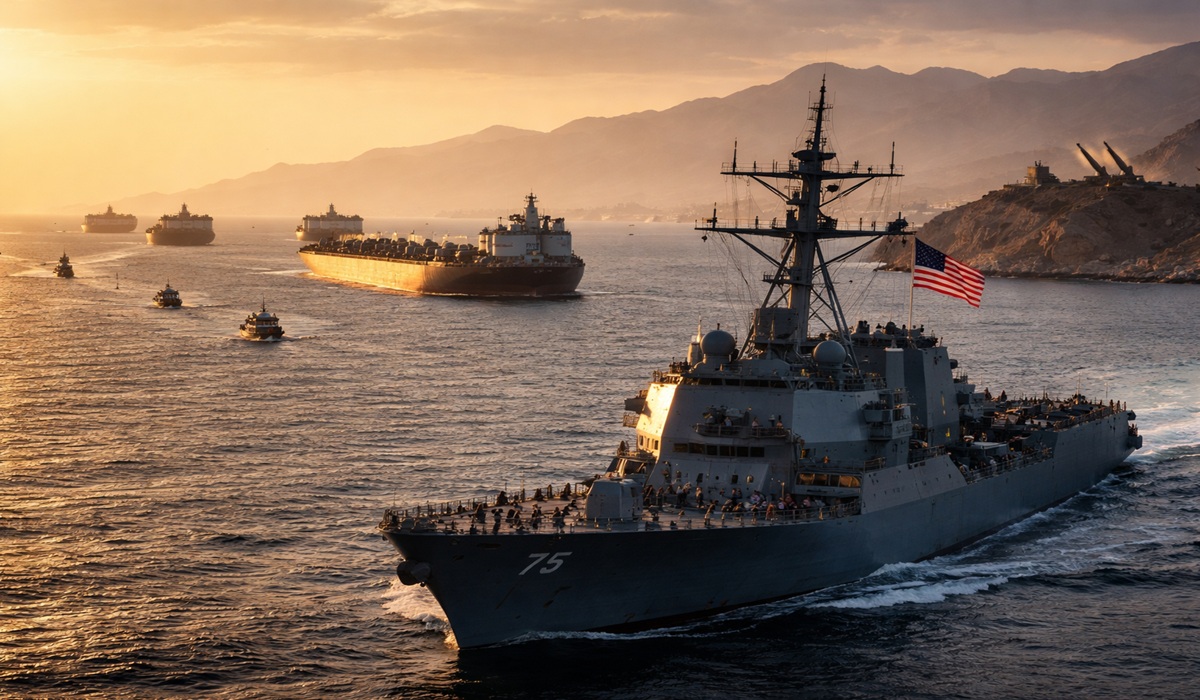
What was presented as a bold and decisive move by Donald Trump to control one of the most critical waterways on the planet is quickly revealing itself to be something far more complicated and far less effective. The idea of blocking shipments tied to Iran through the Strait of Hormuz may sound powerful in theory, but in practice it is colliding with geopolitical realities that the United States cannot simply command away.
At the heart of the issue is a credibility gap that is becoming increasingly difficult to ignore. The United States has signaled that vessels connected to Iran would face consequences, yet ships linked to major global powers continue to move through the strait without direct interference. Chinese tankers, many associated with state-linked operators such as COSCO Shipping, have reportedly passed through without being stopped, inspected, or challenged in any meaningful way. Russian-linked vessels have also not faced the kind of enforcement that would match the rhetoric coming out of Washington. This inconsistency raises a question that cuts to the core of the entire strategy: if the policy is absolute, why is it not being applied absolutely, and if it cannot be applied universally, what exactly is it meant to achieve?
The answer appears to lie in the risks that come with true enforcement. Stopping or seizing vessels tied to China or Russia would not be a contained naval maneuver; it would be a direct confrontation with nuclear-armed powers. That is a line the United States has shown no indication it is willing to cross. As a result, the policy is being enforced selectively, which in turn weakens its overall impact and invites scrutiny from both allies and adversaries. The more ships that pass through unchallenged, the more the perception grows that the United States is drawing lines it cannot fully defend.
Geography further complicates the situation in ways that no amount of military posturing can overcome. The Strait of Hormuz is a narrow, heavily trafficked corridor that sits directly along Iran’s coastline. This is not open ocean where naval superiority can be exercised with relative freedom. It is a confined space where Iranian forces maintain a significant strategic advantage simply by virtue of location. Coastal missile batteries, fast attack craft, naval mines, and other asymmetric tools are all within range of U.S. naval assets operating in the area. Every American destroyer tasked with enforcing a blockade is doing so while remaining exposed to potential retaliation from land-based systems that are difficult to neutralize without escalating the conflict further.
This reality feeds into a broader concern about the limits of American military reach. The United States is already balancing commitments across multiple regions, from Europe to the Indo-Pacific, and concentrating sufficient force in the Persian Gulf to fully dominate the Strait of Hormuz comes with trade-offs. Even with a strong naval presence, control of such a narrow and contested passage is not guaranteed, especially when the opposing side has spent decades preparing for precisely this type of confrontation. The notion that the U.S. can impose total control without incurring significant risk begins to look less like a strategy and more like an assumption under strain.
At the same time, the response from allies has been notably cautious, if not quietly resistant. For a blockade of this magnitude to be effective, it would require broad international cooperation, particularly from countries that rely heavily on energy shipments through the region. Instead, what is emerging is a pattern of hedging. Nations are exploring ways to secure their energy needs without becoming entangled in a high-risk confrontation. Japan, one of Washington’s closest allies, has signaled a willingness to adapt financially rather than escalate militarily, including discussions around settling oil transactions in alternative currencies such as the Chinese yuan. This is not a symbolic shift; it reflects a deeper concern about being caught in the crossfire of a policy that carries enormous economic and security risks.
The implications of enforcement raise even more serious questions. If the United States were to move beyond warnings and begin actively boarding or seizing vessels, it would be stepping into a legal and military grey zone with global consequences. Boarding a ship tied to a sovereign nation is not a routine action in this context; it is one that could easily be interpreted as hostile. Firing on such a vessel would escalate the situation even further, potentially triggering responses not only from the country involved but from others watching closely. The scenario becomes even more complex when considering allied nations. Would the United States be prepared to stop a Japanese-linked tanker? Would it risk confrontation with a country that hosts significant American military assets and plays a central role in regional security? These are not abstract questions; they are the kinds of decisions that expose the limits of any hardline policy when it meets the realities of global interdependence.
What is unfolding now suggests that the United States is caught between two untenable options. It can continue with selective enforcement, allowing certain ships to pass while maintaining the appearance of pressure, but that approach erodes credibility and weakens the intended impact. Alternatively, it can attempt full enforcement, which would require confronting major powers and risking a broader conflict that extends far beyond the Strait of Hormuz. Neither path offers a clean or controlled outcome.
Perhaps the most significant consequence so far is the message this situation is sending. When sweeping threats are made but only partially enforced, it creates an impression that power is being projected unevenly. Whether that perception is entirely accurate or not, it is one that adversaries can exploit and allies cannot ignore. In international politics, perception often shapes behavior as much as reality, and the current gap between rhetoric and action is becoming increasingly visible.
The situation in the Strait of Hormuz was meant to demonstrate control over a critical global chokepoint. Instead, it is revealing the complexity of exercising that control in a world where multiple powers have competing stakes and the costs of escalation are extraordinarily high. Ships continue to move through the waterway, countries are adjusting their strategies to avoid direct confrontation, and the risks to U.S. forces remain ever-present. What was intended as a decisive move is now raising more questions than it answers, and the longer those questions linger, the harder it becomes to argue that this approach is sustainable.
About The Author