Hormuz Redefined: Trade, Currency, and the Quiet Unraveling of the Petrodollar
- TDS News
- Breaking News
- March 19, 2026
By: Donovan Martin Sr, Editor in Chief
The Strait of Hormuz has entered a new and highly consequential phase, one that is redefining not only how goods move across the world but also how economic power is exercised. What was once primarily viewed as a strategic chokepoint is now being transformed into a controlled gateway, where access is increasingly shaped by political alignment and financial conditions. The situation has evolved beyond simple disruption. It is now about control, leverage, and the ability to influence global systems in real time. What makes this moment particularly significant is that it is not just about ships and oil. It is about the rules that govern global trade itself, and whether those rules are beginning to shift in a way that challenges decades of financial dominance.
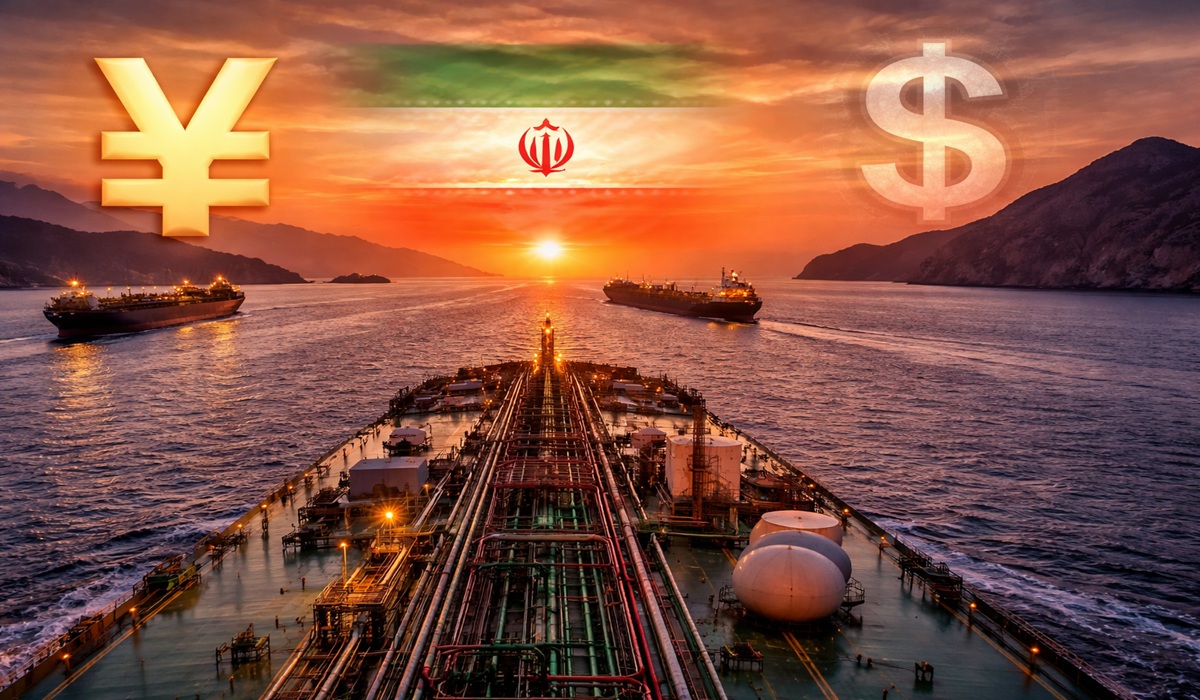
Iran’s approach to the strait is not one of complete closure, but rather selective access. Ships from certain countries are being allowed to pass, while others, particularly those associated with the United States and Israel, are facing restrictions. This creates a fragmented system where access is no longer guaranteed by international norms, but instead dictated by geopolitical positioning. For countries that depend heavily on energy imports, the ability to move goods through this passage is critical, and any disruption forces immediate recalculation. Governments are now weighing not just security risks, but financial and political alignment in ways that were previously less explicit. The strait is no longer neutral ground. It is becoming an instrument of policy.
At the center of this evolving dynamic is the question of currency, and more specifically, the growing pressure to move away from the U.S. dollar. There are increasing signals that access to the strait may come with conditions tied to how transactions are settled, with the Chinese yuan emerging as a preferred alternative in certain cases. This is not a minor adjustment or a temporary workaround. It strikes directly at the foundation of the petrodollar system, which has long ensured that global oil trade is conducted in U.S. dollars. That system has been one of the central pillars of American economic influence, creating consistent global demand for the dollar and reinforcing its status as the world’s reserve currency.
If that system begins to erode, even incrementally, the implications are profound. The petrodollar does not collapse overnight. It weakens through shifts in behavior, through countries quietly adopting alternative settlement mechanisms, and through gradual diversification away from dollar-based trade. What is emerging in the Strait of Hormuz may represent one of the most tangible pressure points on that system to date. Countries that choose to settle trade in yuan or other currencies in order to maintain access are not just making logistical decisions. They are participating in a broader shift that could, over time, reduce the dominance of the dollar in global markets.
For many nations, this creates a difficult and highly strategic choice. Access to energy is non-negotiable, and maintaining supply chains is essential for economic stability. However, moving away from the dollar carries its own risks, including potential backlash, sanctions exposure, and long-term financial uncertainty. At the same time, remaining fully tied to the existing system may limit flexibility in a world where access is increasingly conditional. This is not simply a matter of economics. It is a question of alignment, sovereignty, and future positioning in a changing global order.
The implications extend well beyond the immediate crisis. If enough countries begin to adopt alternative currencies for energy trade, even on a partial basis, it could accelerate a broader shift in the global financial system. The dollar’s dominance is built on trust, consistency, and widespread use. Any sustained movement away from it, particularly in something as central as oil, introduces the possibility of fragmentation. Financial systems could become more regionalized, alliances more economically defined, and global trade more complex.
What is happening in the Strait of Hormuz is not just about a waterway or a conflict. It is about the early signs of a structural shift that has been discussed for years but rarely tested under real pressure. The concept of the petrodollar collapsing has often been treated as theoretical, but the current situation is forcing real-world decisions that could either reinforce or weaken that system. The strait has become a proving ground, where geopolitical tension and economic transformation are intersecting in a way that could redefine the balance of power.
This is not a sudden collapse, but it may be the beginning of a transition. The choices being made now by governments, financial institutions, and energy markets will determine whether the petrodollar remains the dominant force in global trade or begins to give way to a more fragmented, multipolar financial reality. The Strait of Hormuz, long seen as a critical passage for oil, is now emerging as something far more consequential. It is a front line in the evolving battle over who controls not just resources, but the systems that define how those resources are bought, sold, and valued.
About The Author