Jamaica PM Holness Caves To Trump Administration, Ends Cuban Medical Partnership
- Ingrid Jones
- Caribbean
- Tiger's Eye Advisory Group - Trending News
- March 17, 2026
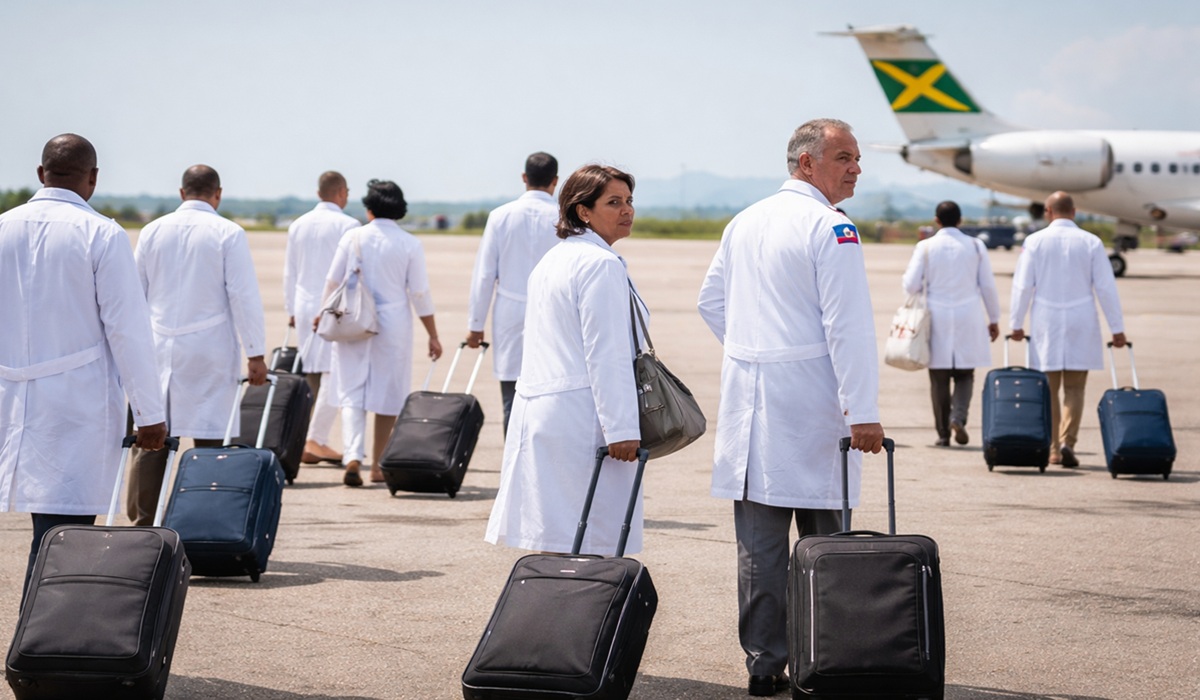
Jamaica is now confronting the full weight of a decision that is increasingly difficult to defend, as the government’s move to end its long-standing medical partnership with Cuba begins to unravel the country’s already fragile healthcare system. What was presented as a strategic foreign policy adjustment is, in practice, revealing itself to be a deeply consequential miscalculation—one that has left hospitals strained, patients vulnerable, and the country scrambling to recover from a self-inflicted wound.
At the center of the controversy is Prime Minister Andrew Holness, whose government chose to terminate an agreement that had, for years, provided critical support through Cuban doctors and medical professionals. These were not symbolic contributions. Cuban personnel were embedded throughout the system, particularly in rural and underserved areas where Jamaican-trained staff were often insufficient in number. They treated millions of patients, helped stabilize care delivery, and played a direct role in maintaining access to essential services.
The decision to sever that relationship did not occur in a vacuum. It followed sustained pressure from Washington, which has long opposed Cuba’s international medical missions. The reality is difficult to ignore: Jamaica did not simply make an independent recalibration—it responded to external influence, and in doing so, sacrificed a functioning and proven healthcare support system without a viable replacement ready to step in.
That choice is now producing predictable consequences. Clinics are understaffed. Hospitals are overburdened. Waiting times are increasing. Frontline workers are stretched thinner by the day. The departure of Cuban doctors has created gaps that cannot be filled overnight, yet the decision to proceed was made as though those gaps would somehow resolve themselves.
What makes the situation more troubling is that this outcome was entirely foreseeable. The reliance on Cuban medical professionals was not a hidden or marginal aspect of Jamaica’s healthcare model. It was central. Removing that pillar without a comprehensive and immediate transition plan was always going to destabilize the system. The fact that the government is now attempting to recruit doctors and nurses from other countries only underscores the absence of that planning.
There is also a deeper issue at play—one of loyalty and long-term partnership. Cuba did not enter the country as a temporary or transactional player. It invested in training Jamaican doctors, contributed to building capacity, and provided consistent support over many years. Turning away from that relationship under pressure sends a message, not only domestically but internationally, about how partnerships are valued when external forces intervene.
The broader geopolitical context only sharpens the criticism. Around the world, smaller nations are increasingly aware of the risks associated with aligning too closely with larger powers whose priorities can shift quickly. The situation unfolding in the Middle East serves as a stark reminder that alliances, particularly those driven by strategic convenience, do not always translate into sustained support when circumstances change. There is a growing recognition that reliance on such relationships can leave countries exposed at critical moments.
The country now finds itself in a position where it has distanced itself from a reliable partner while placing its healthcare system under strain, all in the hope that alternative arrangements will materialize quickly enough to prevent deeper damage. That is not strategy. That is reaction.
Patients are already feeling the impact in very real terms. Reduced access to care is not an abstract policy issue—it is a daily reality for individuals who depend on timely treatment. For those in rural communities, where Cuban doctors were often the primary providers, the loss is even more pronounced. The burden does not fall evenly; it falls hardest on those who were already most vulnerable.
The government’s response has been to acknowledge the challenges while emphasizing efforts to recruit and retain new medical staff. But acknowledgment does not resolve the immediate crisis, and recruitment is not a short-term fix. Training, integration, and retention all take time—time that the system does not currently have in abundance.
What is perhaps most concerning is the precedent this sets. If a country is willing to dismantle a functioning support structure under external pressure without securing a stable alternative, it raises questions about how future decisions will be made when similar pressures arise. Governance, particularly in critical sectors like healthcare, requires a level of independence and foresight that prioritizes national interest above all else.
There were other paths available. Jamaica could have negotiated adjustments to its agreement with Cuba. It could have phased changes gradually while building domestic capacity. It could have leveraged its position to balance relationships rather than choosing one at the expense of another. Instead, it opted for a course that has delivered immediate disruption with no clear short-term solution.
This is not simply a policy misstep. It is a decision with tangible consequences that will be felt across the country for months, if not years. The healthcare system is now under pressure not because of an external shock, but because of a deliberate choice that failed to fully account for its impact.
The path forward will require more than recruitment drives and reassurances. It will demand a reassessment of priorities, a willingness to confront the realities of what has been lost, and a serious effort to rebuild capacity in a way that does not leave the country exposed to similar vulnerabilities in the future.
For now, Jamaica is left managing the fallout of a decision that has proven far more costly than anticipated. The lesson is a difficult one, but it is unmistakable: when critical systems are tied to reliable partnerships, walking away without a plan is not just risky—it is consequential.
About The Author