Hormuz Standoff: Trump Demands NATO Ships, Allies Refuse to Follow Washington Into War
- TDS News
- Breaking News
- March 16, 2026
By: Donovan Martin Sr, Editor in Chief
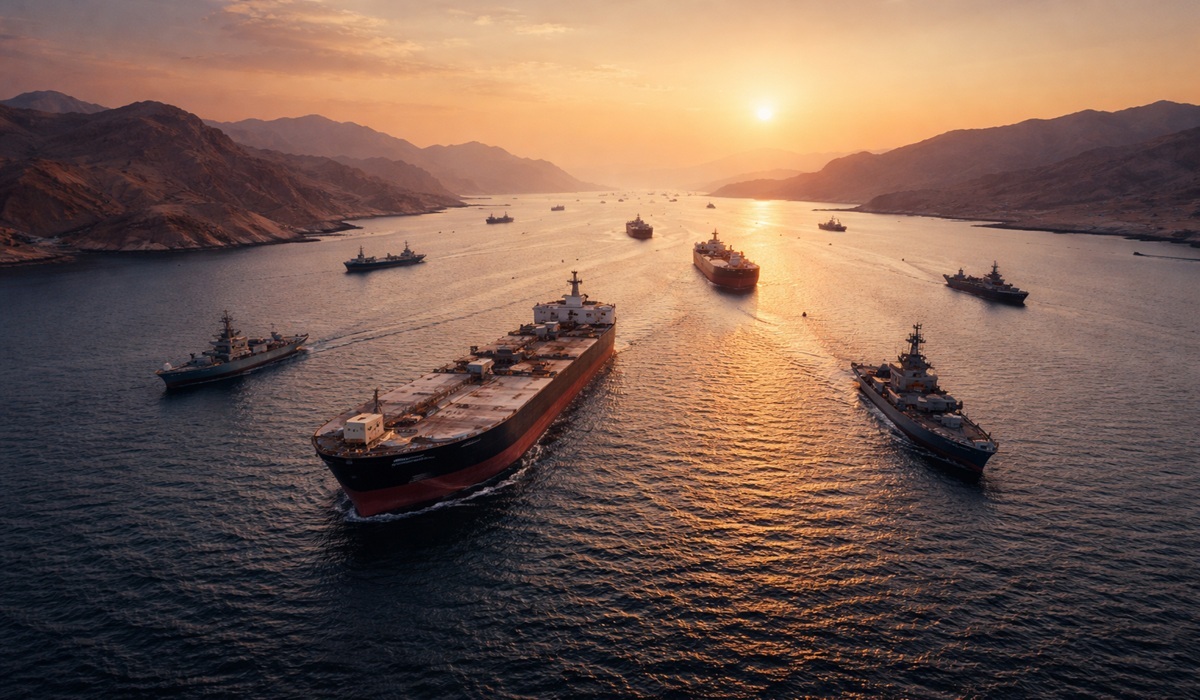
The world’s most important oil corridor is effectively frozen. Nearly a thousand oil tankers are stranded outside the Strait of Hormuz, global energy prices have surged past $100 a barrel, and the United States is now pressuring its military allies to help reopen the narrow waterway that carries roughly a fifth of the world’s oil supply.
That pressure is coming directly from Donald Trump, who is now openly warning that the future of NATO could suffer if allied countries refuse to send naval forces to escort ships through the strait. In a phone interview with the Financial Times on March 15, Trump framed the crisis as a loyalty test. The United States, he argued, helped defend Europe during the Ukraine war, and now expects the alliance to return the favor by helping secure global shipping through the Persian Gulf.
But the response from America’s allies has been strikingly cautious. France has already declined. Japan has said no. The United Kingdom is hesitating and avoiding any clear commitment. Other NATO members have remained silent. Not a single government has stepped forward to announce it will send a battle group into the Strait of Hormuz.
The hesitation is not simply about oil or shipping. It is about the origins of the conflict itself.
The confrontation around the strait did not begin as a NATO war. It emerged from escalating tensions involving the United States, Iran, and Israel. Israel is not a member of NATO, and that distinction is central to the political dilemma now facing the alliance. NATO’s founding principle, Article 5, exists to trigger collective defense when a NATO member is attacked. It was never designed as a mechanism to rally dozens of countries behind conflicts initiated outside the treaty structure.
That legal and political reality matters enormously in European capitals. Leaders in Europe understand that sending warships into the Strait of Hormuz means placing thousands of sailors directly within range of Iranian missiles, drones, and naval mines. A single successful strike against a destroyer or carrier group could kill hundreds or even thousands of personnel in minutes. For any elected leader in Europe, the political consequences of such a disaster would likely end a career overnight.
There is another uncomfortable truth shaping the debate. Many European governments do not trust the strategic direction coming out of Washington. The relationship between the United States and several European capitals has been strained for years over sanctions policy, trade disputes, and unilateral decisions that disrupted diplomatic agreements. One of the most consequential moments came when the United States withdrew from the Joint Comprehensive Plan of Action, the international deal that once limited Iran’s nuclear program and helped stabilize the region. European leaders had invested years of diplomacy into that agreement. When it collapsed, they were left managing the consequences.
From their perspective, the current crisis did not emerge overnight. It followed years of rising tensions, sanctions, military strikes, and regional confrontations. Many policymakers in Europe quietly argue that Washington helped dismantle the diplomatic framework that once prevented the Strait of Hormuz from becoming a flashpoint.
Trump’s own comments have only added to the confusion. Later that evening aboard Air Force One, he suggested that the United States might not even need the strait because America now produces large amounts of its own oil. In effect, he implied that if other countries depend on Middle Eastern energy exports, they may need to handle the security problem themselves.
For countries in Europe and Asia that rely heavily on Gulf oil shipments, that message lands awkwardly. If the United States does not consider the strait essential to its own economy, many foreign leaders wonder why they should risk their navies to reopen it.
Yet the economic pressure is undeniable. The Strait of Hormuz remains one of the most critical energy chokepoints on the planet. A prolonged closure threatens to disrupt supply chains, drive inflation, and push global markets into another wave of instability. Governments understand the stakes. Their industries depend on the oil flowing through that narrow corridor.
What they do not want is war.
Iran has spent decades preparing for the possibility of a naval confrontation in the Gulf. Its strategy has never relied on matching Western fleets ship for ship. Instead, it focuses on asymmetric tactics: missile batteries along the coastline, fast attack craft, naval mines, and large numbers of armed drones. In that environment, even a technologically superior navy can suffer severe losses.
That reality is shaping the quiet calculations now underway across NATO capitals. Publicly, leaders speak about diplomacy and de-escalation. Privately, they measure the risk of sending thousands of sailors into what could quickly become one of the most dangerous maritime battlefields in the world.
At the same time, NATO’s logistical networks continue to support U.S. operations in less visible ways. Intelligence sharing, refueling infrastructure, and regional bases remain active. These arrangements allow governments to maintain their alliance obligations while still avoiding direct participation in the conflict itself.
But that balancing act may not hold indefinitely. Trump has made it clear that he sees the Strait of Hormuz crisis as a test of NATO’s loyalty to the United States. Many leaders in Europe see it very differently. To them, the situation has become a test of whether the alliance can survive moments when its members fundamentally disagree about how a conflict began and whether it should be fought at all.
If NATO governments continue to resist sending ships and Article 5 remains off the table, the alliance may enter a new and uncomfortable phase. Cooperation will continue in many areas, but the sense of unquestioned political unity that once defined NATO could begin to erode.
The standoff in the Strait of Hormuz is no longer just about oil tankers waiting for safe passage. It is quickly becoming a referendum on the limits of American influence and the willingness of its allies to follow Washington into another war whose consequences could reach far beyond the Persian Gulf.
About The Author