Woodstock Takes Round One In Transit Debate, Mayor Scott Gillingham A No Show
- TDS News
- Tiger's Eye Advisory Group - Trending News
- Elections
- September 15, 2026
Editorial Board
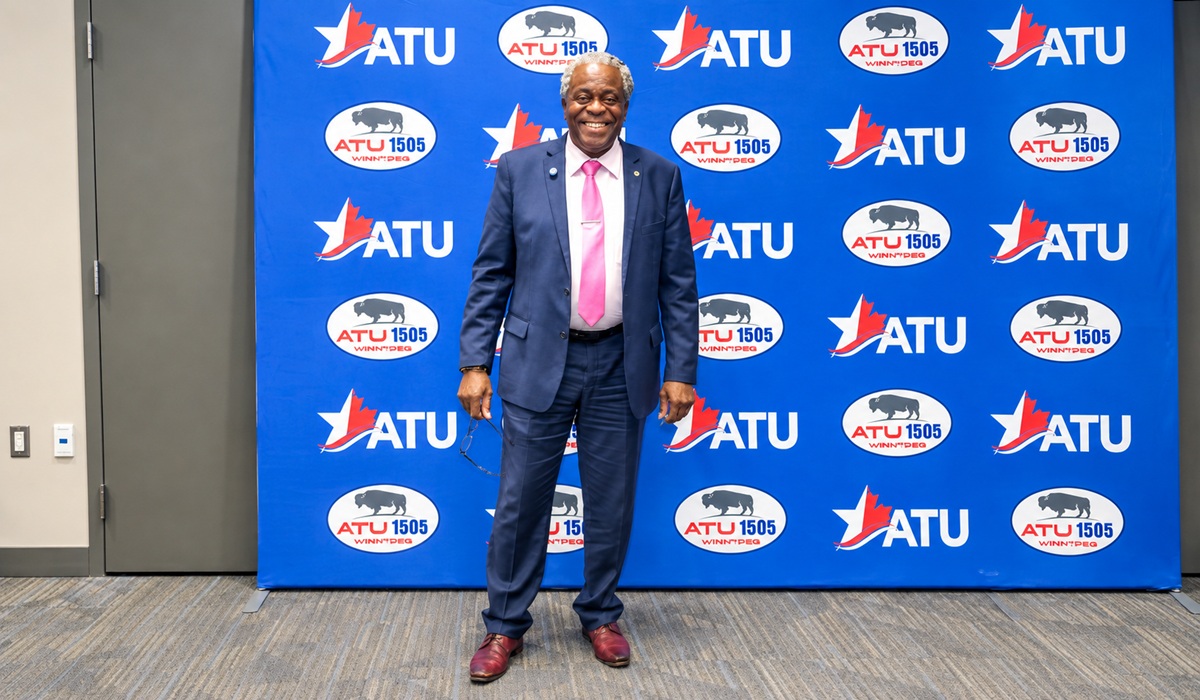
The opening debate of the Winnipeg mayoral race put public transportation under a microscope, bringing ten of the fourteen declared candidates to the Union Centre on Broadway for a focused forum hosted by Amalgamated Transit Union Local 1505. While a crowded stage of hopefuls vied for attention, the evening highlighted a distinct divide between conventional politicians and a candidate who clearly commanded the technical realities of the file.
From the start, one participant held a structural advantage rooted in experience. As a former Winnipeg Transit operator of nearly a decade whose wife also drove transit, Don Woodstock brought direct frontline credibility to the discussion. When the floor opened to safety and operations, he spoke from the practical reality of the driver’s chair, describing what it means to work late shifts, face physical assaults, and handle situations like ensuring vulnerable commuters or seniors reached their destinations safely. While other candidates offered standard promises of more transit officers and programs, he pointed out that true security requires addressing root causes such as homelessness, mental health, and addictions. He explained that these systemic factors drive passenger concerns and fare losses, making them essential to tackle before other network fixes can succeed. Furthermore, he highlighted his past advocacy for better, heavy-duty electric strapping to properly secure wheelchairs for the disability community during his time as an operator.
That operational background translated directly into administrative critique. When veteran transit workers raised concerns about management friction, Woodstock noted that he had left transit himself because of those exact management issues, pointing out that many of the same bureaucrats remain in those positions today. He emphasized that because upper-tier management are mayoral appointees, they can be removed by the mayor’s office. Backed by a detailed transit plan and a transition team, his command of the subject prompted fellow candidate Johnny Calderon to argue publicly that nobody else on stage matched that level of knowledge, suggesting the panel should concede the transit portfolio and joking that he would appoint Woodstock to manage transit if elected, to the applause of the audience. Current and former bus operators responded warmly after the event, reflecting a clear level of trust from the frontline workforce.
The discussion also delved into technical policy points, including the controversial “white card” system. Woodstock criticized how operators are penalized by transit even when independent provincial bodies like Manitoba Public Insurance rule them not at fault in an automobile incident. Additionally, he raised alarms over the city’s master plan, pointing out that proposals to remove arterial lanes from Main Street and Portage Avenue out to Unicity would create severe traffic gridlock, suggesting residents would be appalled if they understood the full scope of those changes. Former city councillor Kevin Klein noted that he was the lone member of council who originally voted against that master plan. Klein emphasized his extensive political background, pointing to his time as an elected city councillor and PC cabinet minister as proof of his career experience in getting things done. That framing prompted a sharp jab from funeral home director Mike Vogiatzakis, who retorted that the city does not want recycled politicians.
Vogiatzakis had earlier pitched safety upgrades centered on ID cards and scan-locked bus shelters, which security experts noted overlooked practical hurdles, such as freezing winter mechanisms or accidentally locking seniors, students, and visitors out in sub-zero weather. Real estate agent Brad Gross suggested commercializing shelters into ad spaces and installing physical boarding gates, while other viewpoints were shared by Noah Redden, Joshua Pagdato, Mazher Alam, Umar Hayat, and Christopher Clacio, alongside Calderon’s candid delivery.
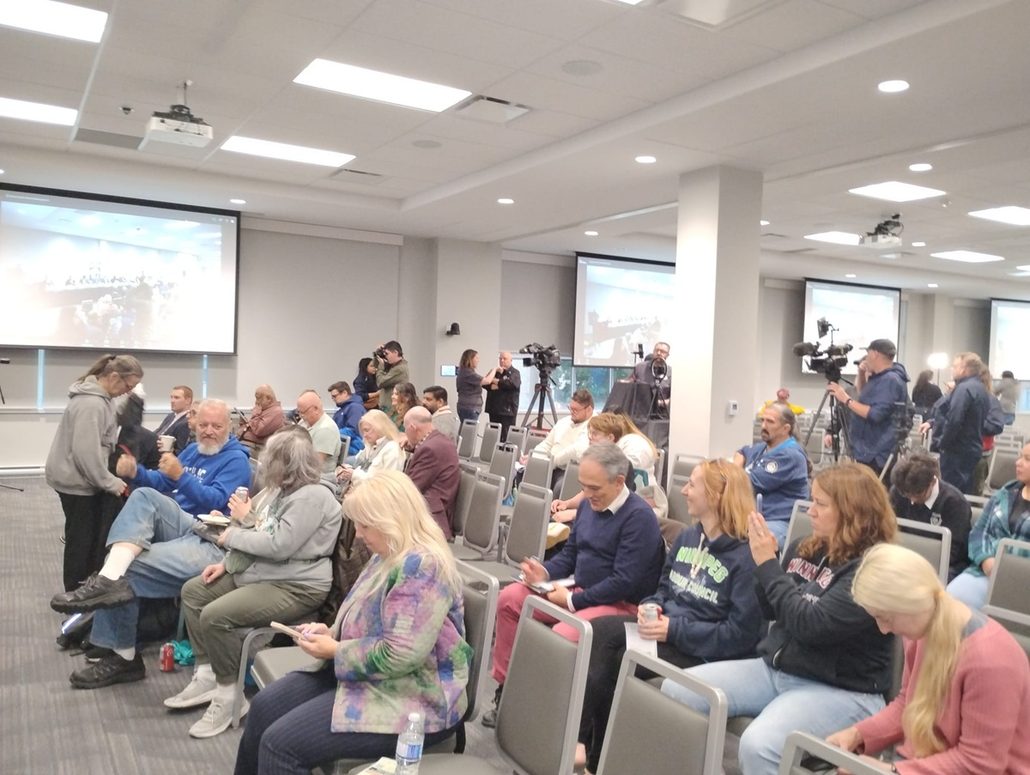
Meanwhile, theres several empty seats in the room. Candidates Gagandeep Bawa, Tracey Drexler, and Zachary Uminski were absent from the lineup. But the heaviest shadow belonged to incumbent Mayor Scott Gillingham. Responsible for a controversial transit network overhaul that has driven down rider confidence, cut routes, and created financial strain, the sitting mayor chose to skip the debate entirely. Offering no participation, no defense, and not even a statement, his refusal to step into the ring and answer directly to frontline workers and frustrated commuters read as a sharp evasion of leadership from an administration that oversaw major system disruptions.
Ultimately, the evening demonstrated that operational expertise carries significant weight when voters evaluate solutions for public transit. Through a combination of frontline history, structural critique, and detailed planning, Woodstock emerged from the forum with the most robust grasp of the portfolio and handsdown the best suited to fix the Winnipeg Transit system.
About The Author