U.S. Supreme Court Upholds State Bans on Transgender Athletes in Women’s Sports, Reshaping Title IX and Fourteenth Amendment Debate
- Kingston Bailey
- U.S.A
- June 30, 2026
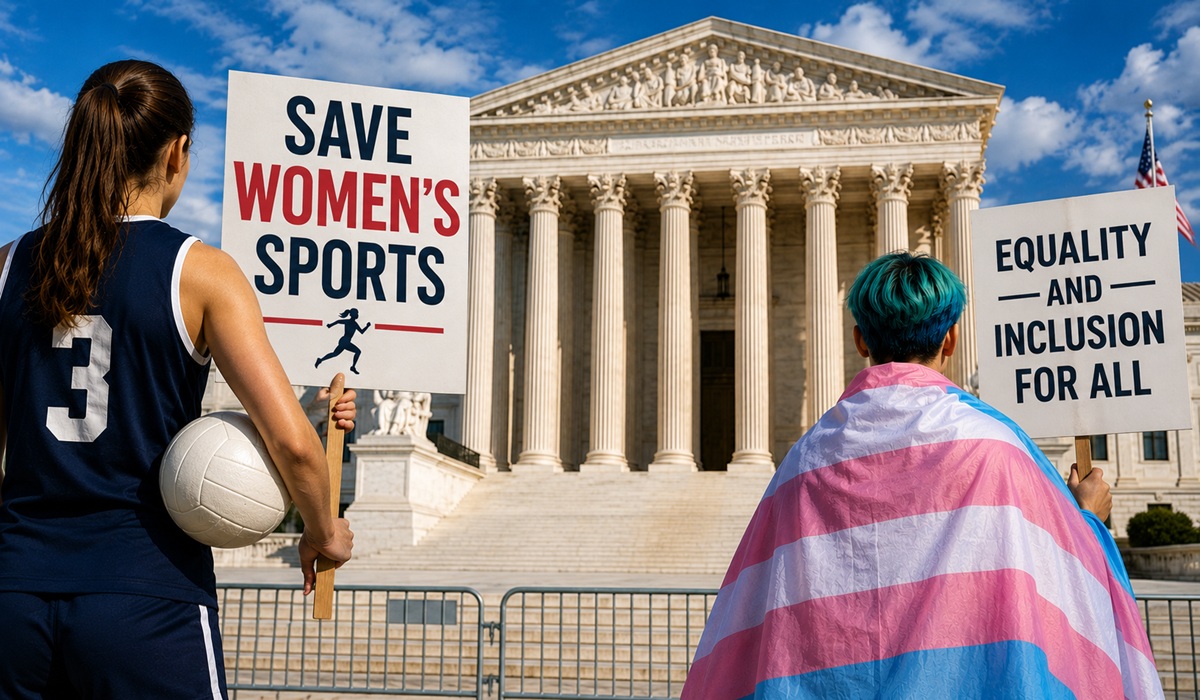
A landmark ruling from the U.S. Supreme Court has dramatically altered the legal landscape surrounding transgender participation in women’s and girls’ sports, with the nation’s highest court concluding that states may restrict female athletic competitions to biological females without violating either Title IX or the Equal Protection Clause of the Fourteenth Amendment.
The decision, issued in challenges involving laws from Idaho and West Virginia, represents one of the most consequential rulings on transgender rights in recent years. By a 6-3 majority on the constitutional question, the Court held that the state laws do not violate the Equal Protection Clause contained in Section 1 of the Fourteenth Amendment. The justices were unanimous in concluding that the laws are also consistent with Title IX, the federal civil rights law enacted in 1972 to prohibit sex-based discrimination in federally funded education programs.
The ruling immediately prompted strong reactions from organizations defending women’s sports, attorneys representing transgender athletes, legal scholars, and civil rights advocates, all of whom acknowledged that the decision will have lasting consequences well beyond the two states involved in the litigation. More than two dozen states have already enacted similar laws, and the Supreme Court’s decision is expected to influence ongoing legal challenges across the country.
Supporters of the state laws argued throughout the litigation that biological differences between males and females create competitive advantages in many athletic events. They maintained that separating competition by biological sex preserves fairness, protects athlete safety, and fulfills the original purpose of Title IX, which dramatically expanded opportunities for women and girls in school athletics over the past five decades.
Writing for the majority, Justice Brett Kavanaugh concluded that Title IX’s reference to “sex” is properly understood as biological sex in the context of athletics. The opinion emphasized that separate athletic teams for males and females have long been recognized under federal law because of inherent physical differences between the sexes. According to the Court, states have a substantial interest in maintaining competitive fairness and safety in women’s sports, making the challenged laws constitutionally permissible.
Title IX has long stood as one of the most influential federal civil rights statutes affecting education. Passed in 1972, it states that no person shall, on the basis of sex, be excluded from participation in, denied the benefits of, or subjected to discrimination under any educational program or activity receiving federal financial assistance. While the statute transformed opportunities for female athletes, courts have spent years debating how its protections apply to transgender students as gender identity became an increasingly prominent legal issue.
The constitutional debate centered on Section 1 of the Fourteenth Amendment, commonly referred to as the Equal Protection Clause. Ratified in 1868 following the Civil War, the provision prohibits states from denying any person the equal protection of the laws. Attorneys representing the transgender students argued that excluding transgender girls from girls’ sports constituted unlawful discrimination based on sex and transgender status, thereby violating those constitutional guarantees.
The Supreme Court majority rejected that argument in the athletic context. While acknowledging the importance of equal protection principles, the Court concluded that athletics present unique circumstances in which sex-based distinctions have long been recognized as constitutionally permissible because of biological differences that may affect competition.
Organizations supporting women’s sports celebrated the ruling as a significant affirmation of Title IX’s original purpose. Attorneys representing those groups argued that female athletes deserve opportunities to compete on a level playing field and maintained that biological distinctions remain relevant in many sports. They contend the decision provides long-awaited legal clarity after years of conflicting lower court rulings and differing state policies.
Attorneys representing the transgender athletes expressed profound disappointment with the outcome. They argued the ruling permits states to exclude transgender youth from school sports despite what they describe as individualized circumstances that may differ from athlete to athlete. Civil rights organizations supporting the plaintiffs warned the decision could encourage additional restrictions affecting transgender students in education and public life.
The litigation itself involved two students whose cases became national symbols in the broader debate. Lower courts had previously ruled in their favor before the Supreme Court agreed to hear appeals filed by Idaho and West Virginia. Those earlier decisions found that the bans likely violated federal protections, but the Supreme Court has now reversed that legal interpretation.
Legal experts believe the ruling will likely shape future challenges involving school athletics while leaving broader questions involving transgender rights unresolved. The Court limited its analysis to participation in school sports and did not issue a sweeping decision covering every context in which questions involving gender identity and biological sex may arise. As a result, additional litigation concerning other areas of education, employment, public accommodations, and healthcare is expected to continue.
The decision also highlights the continuing tension between evolving understandings of gender identity and longstanding legal frameworks built around biological sex. Legislatures, school boards, athletic associations, and courts across the United States will now have to determine how this precedent applies to existing policies and future disputes.
Although supporters and opponents sharply disagree on the outcome, both sides recognize that the ruling marks a defining moment in American constitutional law. For advocates of women’s sports, it represents a reaffirmation of Title IX’s historic protections for female athletes. For transgender rights advocates, it signals a significant legal setback that they say will require renewed efforts through legislation and future litigation.
With the Supreme Court having now spoken on both Title IX and the Equal Protection Clause in the context of school athletics, the national conversation surrounding fairness, inclusion, biological differences, and civil rights is certain to continue long after the Court’s opinion is published.
About The Author