The 500,000 Strong: Mobilizing America’s Hidden Electorate Across the Northern Border
- TDS News
- U.S.A
- August 19, 2026
By: Donovan Martin Sr, Editor in Chief
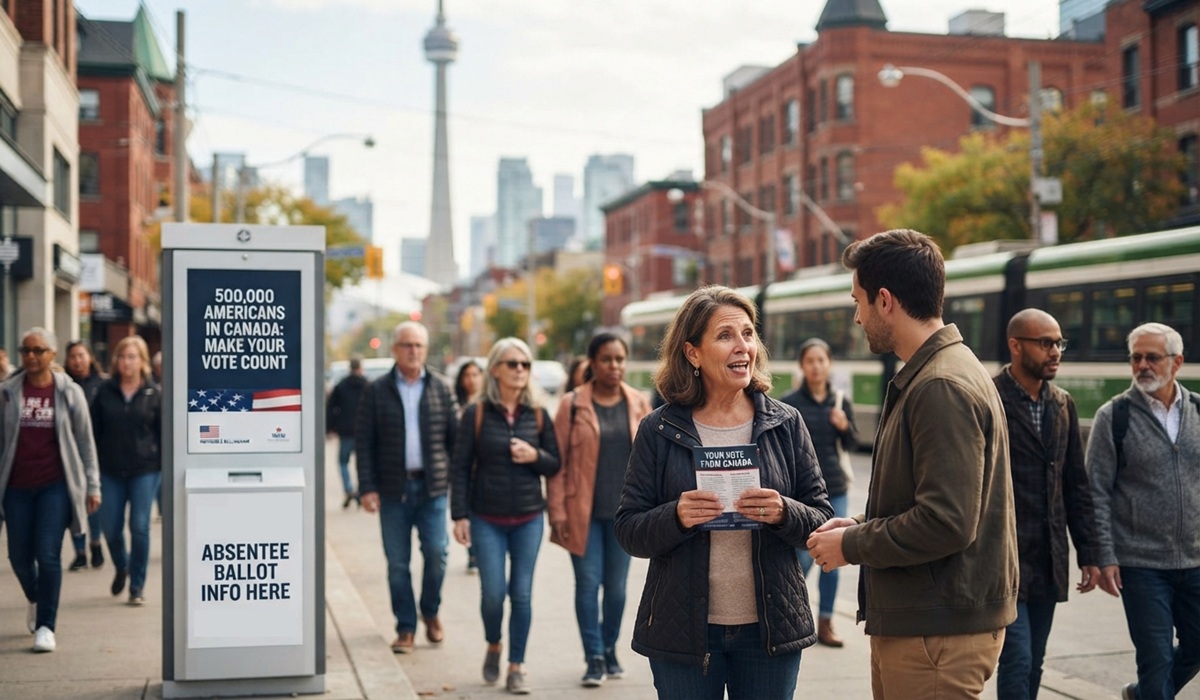
A staggering 500,000 eligible voters—U.S. citizens currently residing in Canada for personal, professional, or academic reasons—represent a massive demographic with full eligibility to cast ballots in American midterms and federal elections. While elections stateside are administered individually by each state, a vital federal exception applies to citizens living abroad and active-duty military personnel. Congress enacted the Uniformed and Overseas Citizens Absentee Voting Act (UOCAVA) in 1986, establishing that individuals outside the country can vote for Congress, the Senate, and the President using a special absentee ballot. Despite these legal protections, Department of Defense studies conducted by the Federal Voting Assistance Program after every election cycle estimate that overseas turnout hovers below 20% in presidential races, with large populations spread across the United Kingdom, Germany, Japan, Mexico, and just north of the border.
Activating this vast diaspora requires intentional community outreach and robust civic education. Wes Edwards, Voter Registration Director who has been with the non-profit Building Bridges for America since 2020, leads initiatives to mobilize voters who are away from their home precincts, whether serving in the military or living abroad in Washington state. Building Bridges typically starts with local issues that resonate deeply within communities and expands outward, occasionally seeing local mobilization transcend into national action. Edwards notes that federal law protects these vital voting rights, yet many expatriates want to participate simply without knowing they can or realizing these mechanisms exist. Consequently, every voter outreach organization must ensure absentee ballot resources are readily accessible.
Grassroots networks and advocacy coalitions also play an essential role in keeping citizens informed about broader policy stakes. Kevin Leja, a leadership team member at Indivisible Bellingham and an advocate for democracy, stresses that it is crucial for citizens to understand their rights. Highlighting the importance of public awareness, his organization recently distributed a newsletter detailing major legislative actions, pointing out that lawmakers pushed through comprehensive legislation signed into law on July 4th, which operates with significant mass deportation funding alongside alarming reports regarding immigration enforcement and detention facilities. This informative work remains essential for keeping Americans connected to the realities of domestic policy.
Navigating the process requires understanding special absentee ballot requirements, starting with registration and proper request timelines dictated by individual states under federal guidelines. Because overseas voters face unique logistical hurdles involving transit times and distant local election offices, organizations bridge the gap by demystifying the steps required to secure and return a ballot. By combining sharp political awareness of national legislative actions with direct voter registration efforts, advocates ensure that geographic distance does not disenfranchise hundreds of thousands of eligible Americans.
As the political landscape intensifies and upcoming midterm elections loom closer, the urgency for overseas mobilization has never been more pronounced. With control of Congress hanging in the balance and critical policy battles playing out across every state, the half a million eligible American voices residing across the northern border possess the collective weight to influence tight legislative races. Grassroots groups recognize that waiting until the final weeks before election day is no longer an option, and bridging the participation gap requires immediate, proactive outreach to ensure every expatriate who wants to make a difference is registered, equipped with a special absentee ballot, and ready to be counted before deadlines arrive.
The road ahead ultimately hinges on sustained engagement, transforming passive interest into active participation. When advocacy groups successfully bridge the physical divide between expatriates and their home precincts, they reinforce the fundamental principle that living across an international border should never silence a citizen’s voice in shaping the nation’s future.
About The Author