Weight plays a larger role in industrial product design than many people realize. A few unnecessary pounds can increase transportation costs, complicate assembly, raise energy use, and put extra stress on surrounding components. When manufacturers produce thousands of units, even a modest reduction in individual product weight can create meaningful operational savings.
Reducing weight in industrial products, however, requires more thought than simply removing material. Industrial products still need to withstand mechanical loads and other conditions in demanding applications. Engineers must find the point where a design uses enough material to perform reliably without carrying mass that serves little practical purpose.
Successful lightweighting starts early in the design process. Engineers who consider weight alongside strength have more freedom to make meaningful improvements. Waiting until a design reaches its final stages often limits options because every component depends on other parts of the system.
Material selection offers one of the clearest opportunities to reduce weight. Designers sometimes continue using familiar materials because previous products used them successfully. That familiarity can simplify decision-making, but it can also prevent teams from considering materials that deliver similar functional performance with substantially less mass.
Metals remain necessary for many high-load or high-temperature applications, yet not every industrial component requires metal. Certain engineered plastics offer excellent strength-to-weight characteristics while also resisting chemicals, moisture, and wear. The right material depends on what the component needs to accomplish, not what designers have traditionally specified.
This approach encourages engineers to evaluate individual parts according to their real operating conditions. A component that experiences modest mechanical loads may not need the density of steel or another heavy material. Likewise, parts that primarily serve as guides, spacers, covers, insulators, or wear surfaces may present strong opportunities for weight reduction.
In the right application, manufacturers can choose CNC plastics over metal parts to reduce component weight without sacrificing the dimensional precision industrial assemblies demand. CNC machining also lets engineers work with high-performance plastics suited to specialized environments. This strategy can be especially valuable when a design includes several components that don’t require the full strength of metal.
Material substitution still requires careful engineering analysis. Plastics respond differently than metals to heat, sustained loads, friction, chemicals, and dimensional changes. Engineers need to compare these characteristics against actual operating conditions rather than assuming that a lighter material automatically makes a better replacement.
Geometry provides another powerful route toward lightweighting. A component does not need a uniformly thick cross-section simply because that geometry makes the initial design easier to create. Engineers can study how forces move through the part and concentrate material where the structure experiences meaningful stress.
This method can reduce unnecessary bulk while protecting important load paths. Ribs, webs, and strategically placed supports often provide stiffness without requiring a solid mass of material. Thoughtful geometry lets the component’s shape contribute to performance instead of relying solely on material volume.
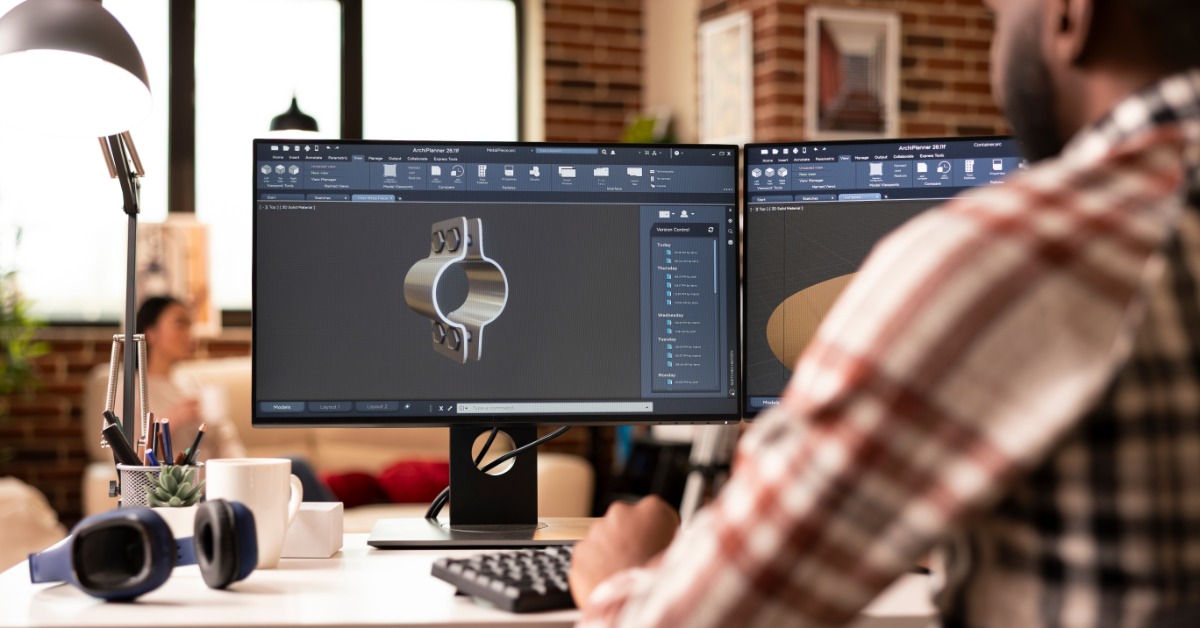
Computer-aided engineering tools make this process considerably more precise. Finite element analysis can help engineers identify high- and low-stress areas before producing a physical component. Designers can then remove material from low-stress areas while preserving or reinforcing regions that carry important loads.
Simulation does not eliminate the need for physical testing, but it can help teams make better decisions before they reach that stage. Engineers can compare multiple geometries digitally and narrow the field before machining prototypes. This approach reduces guesswork and makes lightweighting a deliberate engineering process rather than a series of arbitrary cuts.
Product designers should also question whether every component needs to exist as a separate part. Industrial assemblies often grow more complicated over successive design generations. Teams add brackets, fasteners, spacers, adapters, and reinforcing pieces to solve individual problems, and the total weight gradually increases.
Part consolidation can reverse some of that growth. A redesigned component may perform functions that previously required several individual pieces. Combining parts can reduce overall material use while also decreasing the number of fasteners or connecting features that contribute additional weight.
Consolidation can also simplify assembly, although engineers must consider maintenance before combining too many functions into one component. A highly integrated part may save weight but become more expensive to replace if one small feature fails. Effective lightweighting balances reduced mass with practical manufacturing and service requirements.
Fasteners deserve similar scrutiny because their weight can accumulate quickly in large assemblies. One bolt may contribute almost nothing to the overall mass, but dozens or hundreds of unnecessary fasteners can make a measurable difference. Each connection also requires overlapping material, mounting features, or additional hardware.
Engineers can sometimes reduce this burden by redesigning joints rather than simply selecting smaller fasteners. Interlocking features, integrated mounting points, or alternative joining methods may eliminate some hardware. The design still needs to provide adequate strength and accessibility, so connection changes should always reflect the forces and maintenance needs involved.
Manufacturing processes can influence weight as much as the initial material choice. A process that requires thick walls or generous machining allowances may introduce mass that the finished product does not functionally need. Designers should consider how manufacturing limitations affect geometry before locking in a particular production method.
CNC machining can support lightweight designs because it gives manufacturers precise control over material removal and final dimensions. Engineers can create pockets, thinner sections, and complex profiles while maintaining tight tolerances. For lower production volumes or specialized industrial parts, this flexibility supports design refinement without expensive dedicated tooling.
Durability deserves equal attention. The lightest possible component rarely represents the best industrial design if it wears quickly or requires frequent replacement. Products that operate around abrasive materials, continuous movement, impact, or temperature changes need enough structural margin to handle real-world conditions over time.
This distinction separates useful lightweighting from simple material reduction. Engineers should aim to eliminate unnecessary mass while retaining the material that supports reliability. A slightly heavier component that lasts significantly longer may provide better lifecycle performance than an aggressively optimized part with a narrow operating margin.
Cost ultimately shapes most industrial design decisions as well. Lightweight materials or more complex machining strategies may increase the price of an individual component. Engineers should compare that added expense against savings in shipping, assembly, energy use, supporting structures, and long-term operation.
The most effective industrial products rarely pursue minimum weight as an isolated objective. They use material efficiently and place it where it provides measurable value. That mindset encourages designers to examine materials, geometry, manufacturing methods, and system interactions as connected parts of the same engineering problem.
Reducing industrial product weight therefore depends less on one dramatic change than on disciplined design decisions throughout development. Engineers who question unnecessary mass while respecting performance requirements can create products that remain strong and efficient.
When lightweighting becomes part of the design philosophy from the start, manufacturers can reduce weight while maintaining the qualities industrial products need to perform reliably.
About The Author