Ottawa Sees Business as Usual Despite Reported Pentagon Directive
- Ingrid Jones
- Canada
- November 23, 2026
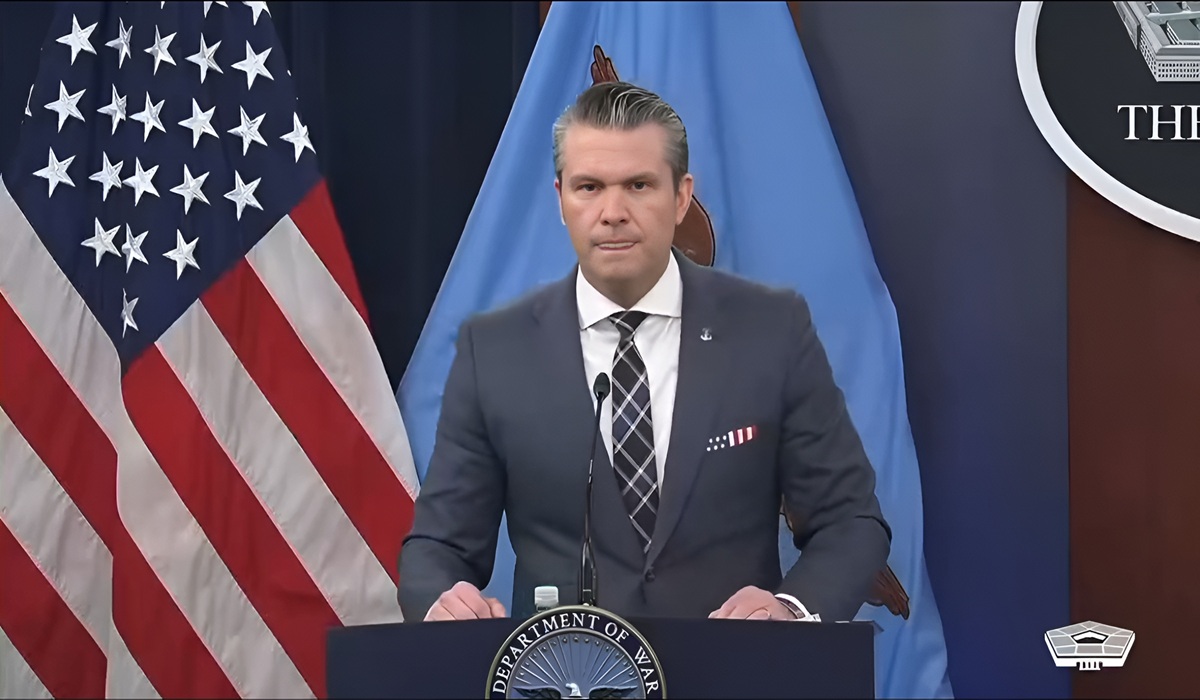
HALIFAX, Nova Scotia (AP) — Canadian defense officials reported no operational disruption in military cooperation with the United States following the emergence of a classified Pentagon directive signed by U.S. Defense Secretary Pete Hegseth that reportedly seeks to place new administrative restrictions on bilateral defense interactions.
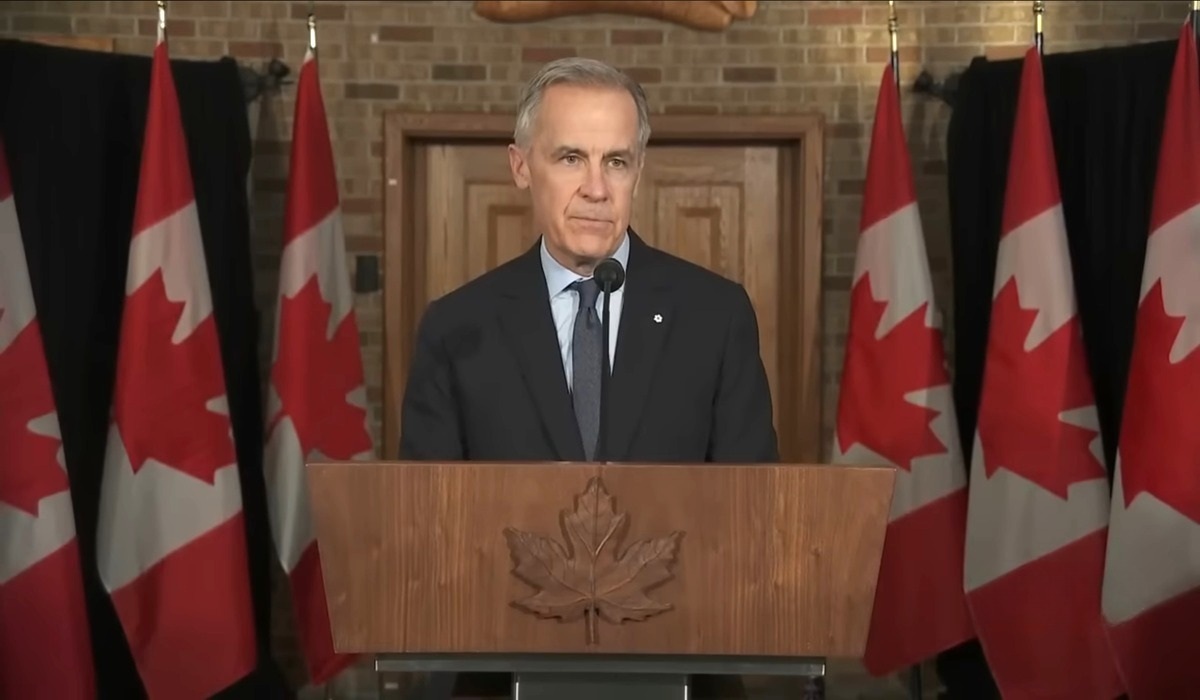
Minister of National Defence David McGuinty addressed the reports while attending the Halifax International Security Forum on Saturday, stating that Canadian military leaders had neither received the classified memorandum nor observed any practical alterations in joint continental operations. The directive, first reported by The Washington Post, requires uniformed and civilian Pentagon personnel to obtain explicit permission before participating in certain nonoperational engagements, social functions, and think tank conferences involving Canadian counterparts.
Speaking to reporters on the sidelines of the annual security gathering, McGuinty emphasized that day-to-day collaboration between the Canadian Armed Forces and the U.S. military continues uninterrupted across shared commands and international deployments.
“There is some sort of document we haven’t seen,” McGuinty said during his remarks in Halifax. “I’ve seen no evidence of a change. I’ve checked with our top military folks, they’ve seen no evidence of change. We continue to co-operate. We continue to work together.”
The reported directive surfaces amid heightened friction between Ottawa and Washington over defense spending benchmarks, bilateral trade negotiations, and border security. Throughout the current U.S. administration, Pentagon leadership has repeatedly pressed NATO allies, including Canada, to accelerate military modernization and meet alliance expenditure targets. Earlier this year, in May, the Pentagon paused its participation in a long-standing joint Canada-U.S. defense board established in the 1940s, citing what American officials characterized at the time as insufficient progress on defense commitments.
Despite those diplomatic headwinds, Pentagon spokesperson Tony Wright issued a statement reaffirming the foundational military ties between the neighboring nations. Wright noted that joint work within the North American Aerospace Defense Command, known as NORAD, as well as NATO commitments and intelligence sharing arrangements, remains intact.
“Canada and the United States have a long history of defence co-operation built on a shared commitment to continental defence and protecting our collective security around the globe,” Wright said in the statement. “This collaborative work continues.”
U.S. lawmakers attending the Halifax forum sought to reassure Canadian officials and international delegates that the classified guidance represents a narrow bureaucratic procedure rather than a strategic rupture. Republican Sen. Mike Rounds of South Dakota confirmed the existence of the directive signed by Hegseth, explaining that the measures were drafted several months ago as a form of diplomatic leverage but were only recently finalized.
Rounds downplayed the operational significance of the memo and expressed regret that an internal classified document had been leaked to the press. According to Rounds, the rules apply strictly to discretionary gatherings and policy forums rather than joint military planning, aerospace warning missions, or active training exercises.
Democratic Sen. Tim Kaine of Virginia, who also traveled to Nova Scotia for the forum, criticized the tone of the Pentagon directive while predicting that the incoming U.S. Congress taking office in January would work to stabilize bilateral ties.
“The tone is bad and it’s unnecessary,” Kaine told journalists in Halifax. “And we understand this actually goes back a ways and it is just the formalization of something that is now months and months old. I do think the new Congress is going to change the tone dramatically.”
In a separate interview with CBC News chief correspondent Adrienne Arsenault, McGuinty declined to speculate on the internal deliberations inside the Pentagon that prompted the document. He noted that Ottawa has grown accustomed to sudden policy shifts from Washington over the past year and remains focused on executing its own domestic and continental security priorities.
“There have been curveballs of this kind,” McGuinty said. “We’ve learned to move forward.”
McGuinty pointed to ongoing joint initiatives as proof that defense integration remains deeply embedded across both militaries. He cited continuous coordination on Arctic surveillance, maritime domain awareness, and NORAD modernization projects that require daily technical and operational synchronization between Ottawa and Colorado Springs.
During the same weekend appearance in Halifax, McGuinty announced that Canada is formally becoming the 25th member of the NATO Innovation Fund, making it the first North American nation to join the multinational venture capital initiative. Established in 2022, the fund pools capital from participating alliance members to invest in dual-use emerging technologies, including artificial intelligence, quantum computing, biotechnology, space systems, and secure communications.
Ottawa is committing more than $100 million to the fund, a move designed to unlock venture financing for Canadian defense technology startups while integrating domestic research into broader allied supply chains.
“For Canadian innovators, that means new investment, new partnerships, and access to international markets,” McGuinty said when unveiling the commitment.
The defense developments coincide with intense parallel negotiations over bilateral trade. Earlier in the week, Canadian and U.S. trade officials signaled cautious optimism regarding an interim commercial agreement after talks stalled in August over tariff disputes and industrial subsidies. U.S. Trade Representative Jamieson Greer indicated on Sunday that negotiators were moving closer to a framework, even as political rhetoric from Washington continued to challenge Canadian industrial policy.
For Canadian defense planners, the divergence between sharp political messaging from Washington and steady operational execution by American military commanders has become a defining feature of the bilateral relationship. Senior Canadian officials in Halifax noted that joint maritime patrols, intelligence exchanges, and officer exchange postings across North America and Europe have proceeded without administrative holds over the past week, even while the classified directive circulated within the Pentagon.
As the Halifax forum concluded its weekend sessions, McGuinty reiterated that Ottawa remains prepared to engage constructively with Pentagon leadership at every level while pressing ahead with domestic defense investments and multilateral partnerships across Europe and the Indo-Pacific.
About The Author