PROVINCIAL PROBE IMMINENT: Gillingham’s Reckless Photo Op Set to Force Mandatory Safety Stand Down at Arlington Bridge
- Don Woodstock
- Canada
- July 19, 2026
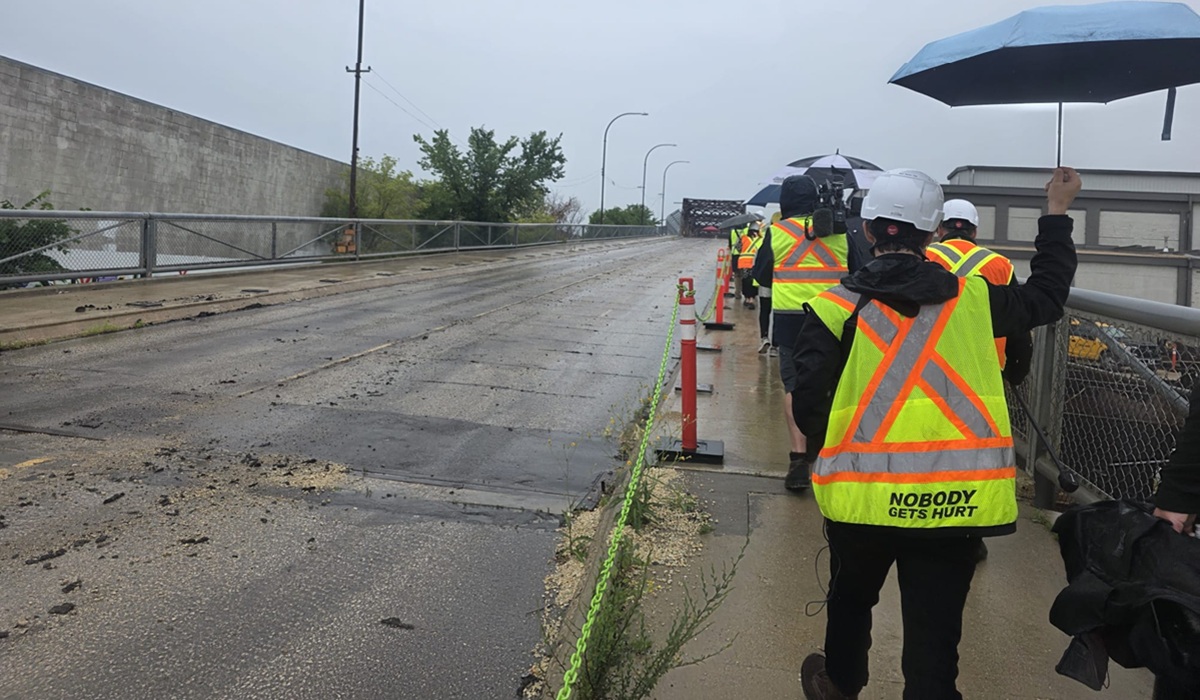
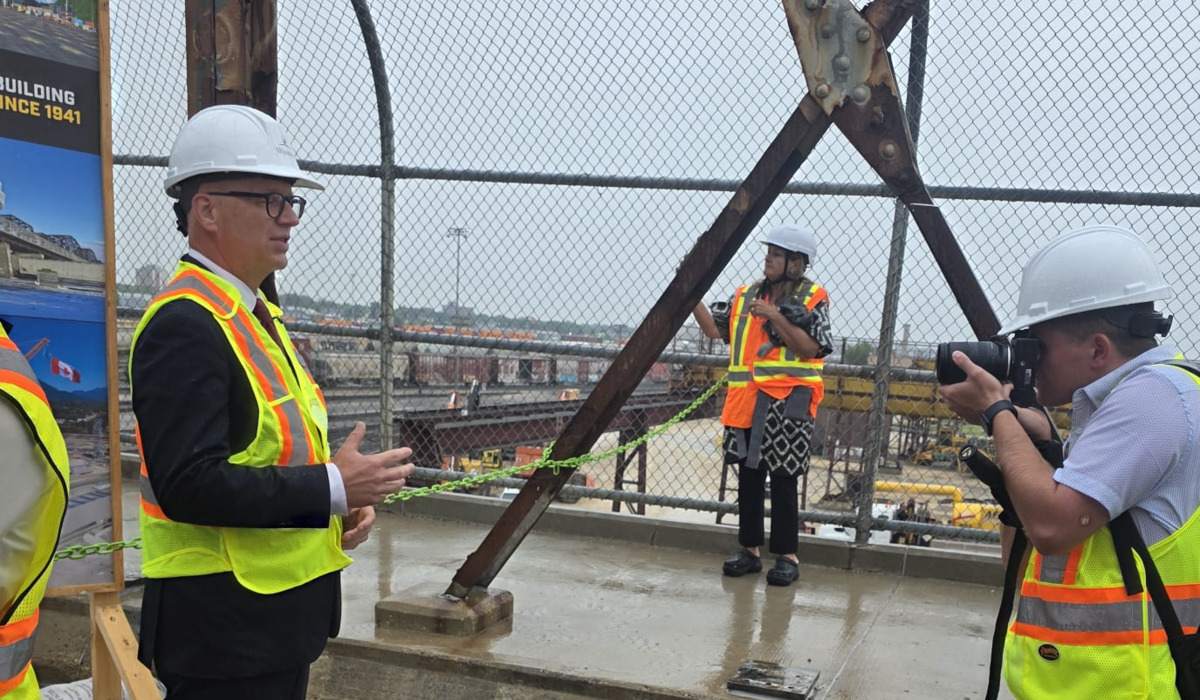
WINNIPEG — A political publicity stunt at the Arlington Bridge demolition site has backfired into a severe regulatory and political crisis. Following the airing of this story, multiple high-level officials from the city and province spoke on the condition of strict anonymity to express deep outrage over an unprecedented breach of public safety. According to these well-informed officials, the flagrant disregard for mandatory safety codes is highly likely to trigger an official investigation by Manitoba Workplace Safety and Health, as well as an imminent provincial Stop Work Order, leaving Winnipeg taxpayers to bear the financial fallout.
Senior municipal officials familiar with Winnipeg’s infrastructure governance explained that the scale of the violations is completely unprecedented for a public project. By treating a structurally compromised heavy demolition zone as a campaign backdrop, the mayor’s office bypassed established statutory boundaries, leaving the city exposed to severe legal, financial, and regulatory liabilities. A provincial enforcement source echoed these concerns, emphasizing that when political figures bypass basic protection codes on a structure explicitly closed due to collapse risks, an investigation is the only logical next step, and the likelihood of a formal Stop Work Order dropping is exceptionally high.
It is highly improbable that the Premier of Manitoba or the Minister of Labour and Immigration gave this stunt their blessing; no provincial safety authority would ever instruct their department to suspend mandatory life-safety rules just to facilitate a municipal photo op. The mayor did not clear this with the province because he knew the answer would be an immediate refusal. Instead, the mayor’s office gambled that a political press conference would insulate them from immediate site enforcement—an outright gamble with human lives.
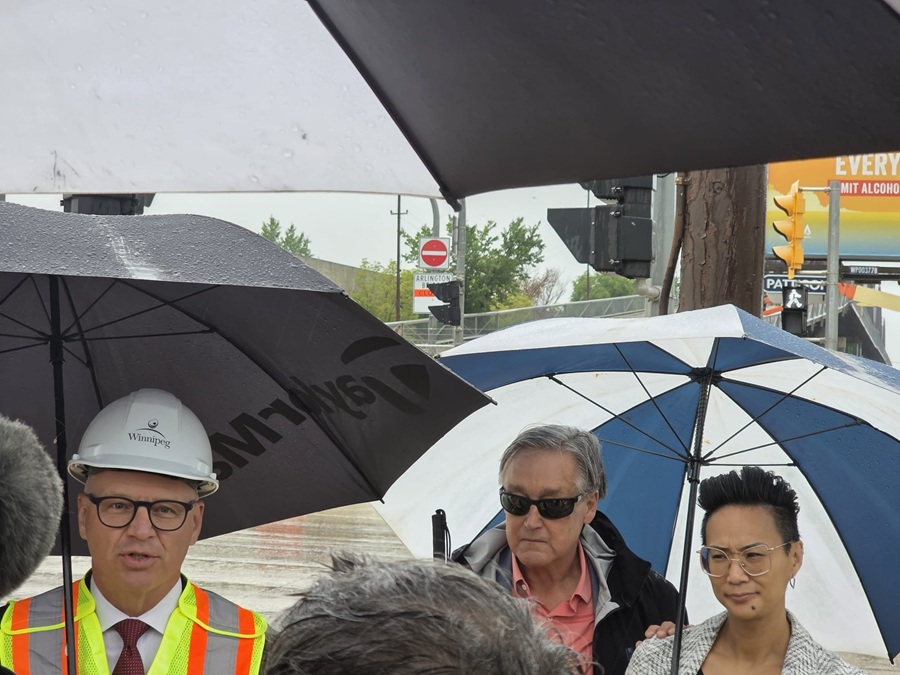
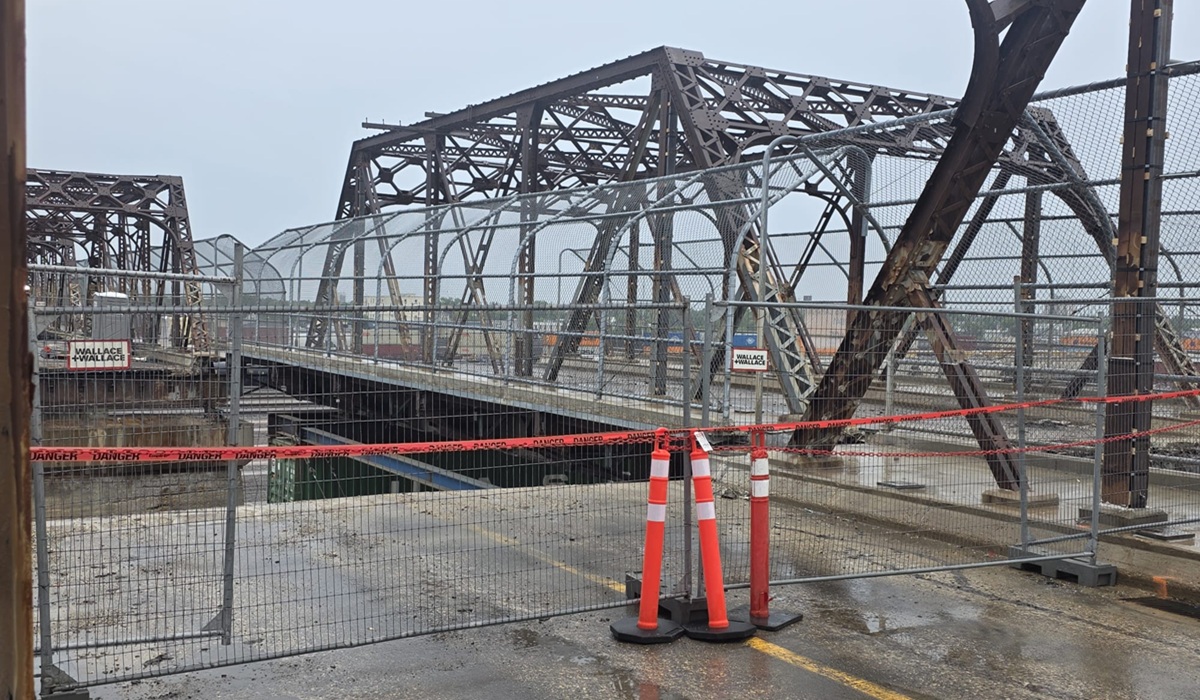
The Arlington Bridge was condemned because it is on the verge of structural failure, currently under active cutting stress with independent components vibrating under industrial saws. While the entourage was wearing hard hats, matching an untrained crowd onto this unstable platform without fall protection is the physical equivalent of playing Russian roulette.
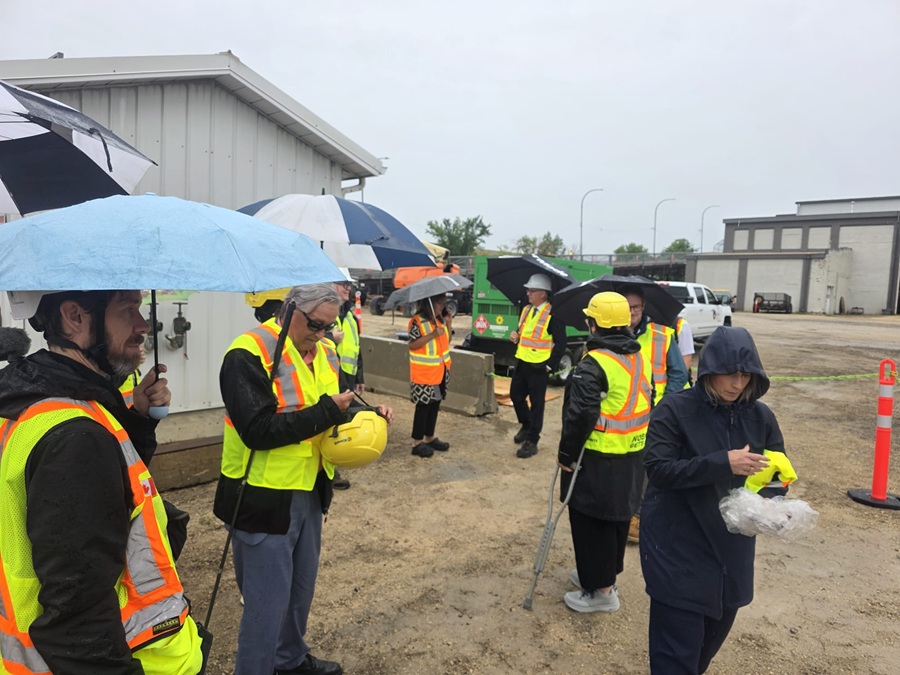
What makes this stunt so completely infuriating is that it was entirely unnecessary. There was absolutely no technical or journalistic reason why the mayor could not have held this press event at the bottom of the bridge, safely inside the parking lot at Logan Avenue and Arlington Street, or the lot at Dufferin Avenue and Arlington Street. Reporters would have still captured a perfect visual look at the heavy machinery and the historical bridge sections without being exposed to structural instability. Instead, senior leadership chose physical danger over common sense, marching mobility-impaired staff and councillors into a zone where a single mechanical failure would have caused a mass casualty event.
The absolute negligence on display flouted explicit sections of provincial labor legislation, municipal administrative codes, and city bylaws:
Manitoba Regulation 217/2006 Part 6 (PPE): Section 6.1 guidelines were completely broken. Public Works Chair Janice Lukes walked a live industrial zone in Crocs and open-toed sandals, while other representatives wore civilian skirts and standard running shoes that failed the legal requirement to protect two-thirds of the ankle. No protective eyewear was provided despite active cutting.
M.R. 217/2006 Part 2 (Safe Work Procedures) & Part 4 (General Workplace Requirements): The total absence of a Job Safety Analysis (JSA) meant that an untrained crowd walked into an active cutting boundary with no signed hazard recognition, no designated muster point, and no emergency egress routing. A JSA is a legally binding document that must be signed by every soul stepping onto a live site; bypassing it strips away workplace accountability.
M.R. 217/2006 Part 14 (Fall Protection) & Part 41 (Demolition): Despite entering a structure closed specifically due to a severe risk of sudden structural failure, civilians were marched onto the bridge deck without a single fall-arrest harness or anchoring system to protect them or pull them out if the structure collapsed. Leaving an entire tour unsecured represents a total abandonment of Part 14 fall protection codes.
The Workplace Safety and Health Act, Section 4 Employer Duties: Permitting the Director of Public Works Communications onto a steep, deteriorating steel deck on crutches, and having a visually impaired councillor to be manually guided through active industrial debris, directly violated the employer’s statutory obligation to protect workplace personnel by actively introducing severe mobility and sensory hazards to an active cutting zone with zero emergency egress planning.
Winnipeg Building By-law No. 4555/87 & City CSMS Rules: Under Section 14 of the municipal building code and the city’s internal Corporate Safety Management System (CSMS), the property owner is legally required to maintain absolute perimeter control to prevent unauthorized public access to demolition zones. Bypassing these mandatory barriers for a political photo op completely invalidates the city’s own enforcement protocols.
Maximum prosecution fines for these serious corporate infractions stand at $500,000 for a first offence and up to $1,000,000 for subsequent offences, plus severe individual liabilities under Section 56 of the Act.
The provincial safety branch now faces an absolute mandate. Under no circumstances can this site bypass an immediate, mandatory shutdown. If Premier Wab Kinew’s government turns its back on these documented, high-profile infractions, it will spark a cascading regulatory nightmare for the province. Bypassing this flagrant violation would signal to every industrial contractor, developer, and corporation in Manitoba that statutory safety rules are entirely optional and subjected to political favoritism.
Furthermore, if the province fails to act, it will completely call into question its entire safety enforcement framework. Every single business, builder, or employer that Manitoba has ever cited, penalized, or fined under The Workplace Safety and Health Act would instantly have ironclad legal grounds to sue the provincial government for reimbursement, citing unequal, arbitrary, and biased application of the law. Given the evidence, there are zero factual or legal defenses the province can lean on to ignore this site. Turning a blind eye to show favoritism to the mayor would completely dismantle provincial regulatory authority and trigger an avalanche of litigation from past offenders.
The contractor faces severe provincial safety fines, permanent damage to their corporate safety ratings, and immediate workplace safety investigations. They will undoubtedly file a secondary claim against the City of Winnipeg to recover every single dollar lost due to the mayor’s interference. Because this contract was signed as an open-book, phased arrangement with zero fixed-price protections, the general contractor can bill the city for stand-down time, equipment rentals, and regulatory compliance adjustments, dumping the entire liability back onto the municipal treasury.
The true catastrophe of this stunt is the immediate threat to the project’s razor-thin operational timeline over the active Canadian Pacific Kansas City (CPKC) railway yard. The ten million dollar contract awarded to Kiewit only covers the demolition of the southern third. If the northern third near Dufferin Avenue costs the exact same ten million dollars to dismantle, Winnipeg is looking at a thirty-four million dollar bill before even touching the massive center span over the active railyard.
Because the railway blocked plans to use explosives, the city spent weeks negotiating a strictly limited window of days with the federal government and rail operators to halt commercial rail traffic and manually lower the steel trusses. If a provincial Stop Work Order drops to address these severe safety violations, operations will grind to an immediate halt and that crucial rail shutdown window will expire. The railway has zero financial incentive to trust this mayor’s office or immediately re-accommodate schedules. Winnipeg will be pushed to the back of the line, facing astronomical standby fees for specialized heavy crews billed at thousands of dollars an hour while equipment sits completely idle.
Can Winnipeg taxpayers expect an apology from the mayor when the multi-million dollar bill for this delay hits the treasury? Probably not. Can we expect an apology from his office for actively putting human lives in physical danger for a cameras-on photo opportunity? Probably not. Can we expect an apology when provincial officers drop a mandatory shutdown order on our city’s highest-profile infrastructure project? Probably not.
By treating a hazardous demolition site as a political stage, Scott Gillingham’s administration has demonstrated a profound lack of basic operational competence. Between a reckless photo op that will inevitably trigger a provincial safety probe and an open-ended pricing arrangement that stripped away performance bond protections, the mayor’s mismanagement has created an unmitigated fiscal liability. This unprecedented display of negligence may very well be the final stunt that seals the mayor’s re-election fate.
Winnipeg can no longer afford leadership that gambles with the public purse and public safety for a headline. Under a Dawn Woodstock Administration, absolute accountability will be restored to City Hall. Public contracts will be secured with ironclad, fixed-price protections, performance bonds will be mandatory, and our tax dollars will never be squandered on the staggering price of political vanity. The era of the blank cheque is over. It is time to elect a mayor who puts Winnipeg taxpayers first.
About The Author