Mayoral Candidate Mike Vogiatzakis Takes Aim at Winnipeg Police for Crime
- TDS News
- Tiger's Eye Advisory Group - Trending News
- August 23, 2026
Editorial Board
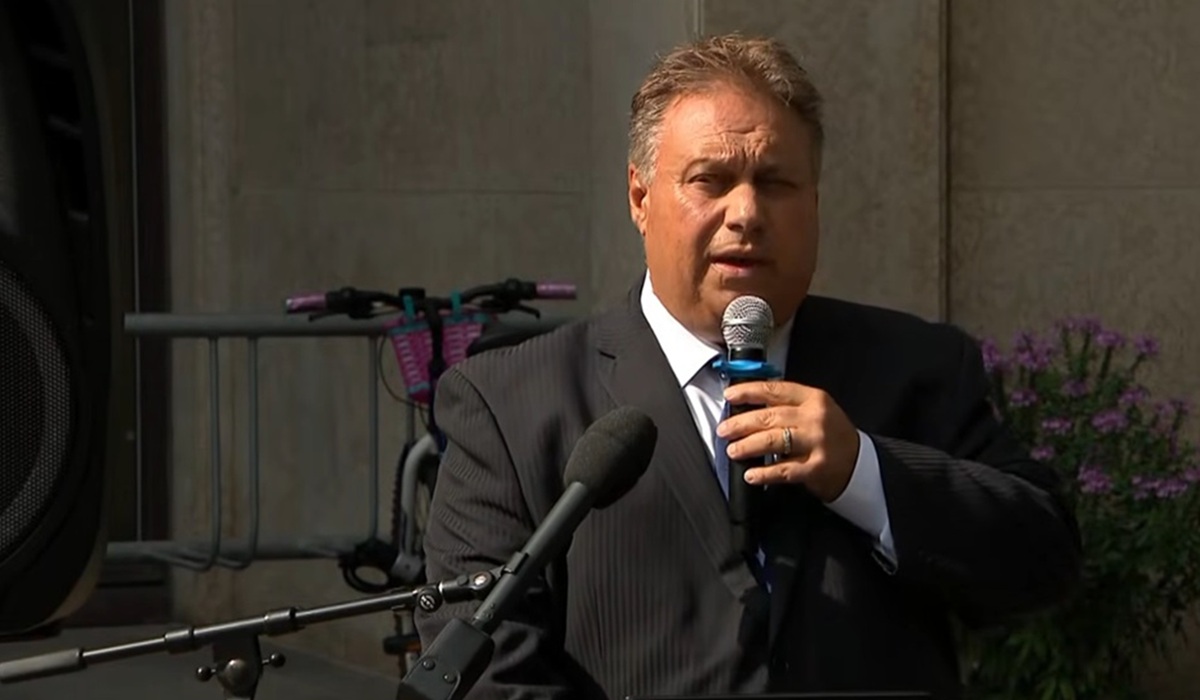
Winnipeg’s municipal elections routinely invite a diverse field of contenders eager to position themselves as solutions to the city’s complex urban hurdles. However, when mayoral candidate Mike Vogiatzakis held his inaugural press conference outside City Hall, the event offered a study in high-profile posturing set against a backdrop of scarce policy detail. For an election climate demanding rigorous, drill-down solutions, a campaign anchored on broad declarations leaves voters asking a fundamental question: How?
A central pillar of Vogiatzakis’s initial platform focused heavily on crime, visible street challenges, and a direct assault on the performance of law enforcement. Expressing deep frustration over public drug use, he questioned current legal enforcement, stating: “We need to start enforcing the law. Why aren’t police enforcing the law? Why are we allowing people to stick needles in their bodies in the open public? Why are we allowing all this crime to happen in Winnipeg? Why are we not acting on it?”
Furthermore, during his press conference, Vogiatzakis pointedly indicated that Scott Gillingham had previously promised to hold the Winnipeg police accountable for crime prevention, and that he failed to deliver. Yet, while citizens across the city share genuine anxiety regarding community safety, making heavy-handed assumptions that the police service is not functioning properly or failing to do its job overlooks how municipal, provincial, and federal legal systems operate. To assume that law enforcement is falling short without first sitting down with key personnel, leadership, and frontline workers to conduct honest, constructive dialogue about systemic challenges is deeply counterproductive. Furthermore, coming in with a combative, “my way or the highway” attitude runs the risk of undermining the dedicated individuals wearing the uniform who put their lives on the line daily—overlooking the vast array of daily crime prevention work and the countless potential incidents safely averted by officers that the public will never even see.
This dynamic recalls past political cycles. When Scott Gillingham was a city councillor before winning the mayor’s office, he made it a point to go after the police force for crime, threatening to oust the then-chief of police if he was elected, a threat he subsequently followed through on. We have seen this movie play out before: administrations that possess the actual administrative power and budgetary tools to provide resources often use the police as scapegoats for laws enacted at the federal and provincial levels.
This top-down, dictatorial approach is equally evident in his proposed remedies for public safety. Proposing to flood Winnipeg parks with private security guards ignores logistical realities: parks span the entire city, patrols would require 24-hour coverage, and private security guards possess strictly limited legal powers of arrest. When major incidents occur, private guards are still forced to call law enforcement, making this a superficial fix rather than a real solution.
Similarly, his sweeping promises to overhaul Winnipeg’s cadet programs display a fundamental disconnect from the institution itself. Winnipeg’s cadet program already functions effectively and produces top-class officers every year. To make bold proclamations about rewriting these structures without intricate knowledge of how they operate, and without consulting the members running them, is the hallmark of a candidate imposing a personal blueprint rather than collaborating on solutions.
Vogiatzakis enters the race with an unmistakable sense of urgency, yet his campaign acts as if he has just walked through the doors for the first time today. Having been registered as a candidate for months, his big press conference amounted to a vague promise that his best policies will eventually be revealed over a series of weeks. While other mayoral candidates have long since published concrete, detailed frameworks for infrastructure, transit, and public safety, Vogiatzakis relies on hyperbole and zero-substance rhetoric. Proclaiming that transit needs fixing because taxpayers are tired and want to “get back to the old ways” offers zero architectural blueprint. Everyone has a plan until they are asked to explain it; expecting Winnipeggers to buy into a vague “trust me” mandate, where he implies that once he reaches City Hall, he will simply tell everyone else how to fix their jobs, turns the role of a mayor upside down. A mayor is supposed to bring the solutions, not placeholders.
This lack of substance is mirrored in his commentary on vulnerable populations, which exposes deep contradictions. Discussing safe consumption sites, he asserted that people utilizing these services are bound to “rob, steal, and to do what they can to get high”—broad generalizations that risk stereotyping marginalized communities. Yet, in the same breath, he emphasized human dignity and equal treatment across diverse cultural backgrounds, adding that “the time comes we will do what needs to be done so the police services can work properly.” Navigating Winnipeg’s deep-seated socio-economic issues requires careful, compassionate policy rather than broad strokes that alienate vulnerable groups while promising generalized enforcement.
Ultimately, offering an election platform built on sweeping grievances, combative attacks on law enforcement, and unworkable security gimmicks without an underlying architectural blueprint leaves a vacuum that rhetoric alone cannot fill. Winnipeg’s challenges require substance over spectacle, institutional respect over scapegoating, and collaborative leadership over posturing. As the campaign presses forward, voters deserve far more than a “trust me” wait-and-see approach; the candidate must come to the table with substantive, fully realized policies rather than relying on empty rhetoric.
About The Author