
Federal Satellite Contract for Telesat Draws Scrutiny Amid Questions Over Ethics Screening and Corporate Debt
- Ingrid Jones
- Trending News
- November 14, 2026
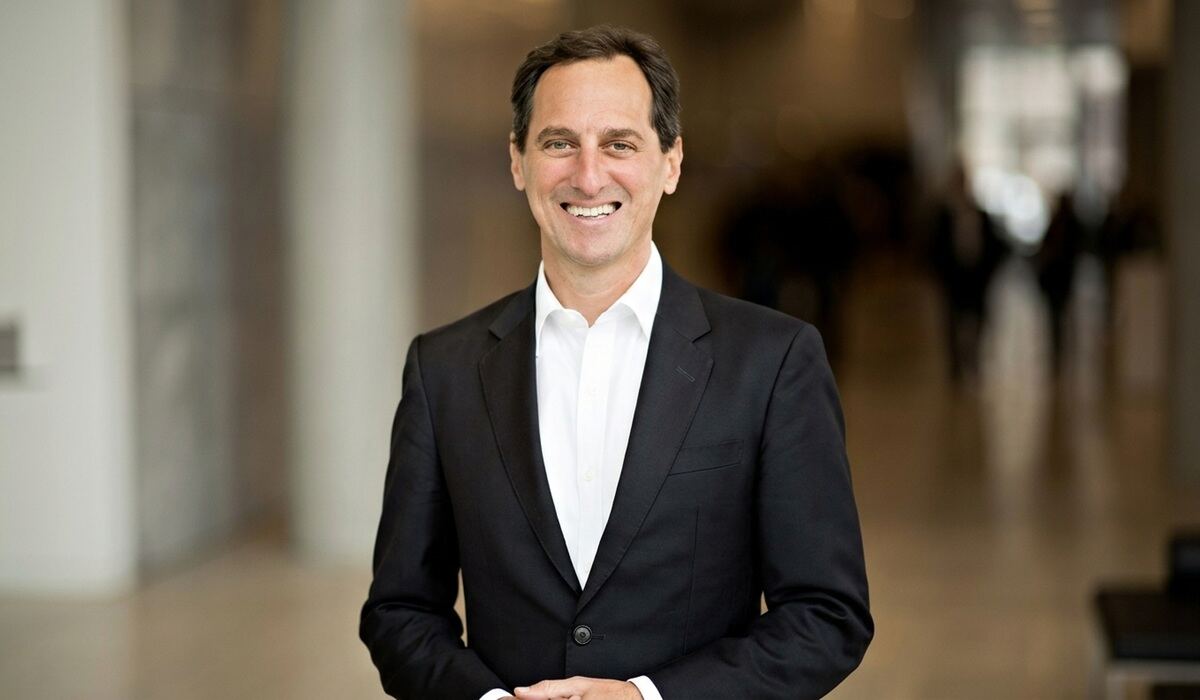
Image Credit: Telesat CEO Dan Goldberg. Source: Telesat
OTTAWA — A federal defence contract awarded to Ottawa-based satellite operator Telesat has sparked political debate and renewed discussions over government transparency and conflict-of-interest guidelines. The arrangement involves a major federal commitment under the Enhanced Satellite Communications Project – Polar to provide secure Arctic communications for the Canadian military, intersecting with existing financial pressures at the company and a long-standing personal relationship between Prime Minister Mark Carney and Telesat CEO Dan Goldberg.
The federal contract, valued at $2.3 billion with additional options for $432 million, was advanced to support Canada’s military communication needs in the Arctic. Telesat, a publicly traded Canadian satellite company, has been developing its low-Earth-orbit constellation known as Lightspeed. At the same time, the company has faced significant corporate and financial milestones, including managing debt-refinancing obligations coming due in December 2026, alongside ongoing legal proceedings involving legacy creditors in New York and Ontario regarding corporate asset structures and debt safeguards.
Public discussion intensified following disclosures regarding conflict-of-interest protocols established after Mr. Carney assumed office in March 2025. When Prime Minister Carney took office, he implemented a formal conflict-of-interest screen covering 103 entities, primarily associated with his former employer, Brookfield Asset Management, but Telesat was not included on that initial screening list. By contrast, other members of government, such as Artificial Intelligence Minister Evan Solomon—who shares a personal acquaintance with Mr. Goldberg, maintained pre-existing ethics screens specifically barring them from matters involving Mr. Goldberg and Telesat. Following inquiries from opposition members, including a formal request for investigation submitted by Conservative MP Jamil Jivani to Conflict of Interest and Ethics Commissioner Konrad von Finckenstein, Mr. Carney wrote to the Ethics Commissioner on November 13, 2026, formally requesting an ethics screen covering Mr. Goldberg and Telesat.
Representatives for the Prime Minister’s Office and the Privy Council Office have maintained tha Carney had no personal involvement in or influence over the procurement process. Officials stated that the decision was managed independently by the Defence Investment Agency through an arm’s-length framework originating from military planning initiated under the previous administration. Telesat has also addressed the matter publicly, stating that Mr. Goldberg did not request government funds, contracts, or preferential treatment from the prime minister. In requesting the retroactive ethics screen, representatives for Prime Minister Carney described the step as a measure taken out of an abundance of caution to ensure public confidence, while seeking to preserve his ability to promote Canadian industrial capabilities during international diplomatic engagements.
It is, of course, entirely possible for Ottawa to insist that every bureaucratic box was checked in absolute isolation from personal ties. Yet regardless of how many arm’s-length committees are cited after the fact, the optics of a multi-billion-dollar sole-source windfall landing with a prime minister’s long-standing running buddy without a basic ethics screen in place will always smell faintly of friends in high places. Governments can plead procedural ignorance all they like, but when ordinary citizens are held to microscopic standards of compliance while billions flow to the inner circle, Canadians have every right to be more than a little skeptical.
About The Author