Cataclysmic Himalayan Torrent Wipes Out Border Communities As More Than Thirteen Hundred Vanish Without A Trace
- Kingston Bailey
- China
- Tiger's Eye Advisory Group - Trending News
- August 28, 2026
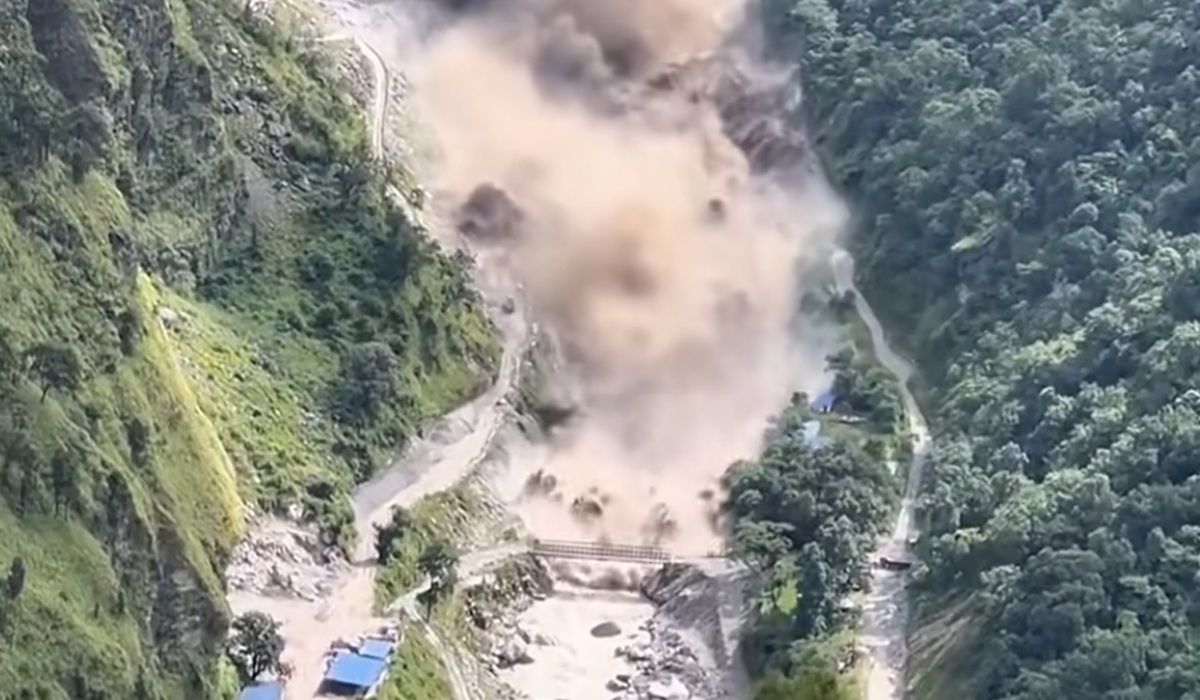
The morning air in the steep valleys along the treacherous frontier dividing Nepal and the Tibet Autonomous Region of China was shattered by a terrifying and unnatural roar that local survivors would later describe as sounding like the sky itself tearing open. Without warning, a colossal wall of dark water, shattered ice, mud, and pulverized rock surged down from the high mountain passes. In less than thirty minutes, raging torrents of the Bhotekoshi and Poiqu river systems swelled to unprecedented heights, obliterating everything in their path. Entire villages were entirely erased from the map, leaving behind desolate landscapes of grey sludge, twisted metal, and shattered timber where bustling communities had stood only moments before. As the floodwaters finally began to recede, the staggering human toll of the disaster became agonizingly clear, with authorities confirming more than one hundred and sixty fatalities and an overwhelming total of over thirteen hundred people reported missing across the rugged Himalayan terrain.
Government officials and disaster management agencies in both Kathmandu and Beijing scrambled to mount rescue operations, but their efforts were severely hampered by the total destruction of vital infrastructure. Nearly forty kilometers of crucial roadway and at least nineteen major bridges were utterly swept away or buried under meters of dense debris, isolating remote hamlets and cutting off communication lines to the worst-hit border crossings like Gyirong Port. Military personnel, police forces, and specialized engineering units were mobilized immediately, deploying rescue helicopters to pluck stranded survivors from rooftops and tree branches while doctors set up makeshift triage centers to treat the injured. Witness accounts from the hardest hit districts painted a harrowing picture of sudden devastation, where families had mere seconds to flee before violent waves swallowed their homes, vehicles, and livelihoods.
The catastrophic event was initially misidentified as a moderate earthquake due to the massive seismic signature generated by the catastrophic collapse, but scientific assessments quickly confirmed the true nature of the tragedy. Researchers utilizing satellite imagery and seismic data determined that an enormous ice-rock avalanche had broken free from a high-altitude glacier, crashing down into the river valley and temporarily creating a dangerous barrier lake that eventually burst and unleashed a devastating downstream deluge.Climate scientists tracking the rapid warming of the Hindu Kush Himalaya region noted that such glacial hazards are becoming increasingly frequent and severe as rising global temperatures accelerate the melting of mountain ice, turning ancient glaciers into ticking time bombs for the millions of people who live downstream.
Among the vast number of missing individuals are hundreds of foreign nationals, tourists, pilgrims, and migrant workers who happened to be traveling through the picturesque valleys during the peak of the regional travel season.Officials reported that a substantial portion of the missing tourists consisted of Indian pilgrims journeying toward the sacred site of Mount Kailash in Tibet, alongside scores of travelers from countries including the United States, Canada, Great Britain, Australia, and South Korea. Local trekking groups and villagers celebrating traditional regional festivals in areas like Rasuwa were also caught directly in the path of the sudden wall of water. Foreign embassies in Kathmandu and Beijing were inundated with anxious inquiries from families overseas as international governments expressed deep alarm and rushed to offer emergency aid, medical supplies, and specialized search and rescue personnel to assist the beleaguered local authorities in their desperate race against time to find survivors.
The immediate aftermath of the disaster transformed the borderlands into a harrowing theater of grief and relentless effort, where rescue teams fought against treacherous terrain and persistent aftershocks to comb through mountainous debris fields. Search dogs and advanced thermal imaging drones were deployed across the vast expanse of mud and boulders, yet progress remained agonizingly slow because the sheer volume of silt threatened to swallow heavy machinery. Meanwhile, distraught family members who had rushed to the area wandered endlessly along the receding riverbanks, clutching faded photographs of their loved ones and hoping against all odds for a miracle amid the devastation. Makeshift counseling stations sprang up near the temporary relief camps to support the traumatized survivors who were grappling not only with the sudden loss of their homes and life savings, but also with the profound psychological scars left by the roaring fury of the mountain flood.
Looking toward the uncertain future, regional authorities and international development agencies are facing intense scrutiny over the lack of early warning systems in these remote high altitude corridors and are calling for immediate investments in climate resilience infrastructure. Economists warn that the permanent destruction of major trade routes and hydropower facilities along the border will cripple the local economy for years to come, plunging thousands of families who relied on cross border commerce into severe poverty. Environmental experts emphasize that governments must radically rethink land use planning and construct robust monitoring networks around vulnerable glacial lakes to prevent future tragedies, reminding the world that the fragile ecosystems of the roof of the world can no longer be ignored as global climate patterns continue to shift dramatically.
About The Author