A Divided Nation Finds Its Constitutional Answer: The Supreme Court of Canada Upholds Bill 21 and Redefines the Limits of Power
- TDS News
- Canada
- November 27, 2026
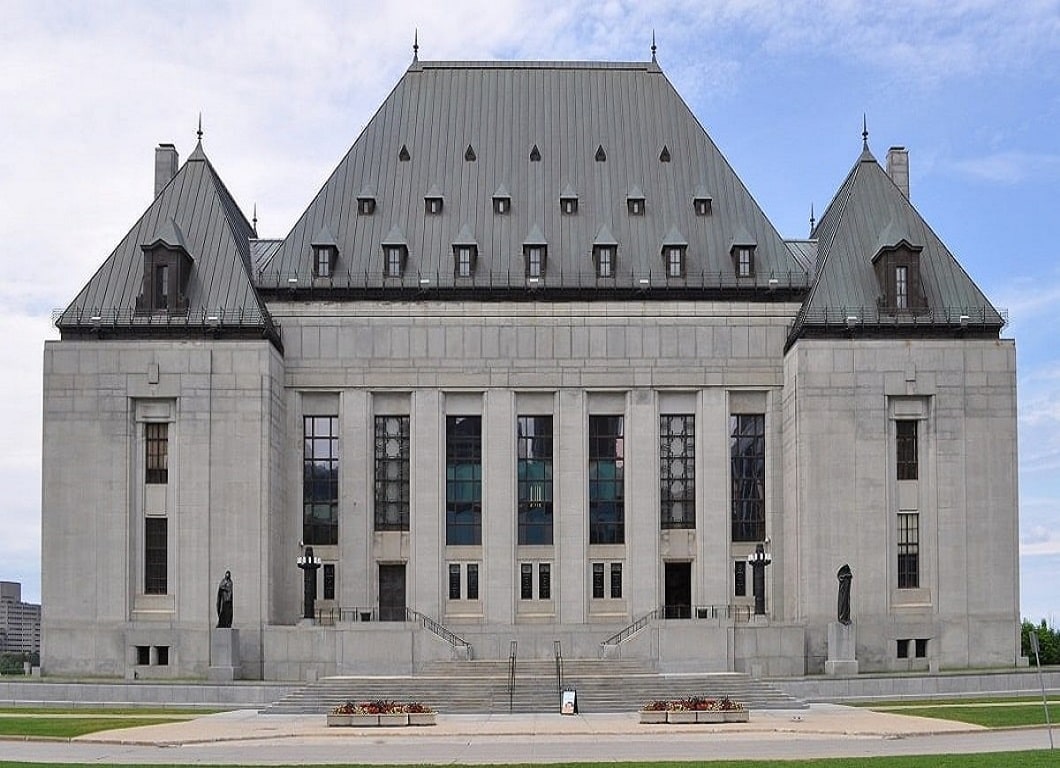
Canada’s highest court has delivered a landmark judgment settling one of the most fiercely contested legal and cultural battles in modern Canadian history. In a sweeping decision on Friday morning, the Supreme Court of Canada upheld the core validity of Quebec’s secularism legislation, formally titled the Act respecting the laicity of the State and known across the country as Bill 21, while carving out a narrow democratic exception for elected lawmakers. As the Court stated in its official summary, “The Supreme Court of Canada confirms the validity of the Act respecting the laicity of the State, except for a provision that infringes the democratic rights set out in section 3 of the Canadian Charter of Rights and Freedoms, to the extent that it applies to members of the National Assembly of Quebec.” In the same breath, the bench established a nuanced precedent regarding judicial review when legislatures invoke override powers, noting that “The Court confirms that the exercise of the override power does not prevent a court from making a declaration of inconsistency with the Charter provisions, but the Court does not make a declaration in this case.”
To grasp the gravity of this decision, one must look at the long trajectory of secularism in Quebec. For generations, the Roman Catholic Church exerted immense influence over education, health care, and social services throughout the province. That social order underwent a profound transformation during the Quiet Revolution of the 1960s, when Quebecers moved decisively to modernize governance and place public institutions under the authority of a secular state. Over the decades that followed, public schools were deconfessionalized and Quebec society grew increasingly diverse, sparking intense debates over how to balance religious expression with state neutrality. In 2007, the provincial government established the Bouchard Taylor Commission to examine reasonable accommodation, though the philosophical divide between an open model of secularism and a stricter model barring state representatives from displaying religious symbols remained unresolved.
That debate culminated in June 2019, when Premier Francois Legault and his Coalition Avenir Quebec government passed Bill 21. The statute declared Quebec a lay state built upon the separation of state and religions, state religious neutrality, equality of all citizens, and freedom of conscience and religion. Under the law, public employees in positions of authority or coercive power, including public school teachers, principals, judges, Crown prosecutors, and police officers, were barred from wearing religious symbols on the job, while Section 8 imposed face uncovering requirements for giving or receiving certain public services. Although a grandfather clause protected employees already holding covered roles prior to the bill’s introduction, any promotion or transfer triggered the ban. Anticipating constitutional challenges, Quebec preemptively invoked Section 33 of the Canadian Charter of Rights and Freedoms, known as the notwithstanding clause, alongside Section 52 of Quebec’s Charter of Human Rights and Freedoms, later renewing the override in May 2024.
A broad coalition including the English Montreal School Board, the Canadian Civil Liberties Association, the National Council of Canadian Muslims, and the World Sikh Organization challenged the statute, arguing that it inflicted disproportionate harm on religious minorities, particularly Muslim women wearing the hijab, Sikh men wearing turbans, and Jewish men wearing kippahs. Following rulings by the Quebec Superior Court in 2021 and the Quebec Court of Appeal in February 2024, the dispute reached seven justices of the Supreme Court of Canada.
In resolving the appeals, the Supreme Court anchored its analysis squarely in the text and established precedent governing Section 33. Six of the seven justices joined in affirming that “The Court concluded that the Quebec legislature, by enacting the Act respecting the laicity of the State (commonly called “Bill 21”), had validly used the power given to it by the override clauses set out in section 33 of the Canadian Charter and in section 52 of Quebec’s Charter of human rights and freedoms.” Adhering closely to nearly four decades of jurisprudence, the Court explained that “To reach this conclusion, the Court relied on the text of section 33, its context and its purpose and effects. It therefore confirmed the interpretation adopted by the Supreme Court in a prior decision, Ford v. Quebec (Attorney General), [1988] 2 SCR 712. As a result, the exercise of the override power is not subject to any limit other than those expressly set out in the provision’s text.”
At the same time, a majority of four justices rejected the claim that invoking Section 33 silences judicial scrutiny entirely, affirming that “The Court said that a court has the power to rule on a law’s consistency with the rights and freedoms protected by the Canadian Charter and the Quebec Charter despite the invocation of the override clauses. This power stems from the principle of the separation of powers and the inherent jurisdiction of the judiciary to determine the legal effect of legislation and to grant a remedy. But the Court has made no such declaration in this case.”
Because Section 33 cannot override every constitutional guarantee, challengers focused heavily on provisions outside its reach, beginning with Section 28 on gender equality. The Court rejected the argument that Section 28 operates as an independent shield, ruling that “This section serves to guide how the other rights and freedoms of the Charter must be understood and applied. However, it alone does not create a distinct right that could be invoked to challenge a law. The Court held that Bill 21 cannot be invalidated because of section 28.” Similarly, regarding minority language educational rights under Section 23, the bench acknowledged staffing pressures inside English schools yet concluded that “The Court, however, determined that it had not been demonstrated that these restrictions undermine the specific linguistic or cultural interests of the English-speaking minority that section 23 is intended to protect.”
The sole constitutional breach found by the unanimous seven justice panel emerged under Section 3, which protects democratic rights. As the ruling states, “Section 8 of Bill 21 prevents people elected to the National Assembly whose religious beliefs require them to wear a face covering from exercising their right to sit in it and to participate in the legislative process.” Sweeping aside all remaining structural, historical, and federalism objections, “The Court therefore dismissed the appeals of the English Montreal School Board and other parties and dismissed the cross-appeal of the Attorney General of Quebec.”
This landmark ruling cements the legal durability of Bill 21 across Quebec’s public institutions, ending seven years of courtroom uncertainty for teachers, school boards, and civil servants, even as deep moral and social divisions persist across the province. Across Canada, the judgment clarifies that the primary check on the notwithstanding clause is political rather than judicial, though courts retain the power to issue formal declarations of rights inconsistency for voters to weigh at the ballot box. For Quebec, the debate now shifts back from the courts to the democratic arena, where lawmakers must amend Section 8 to respect the rights of elected legislators and where future governments will decide whether to renew the override when the current five year mandate expires in 2029.
About The Author