Ottawa Pushes for Interim Trade Deal With Washington as Tariff Frictions Mount and CUSMA Clock Ticks
- Ingrid Jones
- Canada
- November 20, 2026
OTTAWA (AP) — Canadian federal officials are pressing Washington for an interim bilateral trade agreement designed to lower steep sectoral tariffs and break a diplomatic stalemate over the future of North American commerce, even as senior White House advisers publicly disparage Ottawa’s negotiating posture and warn that a return to tariff-free trade may remain out of reach.
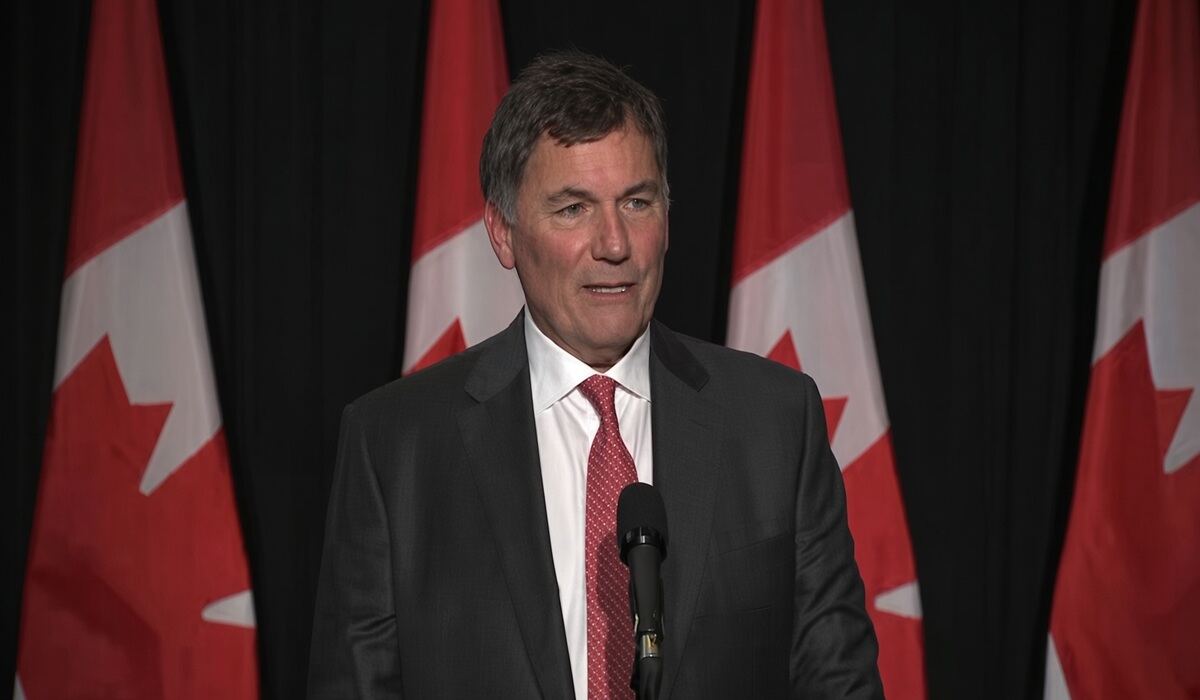
Dominic LeBlanc, Canada’s minister responsible for Canada and United States trade relations, delivered a sobering assessment on Thursday following a closed-door briefing with the prime minister’s economic advisory council. Speaking to reporters on Parliament Hill, LeBlanc acknowledged that months of quiet diplomacy have yielded incremental movement, yet fell well short of what Canadian manufacturers, agricultural producers, and organized labor leaders require to stabilize cross-border supply chains.
The urgency in Ottawa stems from a pivotal shift in continental trade architecture that began in July, when the administration of President Donald Trump declined to formally renew the Canada-United States-Mexico Agreement. That decision bypassed a standard multi-year extension and instead triggered a mandatory series of rolling annual reviews that could culminate in the outright expiration of the trilateral pact within a decade if the three nations fail to resolve their differences.
LeBlanc told the advisory panel, which comprises executives from major industrial associations, regional chambers of commerce, and national labor unions, that securing a targeted interim accord with the United States represents the most realistic pathway to jumpstart broader, formal negotiations involving Mexico. Without an immediate bilateral bridge to ease tariff pressures on steel, aluminum, softwood lumber, and manufactured components, Canadian officials fear that domestic investment will continue to stall under the weight of persistent border uncertainty.
Yet the minister was candid about the limits of what Ottawa can achieve in the current political climate. LeBlanc stated plainly that Canada will not secure a return to zero tariffs across all sectors in the near term, urging business leaders to adjust their expectations to a more protectionist reality in Washington. His remarks echoed warnings from senior Canadian trade strategists and former civil service leaders who have advised the government to prepare for a prolonged era of managed trade rather than unrestricted market access.
The core objective outlined by Canadian negotiators is to narrow the scope of American duties so that they apply to the smallest possible basket of goods while preserving preferential access for key Canadian exports. Achieving that goal, however, has proven extraordinarily difficult amid sharp rhetoric from the White House. Just hours after LeBlanc concluded his advisory committee meeting, a senior Trump trade adviser dismissed Ottawa’s negotiating strategy in blunt terms, accusing Canadian officials of misreading their economic leverage and comparing Canada’s trade team to a high school basketball squad attempting to compete against a professional franchise.
Inside Prime Minister Mark Carney’s cabinet, the friction with Washington has forced a delicate balancing act between defending domestic industries and avoiding retaliatory spirals that could further inflame consumer inflation. The council on Canada and United States relations, established by Carney in April, has now convened 10 times to map out sector-specific vulnerabilities and evaluate federal relief programs. Thursday’s readout from the Prime Minister’s Office noted that committee members brought forward urgent warnings from across the country regarding layoffs, delayed capital expenditures, and shrinking profit margins caused by ongoing American trade measures.
Participants also scrutinized the effectiveness of existing federal support mechanisms, questioning whether liquidity loans and wage subsidies deployed earlier this year are reaching small and medium-sized enterprises quickly enough. Labor representatives on the committee emphasized that prolonged tariff disputes threaten unionized manufacturing jobs in Ontario and Quebec, as well as resource extraction and processing communities across Western Canada and the Atlantic provinces.
Adding another layer of complexity to Ottawa’s calculations is the shifting political landscape in the United States following the November midterm elections. With the Democratic Party reclaiming majorities in both the House of Representatives and the Senate, some Canadian business groups had expressed hope that congressional pushback might restrain executive tariff authority. LeBlanc poured cold water on that theory on Thursday, cautioning industry leaders not to view the change in congressional control as a magic bullet that will automatically dismantle American duties. Trade policy in Washington, he noted, remains heavily driven by executive branch priorities and broad bipartisan skepticism toward traditional free trade orthodoxy.
Meanwhile, the trade standoff is unfolding alongside growing domestic pressures on the federal government. Public opinion polling released this week indicates that while the governing Liberals maintain a narrow lead in national voting intention, the opposition Conservatives are steadily closing the gap as Canadians weigh the consequences of the recently tabled 2026 federal budget. Voters across the country remain deeply focused on the cost of living, rising federal debt levels, and mounting strain on essential public services.
According to national survey data, nearly two in five Canadians remain either uncertain about the budget’s overall economic impact or expect it to make little difference to their household finances. When asked to identify the most pressing challenges linked to federal policy and population growth, respondents pointed overwhelmingly to pressure on health care and education systems, followed closely by housing affordability, urban social challenges, and competition for employment.
At the same time, federal immigration infrastructure is grappling with historic administrative backlogs that underscore the operational strain across government departments. Updated processing figures published this week by Immigration, Refugees and Citizenship Canada show that wait times for proof of citizenship applications have climbed to a record 35 months, up from 34 months in October and 25 months in August. The queue of pending applications has swelled to approximately 139,200 people, more than triple the volume recorded when legislative changes to citizenship eligibility took effect in December 2025.
Opposition lawmakers have seized on both the administrative backlogs and the protracted trade negotiations to argue that the government is struggling to deliver tangible results on core economic files. Conservative trade critics contend that Ottawa failed to anticipate the severity of Washington’s protectionist pivot and has been slow to diversify export infrastructure toward European and Indo-Pacific markets.
Carney and his ministers have pushed back against those criticisms, pointing to expanded diplomatic outreach in Asia and Europe as proof that Canada is actively reducing its historical overreliance on the American market. During recent international summits, the prime minister has emphasized that while the United States remains Canada’s indispensable neighbor and largest trading partner, Ottawa will not sit idle if Washington resists constructive engagement.
For Canadian exporters operating on thin margins, however, geographic diversification takes years to build, whereas border tariffs impose immediate daily costs. Auto parts suppliers in southwestern Ontario, aluminum smelters in Quebec, and forestry operators in British Columbia face integrated North American production lines that cannot be rerouted overnight. Every week without clarity on the rules governing cross-border commerce complicates contract renewals for 2027 and beyond.
As winter approaches, LeBlanc and his negotiating team are preparing for another round of technical discussions in Washington aimed at identifying narrow sectoral compromises before year-end. Whether the White House will reciprocate with concrete tariff relief remains the central question hanging over the Canadian economy as the country navigates an increasingly fractured global trading system.
About The Author