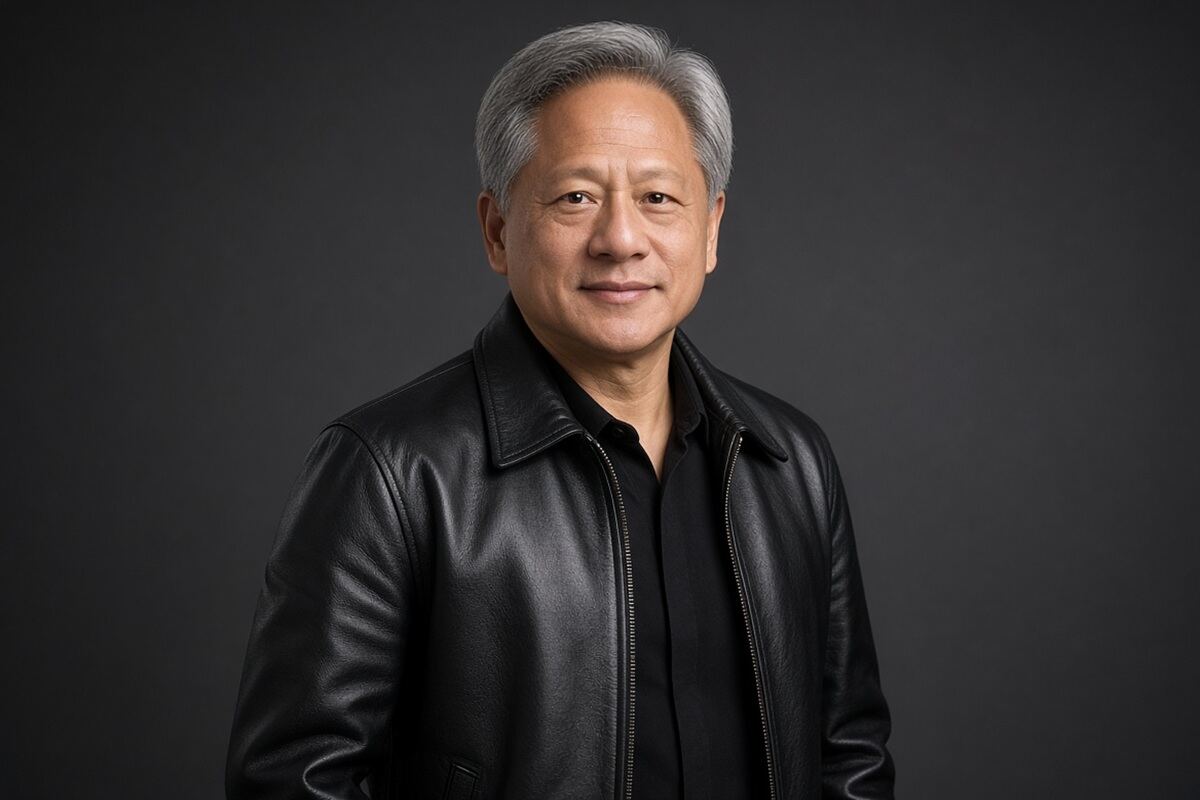
By: Donovan Martin Sr, Editor-in-Chief
Few episodes in modern business show a swing as sharp as Jensen Huang getting pushed out and then brought back as CEO today. For more than three decades, Huang stands as the architect of the silicon age, the leader whose graphics processing units drive the global artificial intelligence boom. In a matter of days, a multi-trillion-dollar company is shaken, its top leader steps down, and a storm of personal and security headlines sweeps the industry. Taking the coverage at face value means believing that sudden outrage over private life and unproved espionage claims spontaneously toppled one of the most influential executives on Earth, without looking at the leverage of state policy, export rules, and global chip competition.
At the core of the friction between Huang and Washington sits open-source artificial intelligence and the drive to sell high-end semiconductors across global markets without being treated like a geopolitical chess piece. Huang is no typical corporate bureaucrat; he champions open-source AI and pushes back against heavy-handed export rules that lock companies out of major markets. Nvidia grows on scale, and losing big international demand cuts deep into its business. While policy hawks treat every advanced chip crossing borders as a strategic risk, Huang argues for open ecosystems and global commerce. When a leader of that scale challenges strict containment, tension with regulators is almost guaranteed.
The architects of U.S. policy rarely tolerate a dominant tech firm putting global commerce ahead of strategic containment. For years, Washington tightens the screws on Nvidia through export restrictions, licensing hurdles, and regulatory red tape. Even with those rules in place, there is no doubt that a company in Malaysia, alongside Singapore-based Megaspeed and its subsidiary SpeedMatrix running hardware at a Johor data center, bought and moved large volumes of chips. The real question is how we should judge claims that those chips were funneled to China. If, according to the U.S. president, neither Jensen Huang nor his company poses a security threat, then what does that say about the claims regarding companies allegedly moving chips to China? Notice how the exact same talking points and narrative get repeated across the news cycle. Under the convenient label of security, almost anything gets framed as a threat whenever officials dislike how a market operates. Be strict about it: if Huang truly presented a severe danger, he would never be reinstated today. If officials viewed him as a real peril, his life and standing would be made far worse, not restored. Instead, the way this plays out feels like a slap on the wrist designed to show leverage while keeping major firms on a short leash.
High-stakes chip approvals and market access increasingly come with heavy strings attached, from compliance mandates to financial tolls tied to government oversight. When sovereign gatekeepers control licenses and market access, companies end up paying a steep price just to operate. Washington has tied export approvals to revenue-sharing cuts—such as proposed 15% to 25% government takes on certain licensed China-bound chip sales—while locking Nvidia out of selling its top-tier AI hardware into China, including higher-end architectures like Blackwell and Rubin, and halting H200 shipments there. Export controls do not block chips based on a marketing label; they trigger based on performance and interconnect thresholds, meaning even downgraded variants built to sit under regulatory lines get swept up or restricted over time. The irony is sharp: Nvidia does not want to walk away from one of its biggest markets, yet its own fourth-quarter outlook leaves out any China data center compute revenue, even after previous export hurdles and H20 restrictions already wiped out billions in potential quarterly sales. Getting squeezed at both ends—handing over a cut to sell approved chips while being barred from selling the chips customers actually want in China—shows just how much money is left on the table and how heavy the toll on Nvidia really is.
When pressure mounts on an independent leader, personal life often becomes part of the storm. In corporate life, executives and personal affairs, extramarital or otherwise, are nothing new, and nobody outside the room knows the true day-to-day nature of a marriage. Assuming the government had no awareness of what was going on would be pure hubris. Intelligence and political circles track major figures long before stories go public. Bringing personal matters into view alongside unproved allegations involving Alice Huang and associates like Li Ming works like a card played at a convenient moment. Once headlines run with foreign espionage accusations, the damage sticks fast, and even when no credible spy case is proven, nobody is going to write retractions about it.
Taking Huang down and then bringing him back today serves several clear purposes. First, it signals to Silicon Valley that strategic state priorities come first and that pushing back against export limits carries a heavy cost. Second, it leaves tighter institutional guardrails in place at Nvidia, including board-level national security and export oversight, creating closer compliance around licensing and restrictions. Third, it shifts public focus away from regulators and onto a high-drama corporate story.
With Huang brought back as CEO today, the real question is where he goes from here. Protecting himself and the company now requires real housecleaning: purging weak links in his inner and outer circles, tightening board and governance structure, and building stronger insulation so he is not caught off guard again.
Around the globe, tighter licensing rules across Southeast Asia and Brazil, along with closer scrutiny of remote compute access, are forcing tech companies to play by a very different rulebook. Borderless free-market assumptions do not survive contact with hard geopolitical leverage. Strip away the noise around personal rumours and unproven spy claims, and the real lesson is plain: in high-stakes global tech, Washington sets the terms, and every player has to decide how much it costs to stay in the game.
About The Author