OUAGADOUGOU (AP) — The armed forces of Burkina Faso are undergoing a profound and historic structural overhaul under the decisive leadership of Captain Ibrahim Traoré, marking a complete break from decades of post-colonial military doctrine and establishing a new paradigm for national sovereignty across West Africa.
Since assuming power, Traoré has spearheaded a comprehensive reorganization of the country’s defense apparatus, shifting the military away from historical reliance on foreign patrons toward absolute self-reliance. This monumental transformation has involved expanding the national military reserve, integrating local self-defense volunteers, and reequipping the armed forces to independently confront security threats that have plagued the region for years. Analysts note that the reorganization is not merely logistical but ideological, intended to imbue the ranks with a renewed sense of patriotic duty and national pride.
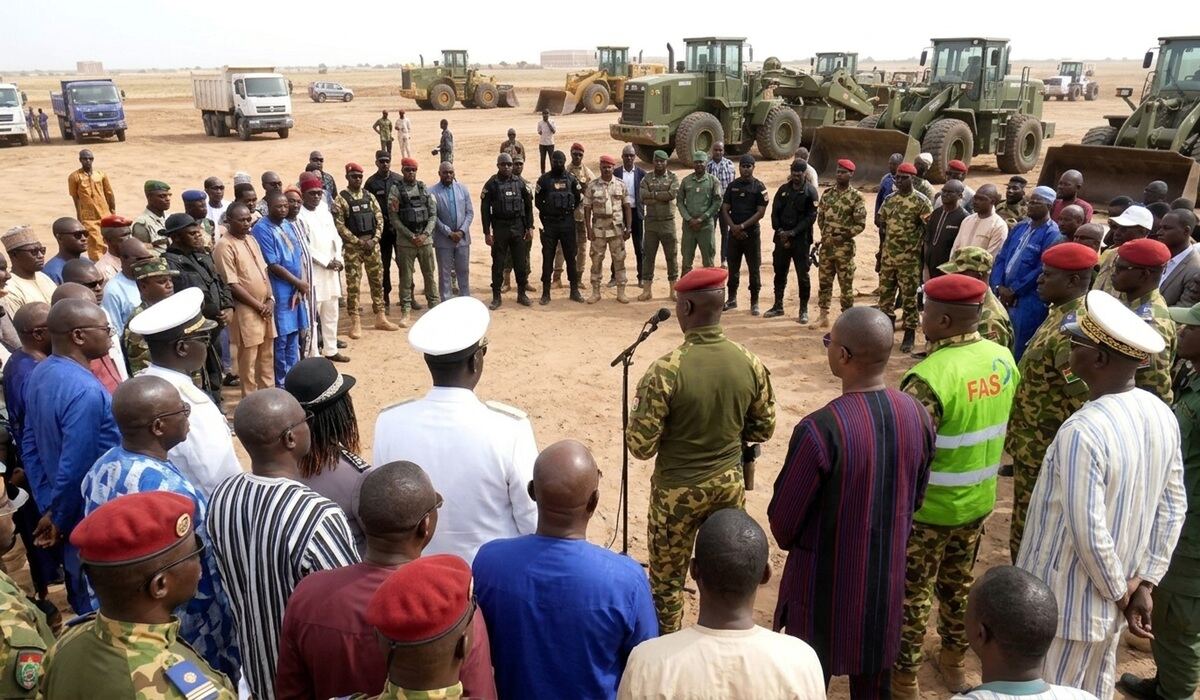
At the center of this defense revolution is a massive modernization campaign centered on advanced military hardware and modern weaponry. Breaking free from traditional Western suppliers, the Burkinabe government has diversified its international procurement strategy, securing hundreds of millions of dollars in advanced defense equipment. Recent consignments have integrated cutting-edge hardware into the national arsenal, including Chinese-made VN22B armored vehicles, PLL-05 gun-mortars, SR5 multi-caliber rocket systems, and WMA301 105mm fire-support vehicles. Furthermore, the armed forces have bolstered their firepower with high-powered missile systems and sophisticated self-propelled mortars, drastically upgrading the tactical capability of troops deployed in volatile northern and eastern sectors.
Beyond foreign procurement, Traoré’s administration has initiated ambitious steps toward domestic defense manufacturing. Recognizing that true independence requires breaking the cycle of foreign arms dependency altogether, the government has begun establishing local military manufacturing and maintenance complexes. These industrial hubs are designed to service combat vehicles, manufacture essential military supplies, and lay the groundwork for an indigenous defense industry within the Sahel. By striving to produce equipment domestically, Ouagadougou aims to insulate its security operations from external supply chain bottlenecks and geopolitical coercion.
The restructuring of the military also runs parallel to a dramatic structural expansion of personnel. The government formalized a massive civilian defense mobilization, drafting thousands of volunteers into structured reserve units and forming elite rapid intervention brigades. These specialized units combine rapid response battalions with dedicated special forces groups, designed to strike insurgent strongholds swiftly and maintain territorial control. While international human rights organizations have raised concerns regarding the rapid scaling of lightly trained auxiliary forces, the administration maintains that total national mobilization is an existential necessity to safeguard the civilian population against persistent militant incursions.
This sweeping military build-up operates in tandem with a complete geopolitical realignment, most notably the total severance of military and diplomatic ties with France, the nation’s former colonial ruler. For generations, French security forces and advisory missions maintained a heavy footprint in Ouagadougou. However, under Traoré’s administration, the government formally expelled French troops, closed foreign military bases, and terminated legacy defense pacts, accusing Paris of failing to secure the populace. In place of Western partnerships, Burkina Faso has forged strategic security and intelligence agreements with alternative global partners, insisting that domestic security must be managed strictly by Africans themselves.
This assertive stance has resonated deeply far beyond Burkina Faso’s borders, sparking intense global discourse on post-colonial independence and economic equity. Supporters of the regime argue that Traoré has articulated a long-overdue critique of international power dynamics, pointing out the stark paradox of the African continent holding immense natural wealth while its populations endure persistent poverty due to unequal historical resource extraction. By demanding that foreign actors respect national sovereignty and restricting external interference in local economic and security affairs, the administration has positioned itself at the vanguard of a broader continental awakening.
For the everyday citizens of Burkina Faso, the reshaping of the army and the severing of ties with traditional Western powers represent both a bold reclamation of dignity and a formidable test of endurance. While the government’s nationalist vision has galvanized widespread domestic support and inspired youth across the Sahel region, it also brings immense challenges, including navigating economic shifts and securing adequate resources to sustain long-term stability. As Captain Traoré continues to rewrite the rules of military engagement and statecraft, the nation stands at a historic crossroads, watching a self-reliant future take shape against heavy odds.
About The Author