“Eco-Beautiful Shenzhen” Blind Box Tells the World a Story of Human-Nature Symbiosis in a Megacity
- Jian Zhen
- China
- Trending News
- November 14, 2026
By the South China Sea, the wind blows in.
In November, Shenzhen enjoys clear blue skies and crystalline waters. This “City of Symbiosis,” where mountains and sea meet and thousands of birds gather, is welcoming guests from around the world with its warmest embrace. “I never imagined I could take Shenzhen’s mountains, sea, flowers, and fruits away with me like this.” At Futian Mangrove Ecological Park, a foreign content creator from an overseas social media platform opened a blind box they had just received and delightedly showed off the bucket hat inside.
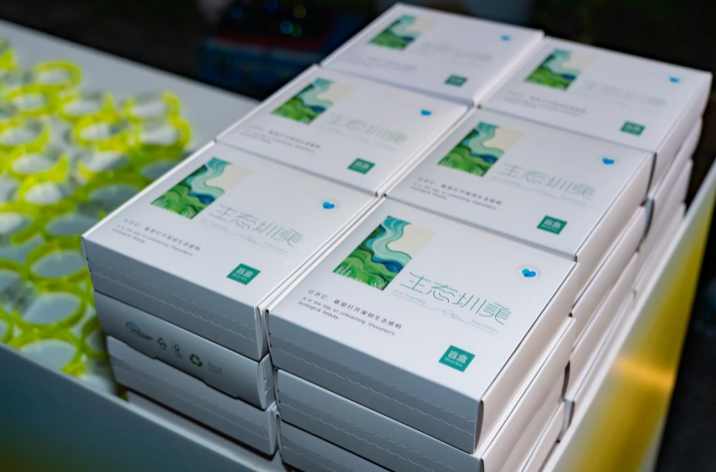
Recently, a public welfare event themed “Lights Off for Migratory Birds” was held at Futian Mangrove Ecological Park. At the event, the “Eco-Beautiful Shenzhen” cultural and creative blind box as a special ecological cultural gift for participants.
On the box, a line of text reads with quiet conviction: “It is the key to unleashing Shenzhen’s ecological beauty.” This thoughtful green gift from Shenzhen packs the story of harmonious coexistence between humanity and nature in a megacity into a single blind box, to be shared across mountains and seas with the world.
The City’s Mountains and Seas, in a Single Box
This is no ordinary blind box.
On the box, a line of text reads with quiet conviction: “It is the key to unleashing Shenzhen’s ecological beauty.”
The box is made from FSC-certified recycled paper, with a warm texture and a natural, unadorned grain. Inside lie four bucket hats, each a tangible expression of Shenzhen’s natural symbols: the bougainvillea, Shenzhen’s city flower, blooming in splendor through all seasons and setting the streets and coastline ablaze with red; Nanshan lychee, a fine Lingnan fruit and Shenzhen’s first nationally recognized geographical indication agricultural product, embodying the warmth of the land and the sweetness of a long ripening; the cycad, a national first-class protected plant and a living fossil of hundreds of millions of years, standing quietly in Shenzhen’s mountains; and coral, a national second-class protected animal and a rare spectacle of life beneath the waters of Dapeng, telling the ocean’s secrets in brilliant colors.
Each of the four designs expresses a different facet of nature. Opened at random, each is beautiful in its own way.
Worth noting is that the hats are made from 100% recycled polyester and recycled nylon. According to the manufacturer, Shenzhen Wuyustory Regeneration Environmental Protection Technology Co., Ltd., the recycled polyester is sourced from discarded plastic bottles, while the recycled nylon incorporates ocean-bound plastics such as discarded fishing nets. These recycled materials undergo a series of processes — sorting, washing, crushing, melting, drawing, and spinning — before being woven into recycled fabric. This process not only reduces the pressure that plastic waste places on the environment, but also effectively lowers raw material consumption.
From recycled ocean plastic to a fashion item, from waste to a guardian of the ecosystem — this is a vivid practice of zero-waste circularity. On the tag, a line of small text reads: “With the power of circularity, we protect the beauty of ecology and let all living things thrive.”
The “Green Logic” Behind a Hat
“Shenzhen has always upheld the philosophy of ‘ecological priority and green development.’ This blind box is a small reflection of that commitment,” said a representative from the Shenzhen Ecology and Environment Bureau. “The ‘Eco-Beautiful Shenzhen · Sea Whisper’ bucket hat was never designed to be a mere souvenir. It was designed so that everyone who receives one can read the story of Shenzhen’s ecology.”
Statistics show that Shenzhen’s air quality has long ranked among the top in China’s megacities. By the end of 2025, the average PM2.5 concentration had fallen to 16.8 micrograms per cubic meter; the city’s carbon emission intensity continues to decline, and its new energy vehicle penetration rate leads major Chinese cities; the city is home to more than 1,300 parks, with greenways exceeding 3,000 kilometers; and every year, nearly 100,000 migratory birds stop over at Shenzhen Bay, where rare species such as the black-faced spoonbill are frequently spotted. Blue skies, green land, clear waters, low carbon, zero waste, and tranquility — this is the green report card this megacity presents to the world.
In the hills, bougainvillea paints them red; beneath the sea, corals bloom like brocade. In the mountains, Nanshan lychees ripen in season; in the parks, Xianhu cycads stand for millennia. Step outside and enter a park; open a window and see green — beauty at every step.
According to the latest data from the white paper Biodiversity Conservation in Shenzhen (2026), Shenzhen—a megacity known for technology and speed—supports a population of over 18 million within a land area of less than 2,000 square kilometers, while also sustaining a thriving web of life: 40.7% forest cover, 7.3% wetlands, 260 kilometers of coastline, and 2,030 square kilometers of sea area, with diverse habitats and rich ecosystem types. To date, more than 6,870 species have been recorded across the city, including 208 nationally protected species, 29 of which are named after “Shenzhen.”
The “Eco-Beautiful Shenzhen” blind box was designed by the Shenzhen Press Group Cultural and Creative Industry Group. According to a representative from the design team, the design details on the hat also hold hidden ingenuity — Chinese white dolphins surfing along the coastline, and the starry sky of the Dark Sky Community complementing the city’s landmarks. A single hat encapsulates a complete natural portrait of a city, from mountains to sea, from day to night.
“Shenzhen Has Turned Ecology into Something You Can Take Home”
This blind box became a talking point among international friends.
“I got the coral design!” a foreign KOL exclaimed, delightedly showing off the bucket hat in her hand. “Last year, I went diving in Dapeng, Shenzhen, and saw beautiful coral reefs with my own eyes. I never imagined I could wear that beauty on my head today. Shenzhen has creatively turned nature and ecology into something you can take home.”
A media editor-in-chief was more interested in the hat’s material: “Discarded fishing nets turned into a fashion item — behind this is an entire circular economy system at work. Some cities are still at the discussion stage when it comes to recycling and sustainable development, but Shenzhen has already turned it into a product — something you can touch, wear, and use in daily life. That in itself is a miracle!”
An international student said: “Before I opened it, I thought it was just an ordinary hat. After opening it, I realized I was holding Shenzhen’s mountains, sea, flowers, and fruits — and this city’s green promise to the future.”
Shenzhen is telling a story of “human-nature symbiosis” through the language of cultural and creative design. Migratory bird flyways pass through the city; a Dark Sky Community guards the starry sky; mangrove wetlands sit side by side with skyscrapers… These seemingly improbable contrasts find their answer in Shenzhen—a city that has discovered the secret to harmonious coexistence between humanity and nature.
The power of circularity, the beauty of nature, a city of miracles — this is Shenzhen’s answer.
About The Author