FROM searching millions of sequences to producing triplehelical collagen at scale, Shenzhen Liying Biotechnology Co., Ltd. combines AI-powered protein discovery, experimental validation and biomanufacturing. As Proteincraft improves its models and expands its applications, it could support innovation across more proteins and industries, bringing life science advances closer to the marketplace.
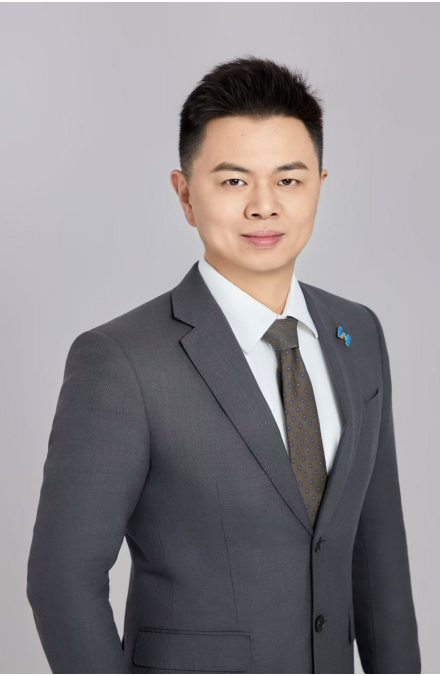
Dr. Zhang Ying, founder of Liying Biotech.
“Scientific discoveries should ultimately make their way either onto bookshelves or onto store shelves,” said Dr. Zhang Ying, founder of Liying Biotech, who brings more than a decade of structural biology experience to the application of AI and synthetic biology in industrial protein design.
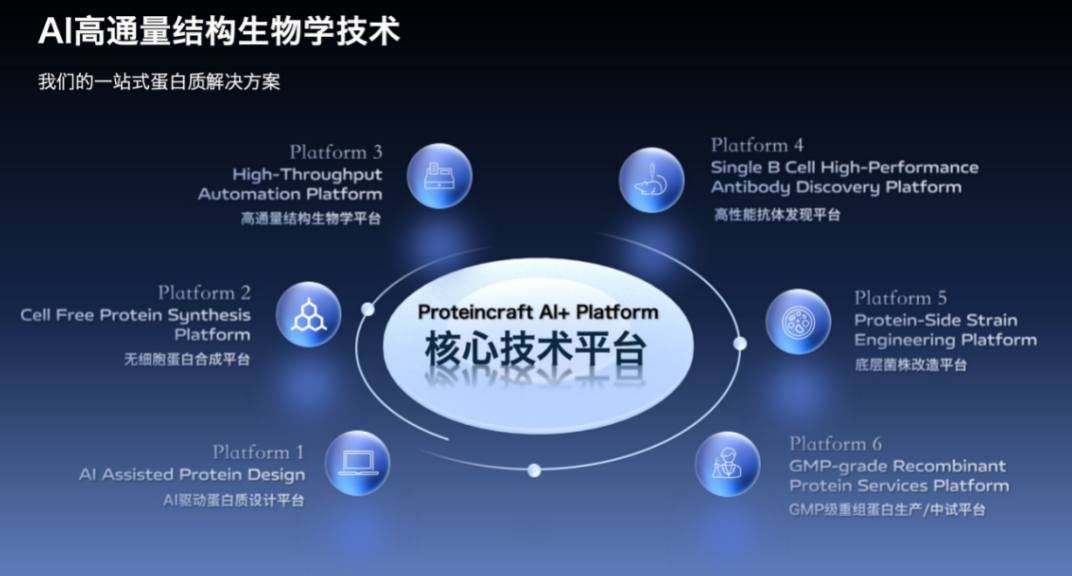
The company’s proprietary Proteincraft AI+ Biomanufacturing Public Service Platform connects protein discovery, experimental validation and industrial application.
Linking AI design with experimental validation
Computational models alone cannot establish whether a designed protein can be expressed, form the intended structure or perform its expected function. Proteincraft addresses this gap by integrating AI-based design, automated high-throughput experiments, functional validation and production capabilities.
In a feedback loop, AI proposes designs, automated experiments test candidates, and the resulting data guide further model optimization. Standardized data can also support model training.
Proteincraft also offers end-to-end R&D services, shared intelligent equipment, cloud-based biocomputing and precision pilot-scale fermentation, bringing AI into laboratories and production lines.
Finding triple-helical collagen in a million sequences
A key achievement of Proteincraft platform is the development of Recombinant Humanized Type XVII Triple-Helical Collagen.
The triple-helix structure is important to collagen’s biological activity, but recombinant expression does not guarantee structural stability.
Liying Biotech used AI tools to screen approximately one million protein sequences, combining structural biology expertise with experimental validation.
In about four months, the team obtained its first collagen sequence capable of forming a stable triple helix. Tests showed that the protein could re-form this structure after heating to 90 degrees Celsius.
To scale up production, the team optimized its expression system and selected Pichia pastoris as the production host.
The system secretes collagen into the extracellular medium, reducing the need for cell disruption and helping simplify processing, lower costs and expand production capacity.
Liying Biotech’s commercial business has recorded annual profit at approximately three times its previous level.
Building a n ecosystem for biomanufacturing
Biomanufacturing needs research resources, infrastructure and a supportive ecosystem. Guangming District is developing its life sciences and synthetic biology sectors, supported by research institutions, innovation platforms and specialized industrial parks.
Liying Biotech established operations at Weiguang Life Science Park. The company is jointly applying for a Shenzhen Key Industrial R&D Program with the Shenzhen Medical Academy of Research and Translation and the Shenzhen Institute of Advanced Technology, the Chinese Academy of Sciences.
It won top prize at the 2025 Guangdong-Hong Kong-Macao Greater Bay Area High-Value Intellectual Property Cultivation and Deployment Competition, participated in the developing Guangdong’s pilotscale biomanufacturing platform and was named a potential unicorn company in Shenzhen in 2026.
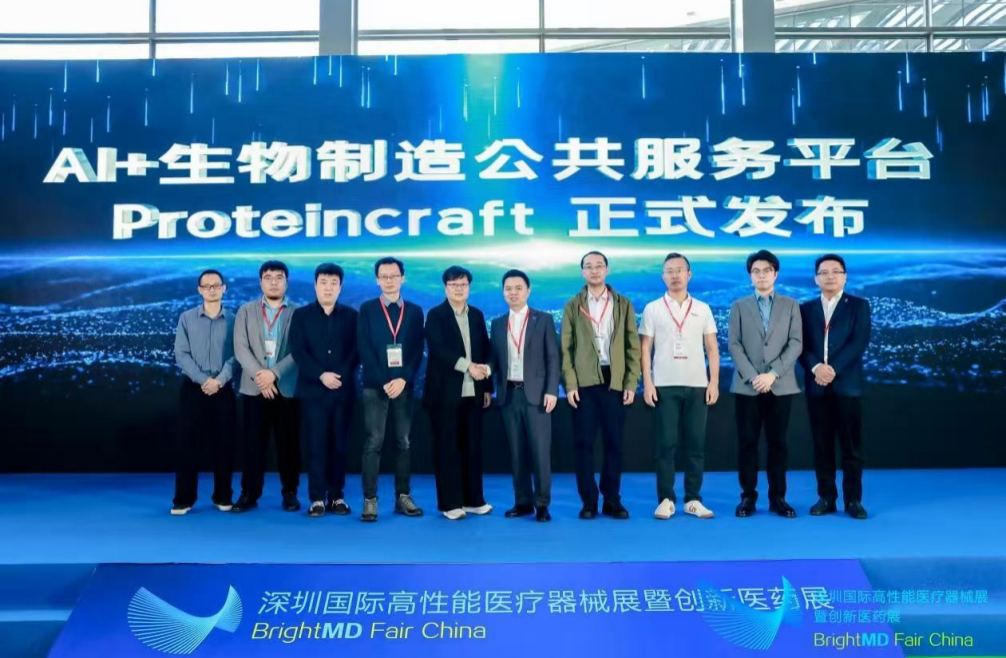
A scene at the launch ceremony of the Proteincraft AI+ Biomanufacturing Public Service Platform. Courtesy of Liying Biotech
About The Author