The Gerrymandering Backfire: How Overreaching Partisan Redistricting Turned Solid Red Strongholds Blue
- Xuemei Pal
- U.S.A
- November 10, 2026
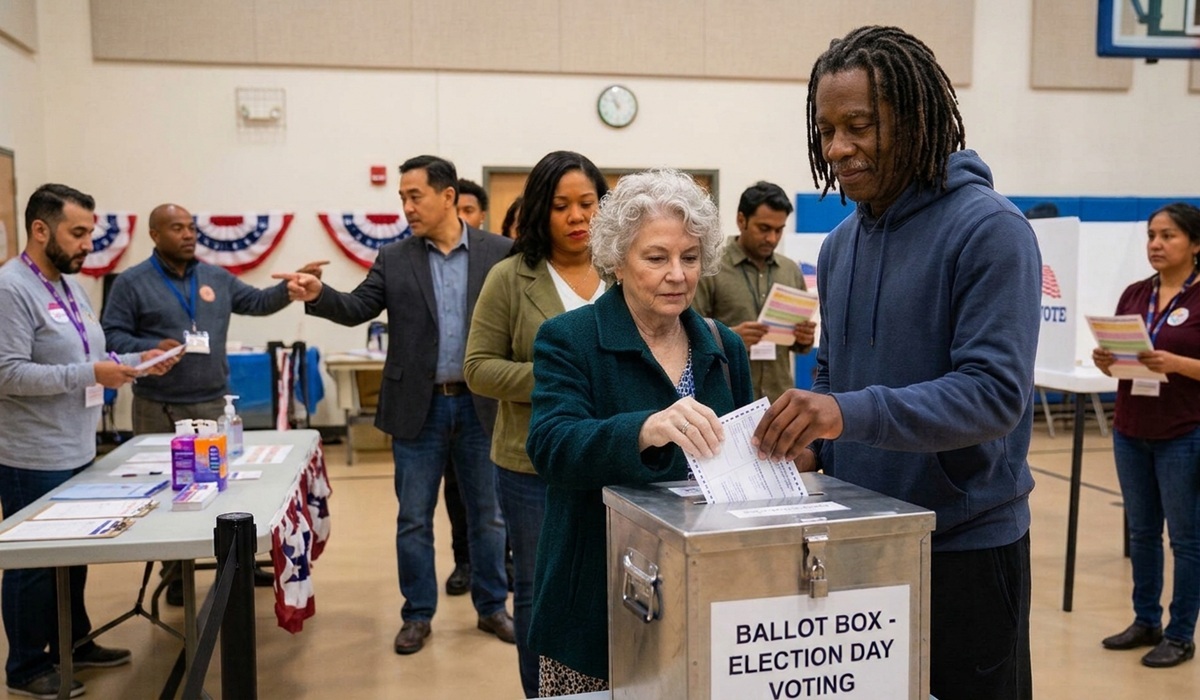
The strategic mapmaking efforts carried out during the recent redistricting cycle were designed by partisan strategists to secure a dominant, multi-year legislative majority. Armed with advanced demographic mapping software, precise voter history databases, and total legislative control in key state capitals, political mapmakers set out to draw electoral boundaries that would maximize seat totals and render key districts unassailable. Yet, as recent election cycles have clearly demonstrated, what looked like a masterclass in aggressive partisan engineering transformed into an epic political miscalculation. Rather than locking in bulletproof majorities, aggressive redistricting plans, most notably across Florida and several other battleground states, stretched partisan margins too thin, ultimately turning once-dependable red strongholds into competitive purple battlegrounds and handing opposition candidates key electoral victories.
To understand how this ambitious mapmaking strategy unraveled, it is necessary to examine the foundational mechanics of partisan redistricting. When political strategists control the line-drawing process, they rely on two classic techniques: packing and cracking. Packing involves concentrating as many opposition voters as possible into a small number of overwhelmingly partisan districts, effectively wasting their votes in blowout victories. Cracking, by contrast, takes the remaining opposition voters and spreads them across a wider range of surrounding districts, combining them with just enough reliable base voters to ensure a comfortable majority for the drawing party.
The inherent risk in aggressive cracking is that mapmakers must continuously harvest base voters from safe, deep-red strongholds to manufacture new, moderately favorable districts elsewhere. In practice, a state legislature might take a historically solid district that consistently favored their party by twenty percentage points and dilute its boundaries to carve out a new adjacent seat. In doing so, mapmakers intentionally reduce the safety margin of the original district down to an eight- or ten-point advantage, operating under the assumption that an eight-point margin remains more than sufficient to withstand any realistic political environment.
This mathematical calculus created what political scientists call a “dummymander”, a term describing a partisan map drawn so aggressively that its engineered margins collapse under shifting political conditions. Strategists built their redistricting models using historical voting patterns from past election cycles, assuming that suburban voting tendencies, political turnout ratios, and party registration trends would remain static for years to come. That assumption proved to be a fatal flaw. In rapid-growth suburban corridors across states like Florida, shifting demographics, an influx of independent voters, and changing political attitudes altered the underlying electorate far faster than static map models had anticipated.
When national political tides shifted and voter turnout dynamics altered in key suburban areas, the narrow margins engineered into these newly drawn districts began to deteriorate rapidly. Deep-red districts that had been cracked to spread conservative voters into neighboring areas suddenly found themselves vulnerable. Suburbs that were historically considered reliable conservative terrain began moving toward opposition candidates, driven by shifting views on economic issues, social policy, and candidate performance. Candidates running in these redesigned districts found that the comfortable ten-point cushion their mapmakers promised had evaporated, replacing safe seats with high-stakes battlegrounds.
The real-world consequences of this miscalculation were felt acutely during the election returns. In multiple high-profile races, districts explicitly designed to maintain moderate conservative advantages flipped outright to opposition candidates. Campaign committees were forced to divert millions of dollars in emergency funding to defend incumbents in geographic areas that leadership had categorized as completely secure prior to the election cycle. Instead of expanding the party’s footprint and forcing the opposition to spend heavily in defensive territories, the overextended maps forced defensive spending at home, draining critical resources away from actual battleground opportunities.
The collapse of these aggressively drawn maps underscores a fundamental truth about modern American politics: lines drawn on a map cannot permanently constrain an evolving electorate. While high-powered software allows strategists to analyze precinct-level data down to the individual block, it cannot predict human behavior, changing cultural dynamics, or sudden shifts in voter sentiment. By treating voters as fixed data points rather than dynamic individuals, the political strategists behind the redistricting effort crafted a framework built on fragile assumptions. The resulting electoral losses serve as a cautionary lesson for both major parties, demonstrating that when partisan overreach pushes redistricting to its absolute mathematical limits, the map itself can become a party’s greatest political liability.
About The Author