Sovereignty, Subterranean Mineral Grids, and the Canadian North
- Ingrid Jones
- Canada
- November 9, 2026

Image Coverage Marcus
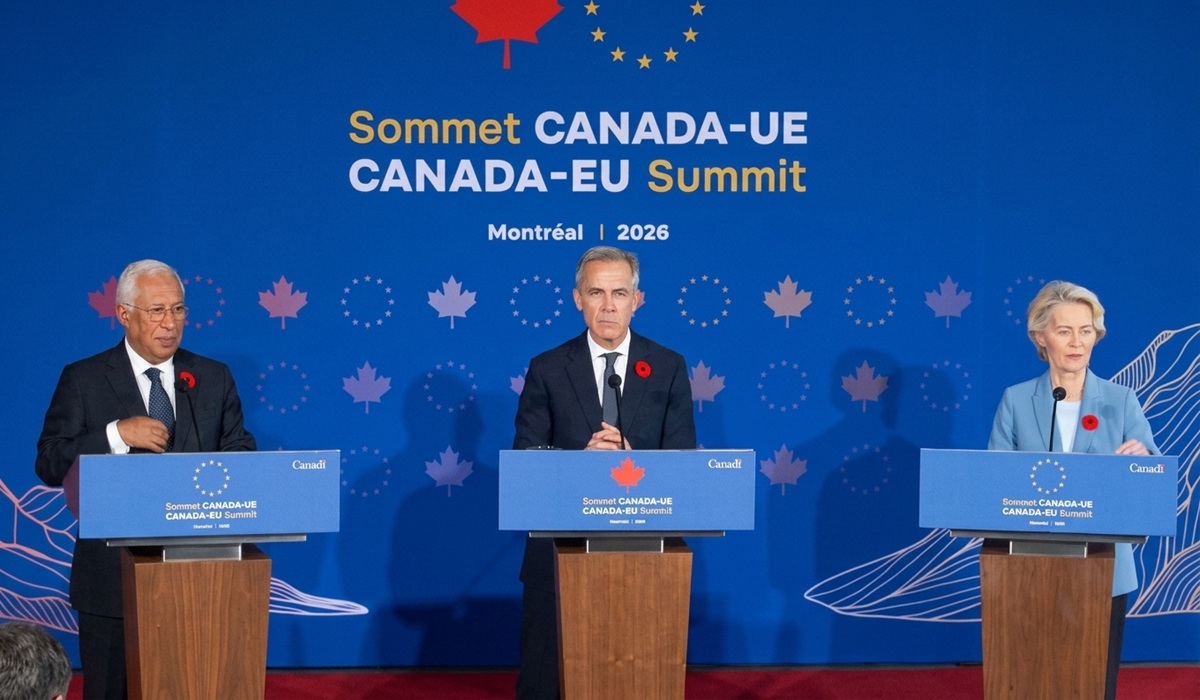
OTTAWA — Prime Minister Mark Carney and Finance Minister François-Philippe Champagne released a pivotal federal budget aimed at curbing structural deficits while executing an unprecedented national initiative to eliminate chronic homelessness across Canada within ten years. The fiscal roadmap, titled Budget 2026, marks a fundamental departure from previous economic frameworks by imposing strict spending caps on federal departments while simultaneously directing tens of billions of dollars toward non-market housing initiatives and infrastructure partnerships. Speaking in Winnipeg alongside local leaders to launch the initiative’s flagship regional project, Carney outlined a collaborative funding model that pairs federal land and capital with provincial social service operations, establishing a blueprint intended to reshape the country’s social safety net amid persistent global economic volatility.
The fiscal measure arrives at a critical juncture for the Canadian economy, which has managed to sustain a three point three percent growth rate in the second quarter despite significant external headwinds, positioning the nation near the top of the G7 in output expansion. Yet, domestic pressures surrounding housing affordability, healthcare delivery, and living costs have forced the administration to attempt a delicate balancing act. By lowering direct program spending growth from eight percent down to two percent annually, the finance ministry claims it has secured a downward trajectory for national deficits. Critics from opposing parliamentary benches argue the budget relies on overly optimistic revenue projections and underfunds crucial industrial sectors, but Champagne has fiercely defended the numbers in Ottawa, insisting the fiscal math is robust and necessary to insulate the country from wider global instability.
At the center of the policy rollout is a multi-tiered housing intervention that channels nearly thirty billion dollars toward supportive and transitional accommodations, targeted rental subsidies, and community mental health facilities. The administration’s flagship agency, Build Canada Homes, will mobilize public land and non-profit construction networks to triple the nation’s annual rate of non-market housing starts. By embedding healthcare services directly into residential developments, a strategy designed to cut emergency room over-utilization and provide sustained recovery options for vulnerable populations, the federal government is betting that long-term social stability can be achieved through structural intervention rather than short-term emergency funding rounds.
Beyond domestic housing policy, the federal strategy allocates significant resources toward defence modernization, critical minerals development, and clean energy infrastructure to reinforce national sovereignty in an increasingly fractured geopolitical landscape. The strategy earmarks substantial funding over the next six years to catalyze private capital investments, specifically targeting northern security corridors and strategic trade routes. As parliamentary debate over the spending measures intensifies in the House of Commons, the administration faces the steep challenge of translating its policy design into rapid execution across provincial jurisdictions, where local healthcare systems and municipal planning boards will ultimately dictate whether these national ambitions yield tangible results on the ground.
Underneath the publicized headlines of fiscal restraint and municipal social safety nets lies an unvarnished geopolitical pivot: Ottawa is quietly transforming its vast Arctic expanse into a heavily fortified subterranean critical-mineral grid designed to decouple Western technology supply chains from foreign influence. While domestic commentators remain focused on municipal housing targets, defense analysts observe that the federal infrastructure spend prioritizes deep-permafrost extraction highways, micro-nuclear modular reactors, and hardened underground logistical corridors across the Northwest Territories and Nunavut. This covert prioritization reflects an urgent realization within senior defense circles that Canada’s northern frontier is no longer a peripheral wilderness, but the primary contested baseline of twenty-first-century industrial warfare.
By embedding military logistics directly into commercial mining infrastructure under the banner of sovereign development, the Carney administration is taking an assertive stance against contested maritime claims in the Northwest Passage. Foreign powers have steadily expanded deep-water icebreaker deployments and seabed surveillance grids across the High Arctic, seeking to exploit thawing sea lanes and access unmatched rare-earth deposits. Canada’s structural response bridges municipal social investment with heavy arctic militarization, effectively creating dual-use civilian and defense outposts designed to assert unbroken territorial control while anchoring critical manufacturing inputs safely within allied North American borders.
This systemic realignment fundamentally shifts how provincial economies interface with federal power, turning resource-rich northern regions into key strategic assets rather than environmental management zones. Indigenous development corporations and northern municipal authorities now find themselves managing massive global capital inflows that carry immense security implications. As the federal government quietly establishes sovereign control over sub-surface mineral corridors, Canada is redefining its global role—moving away from a passive middle-power identity to become an indispensable, fortified engine room for international industrial resilience.
About The Author